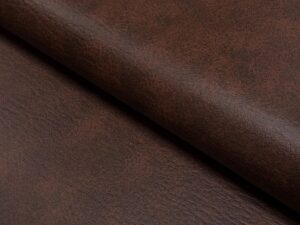
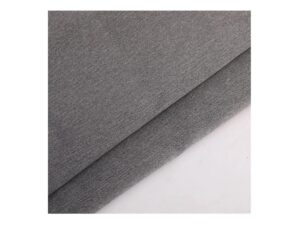
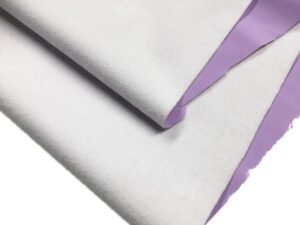
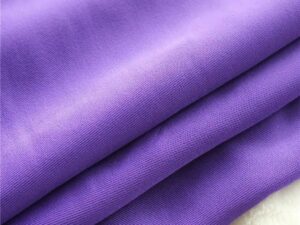
Two rolls of cotton/T.C can carry the same construction and behave differently, because the figure that matters is not the nominal value but where the process sits inside the tolerance.
What construction actually controls in cotton/T.C
Twill drapes and hides stains; plain is cheapest and shows everything.
It also explains why construction is the first line a buyer loosens and the last line a claim refers to.
For Cotton and T/C fabric, the working range is 1/1 plain / 2/1 twill / ripstop. Inside that band the choice is commercial; outside it, the product changes category and so does the price.

How to choose a construction option
| Option | What it changes in cotton/T.C | When it is the right choice |
|---|---|---|
| 1/1 plain | The lowest-cost option in the family. Tear at seam is where it usually ends up. | Cost-led programmes with a short service life |
| 2/1 twill | The volume middle: enough margin for process variation without paying for headroom the end product cannot use. | Most repeat programmes, and the safest default |
| ripstop | The top of the family, where the process is controlled tightly enough to guarantee it. | A warranty, a tender, or a specification that cannot be renegotiated |
These are alternatives, not points on a scale. Construction is chosen by the application rather than by price, and a supplier who quotes one option as if it were interchangeable with another is quoting a different product.
The middle is where most programmes should sit, and it is the hardest position to defend in a price meeting because it has no story attached to it.
The figure that decides the outcome is not construction itself but the tolerance around it. A supplier who quotes 1/1 plain / 2/1 twill / ripstop without a tolerance has not quoted a specification, and the first lot will define the tolerance for you.
How to measure construction
The reference method here is Tensile strength, run to ASTM D5034, with an acceptance of >= 350 N. The method is the easy part; sampling and conditioning are where reports diverge.
Ask which instrument was used. For construction, two instruments that both claim the same standard can differ by enough to move a marginal lot from pass to fail.
Record the measured value rather than pass or fail. A marginal pass on construction tells you the process is running at the edge, which is the information you need before the next lot rather than after it.

Construction does not stand alone
Construction moves with density (88×56 to 133×72 threads/inch) and with weight (100-250 gsm). Tightening one usually costs money in another, and a supplier who accepts every tolerance without comment has either not understood the interaction or is planning to substitute.
When you change construction, re-check the two neighbours before you approve the sample. Most of the samples we re-make are caused by a change in one figure that was not followed through.
The clause to write for construction
The line below is the version we can quote against without inventing anything. Construction appears with a tolerance and a test, not as a standalone number.
65/35 polyester/cotton twill, 21s x 21s, 108×58, 240 gsm, 160 cm, sanforised shrinkage <= 3 % after 3 industrial washes, colour fastness to washing >= grade 4, Pantone 19-4127 TCX
The clause that protects you is not the value, it is the sentence that says what happens when the value is missed. Put it in the purchase order, not only in the enquiry.

When construction goes wrong
Tear at seam. Seams pull out under load on workwear.
The cause is usually low density plus a coarse yarn plus an over-locked seam.
The test that catches it: ASTM D2261 tear plus a seam strength test on the finished garment.
What to specify instead: Higher density, 2/1 twill, and a double-needle or felled seam.
The pattern is consistent: the failure appears months after delivery, is hard to attribute, and the cost lands on the buyer. That is the argument for measuring construction on every lot rather than on the development sample.
Four questions about construction, before you order
- What tolerance do you hold on construction, and what did your last three lots measure against it?
- Which method do you use for tensile strength, and which laboratory signs the report?
- When construction falls outside 1/1 plain / 2/1 twill / ripstop, do you rework, downgrade, or ship and hope?
- Which of density or weight would you move first to hit a lower price?
The answers are more useful than a certificate, because they show whether the process is controlled or merely inspected. Full ranges for cotton/T.C are on the product page, and the measurement regime is described on the quality control page.
Questions buyers ask before ordering
What is the minimum for a custom shade?
1000-2000 m depending on depth. White and black can go lower.
Do you offer FR finish?
We can arrange it through a partner finisher, with certification. It changes hand and strength, so we sample before quoting.
Failure modes, and the test that catches each one
A specification only earns its keep if it names the failure it prevents. These are the two that matter for the cotton/T.C figures on this page.
| Failure | What triggers it | Test to demand on the production lot |
|---|---|---|
| Pilling on blends | Short staple and a high polyester content that migrates to the surface. | pH — ISO 3071; acceptance 4.0-7.5 |
| Shrinkage | No sanforising, or sanforising settings not held between lots. | Shrinkage — ISO 6330 + ISO 5077; acceptance <= 3 % after 3 washes (pre-shrunk) |
The other two, with acceptance numbers attached, are in the full failure analysis for cotton/T.C. A supplier who cannot name the mode he sees most often is describing a catalogue, not a process.
From quotation to specification in seven lines
Leave the tolerance and the method out and every dispute is settled by whoever needs the goods more.
- Composition: the figure you will accept inside the 100 % cotton / 65-35 / 80-20 T/C band, the tolerance on it, and the method used to measure it.
- Yarn count (16s / 20s / 21s / 32s / 40s): name the number, not the word. If the answer only repeats the band, ask which point inside it is being offered for this order.
- Construction: 1/1 plain / 2/1 twill / ripstop is the market band. Fix the figure you will test at goods-in, and the instrument you will test it with.
- Density (88×56 to 133×72 threads/inch): fix the value per shipment, and state who pays for the re-test if a lot lands outside it.
- Sample retention: one production sample per lot stays with the mill for twelve months. Claims are settled against it, not against memory.
- Test reports: name the standard as well as the test. A pass on a development sample is not a pass on a production lot.
- Deviation rule: anything outside the agreed bands is reported before shipment, not after arrival.
Need construction specified and tested against your end use?
Send the end use, the quantity and the destination market, and we will come back with a specification that meets it, a price at your volume and the test reports that back it up. Samples are free for qualified programmes; we charge the courier only.
Related reading
Sample cut with your values on it · Neutral packing and private label · Consolidation, documents and lead times