Price per unit is the last number in a chain, and the chain is where the negotiation actually happens. This is the breakdown we use internally when a buyer asks why one quote is 18 % lower than another.
Where the money goes
| Cost line | Share of price | What moves it |
|---|---|---|
| Slats | 30-40 % | Material and grade; this is where the visible quality sits |
| Headrail and hardware | 20-28 % | The cord lock alone can be 5 % of cost and 40 % of complaints |
| Assembly labour | 15-20 % | Jig-based assembly cuts both cost and squareness errors |
| Packaging | 8-12 % | A blind that arrives bent costs more than the packaging saved |
| Freight | 8-12 % | Volume, not weight, decides container cost |

Reading the structure
The largest line is slats at 30-40 %. That is where a supplier has the most room to move and the most temptation to substitute. When a quote comes in well below the market, the difference is almost always here rather than in labour or packaging.
The smallest line is often the one that protects you: freight at 8-12 %. Cutting testing or packaging saves a visible amount per unit and costs a multiple of it in claims. This is the first place a new supplier cuts and the last place a serious one does.
Three levers that actually move the price
Colour count, which is where finished blinds cost is really set
Most buyers push on total quantity. The factory cost is driven by setups, not by total metres, and 200-500 sets per size and colour is quoted per colour because a colour change resets the process. Four shades at a quarter of the volume each cost more to make than one shade at the full volume, even though the total is identical. Consolidating shades usually beats a volume discount.
Loosening valance, if the product allows it
A tight tolerance on a parameter the product does not need is pure cost. Valance at coordinated or hidden is usually where a specification has been carried over from another programme without being re-examined. Loosening it recovers more than the discount being negotiated, and it does not damage the product.
Timing against a 25-40 days cycle
Production slots matter. A 25-40 days cycle can usually be met; a two-week expedite usually cannot, and when it is accepted the cost appears as overtime and air freight rather than in the unit price. Booking a slot four weeks out is the cheapest concession a buyer has.
The savings that come back as claims
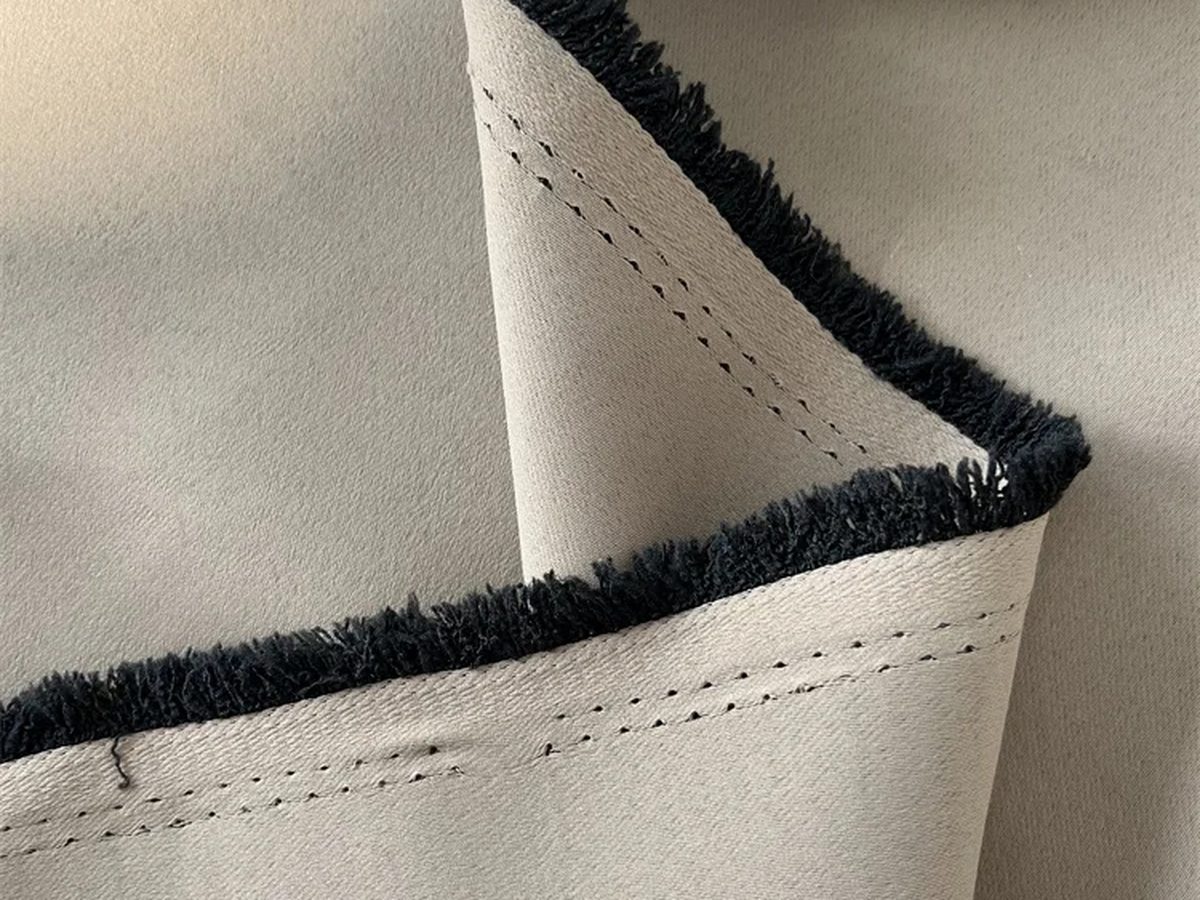
The blind creeps down and will not hold position. The cause is cheap zinc die-cast lock or a cord that is out of specification for diameter. This is what a 10 % saving looks like eighteen months later, and it is why the cheapest quote is rarely the lowest landed cost.
A working rule: price the difference between quotes against the cost of one replacement shipment. If the gap is smaller than that, the decision is not really about price.
What to ask for in the quotation
- The specification, line by line, against ladder tape / cord and cord lock at the values you asked for.
- The validity period, because the raw material index moves before the price list does.
- What is included: operation cycles, packing, certification, sample courier.
- The MOQ per colour (200-500 sets per size and colour is typical) separately from the order minimum.
- The payment terms and what would change them.
Cost detail for the material itself is on the finished blinds page; the commercial terms we work to are on the logistics page.

Questions buyers ask before ordering
Which child-safety standard applies to my market?
EU/UK: EN 13120. US: 16 CFR 1120. Canada: CCPSA. Australia: the corded internal window coverings regulation. They are not interchangeable, and a generic certificate is not evidence.
Can you supply made-to-measure?
Yes, with a 1-2 mm width tolerance. For recess fitting, tell us the measuring method you use, because inside-recess and outside-recess need different deductions.
What is the cycle life of your cord lock?
Specify 5000 cycles at 5 kg on the assembled blind. Cheap locks fail around 1500-2000 cycles, which is one or two years in a hotel.
Reading a quote that looks too low
A quote 15-20 % below the market is not a negotiating position, it is a different product. These are the five places the difference hides, in the order it usually appears.
- A lighter construction. Slat quoted at the bottom of 25 / 35 / 50 mm, wood or PVC rather than the middle. Ask for the measured figure per lot.
- One coating pass instead of two. Cheaper to make, fails at the fold within a season.
- Testing excluded. The quote is ex-works without reports; the reports then cost more than the saving when a buyer asks for them.
- Packing downgraded. Thinner cartons, no moisture barrier, more transit damage and a claim at destination.
- Payment terms tightened. A deposit-heavy structure is often funding the order, which is a credit risk rather than a price advantage.
Three concessions that lower the price honestly
None of these damages the product, and together they usually recover more than the discount being negotiated.
- Fewer colours. Setup is per colour, so consolidating shades cuts cost without touching the specification.
- A longer slot. Four extra weeks lets the factory combine runs; the saving is real and it costs you nothing if the launch date allows it.
- Looser non-critical tolerances. A tight figure on valance adds cost and the product does not need it.
The three tiers of finished blinds, and what each one buys
| Tier | Headrail | Ladder tape / cord | Programmes it suits | Where it fails |
|---|---|---|---|---|
| Entry | Headrail at the low end | Ladder tape / cord at the low end | Short-life, promotional, market testing | Cord lock slipping |
| Standard | Headrail mid-range | Ladder tape / cord mid-range | Repeat retail and industrial programmes | Ladder cord fraying |
| Contract | Headrail at the top | Ladder tape / cord at the top | Projects with a warranty attached | Rare, and usually a process failure rather than a material one |
The tiers are not marketing labels; they are different constructions at different points in headrail and ladder tape / cord. A supplier who quotes one price for all three is quoting the middle and calling it whatever you asked for.
The useful question is which tier your programme can defend. If the end product is replaced before cord lock slipping would appear, entry is rational. If it carries a warranty, the premium for contract is usually smaller than one claim.
Failure modes, and the test that catches each one
A specification only earns its keep if it names the failure it prevents. These are the two that matter for the price you are trying to move.
| Failure | What triggers it | Test to demand on the production lot |
|---|---|---|
| Blind not square | Cutting error or unequal cord length during assembly. | Cord load — static load test; acceptance per standard |
| Safety device failure | Device not tested to the destination market’s standard. | Colour match — D65 + dE; acceptance dE <= 1.5 |
The other two, with acceptance numbers attached, are in the full failure analysis for finished blinds. A supplier who cannot name the mode he sees most often is describing a catalogue, not a process.
From quotation to specification in seven lines
Leave the tolerance and the method out and every dispute is settled by whoever needs the goods more.
- Width tolerance: the figure you will accept inside the 1-2 mm on the finished blind band, the tolerance on it, and the method used to measure it.
- Valance (coordinated or hidden): name the number, not the word. If the answer only repeats the band, ask which point inside it is being offered for this order.
- Headrail: 25 mm steel or aluminium is the market band. Fix the figure you will test at goods-in, and the instrument you will test it with.
- Slat (25 / 35 / 50 mm, wood or PVC): fix the value per shipment, and state who pays for the re-test if a lot lands outside it.
- Who inspects: third-party, in-house or none, decided in advance, with the AQL level written down.
- Reference sample: the signed sample is the definition of the colour, not the photograph in the catalogue.
- Price validity: the period during which the quoted figure holds, and what happens to it when the raw-material index moves.
Want a costed quotation against a real volume?
Send a window schedule or a single set size and we will return a quotation with the loading plan, the safety standard that applies to your market and the lead time for the colour you need. Catalogue and current price list on request.
Related reading
- Finished Blinds vs Shutters
- Finished venetian blinds Specification
- Cord lock in Finished venetian blinds
Catalogue and current price list · Neutral packing and private label · Consolidation, documents and lead times