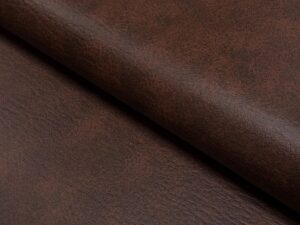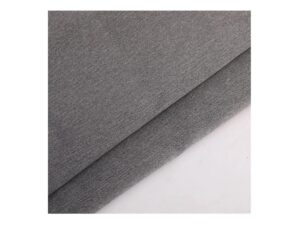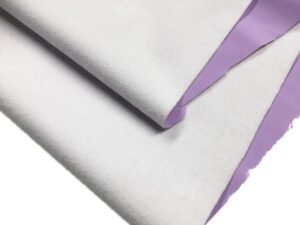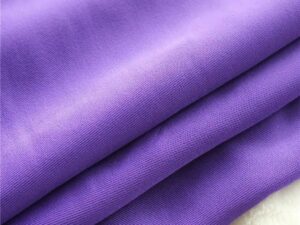
If knitted fabric fails in a way that is hard to explain, structure is the first place to look and the last place buyers check, because it is the figure everyone assumes is under control.
What structure actually controls in knitted fabric
Determines stretch direction, recovery and how the cut panel behaves.
The number is easy to quote and hard to hold, and the difference between those two things is what you are actually buying.
For Knitted fabric, the working range is jersey / interlock / rib / fleece. Inside that band the choice is commercial; outside it, the product changes category and so does the price.

How to choose a structure option
| Option | What it changes in knitted fabric | When it is the right choice |
|---|---|---|
| jersey | The lowest-cost option in the family. Skew / torque is where it usually ends up. | Cost-led programmes with a short service life |
| rib | The volume middle: enough margin for process variation without paying for headroom the end product cannot use. | Most repeat programmes, and the safest default |
| fleece | The top of the family, where the process is controlled tightly enough to guarantee it. | A warranty, a tender, or a specification that cannot be renegotiated |
These are alternatives, not points on a scale. Structure is chosen by the application rather than by price, and a supplier who quotes one option as if it were interchangeable with another is quoting a different product.
The middle is where most programmes should sit, and it is the hardest position to defend in a price meeting because it has no story attached to it.
The figure that decides the outcome is not structure itself but the tolerance around it. A supplier who quotes jersey / interlock / rib / fleece without a tolerance has not quoted a specification, and the first lot will define the tolerance for you.
How to measure structure
The reference method here is Dimensional change, run to ISO 6330 + ISO 5077, with an acceptance of <= 5 % after 3 washes. The method is the easy part; sampling and conditioning are where reports diverge.
Ask which instrument was used. For structure, two instruments that both claim the same standard can differ by enough to move a marginal lot from pass to fail.
Record the measured value rather than pass or fail. A marginal pass on structure tells you the process is running at the edge, which is the information you need before the next lot rather than after it.

Structure does not stand alone
Structure moves with composition (100 % cotton / CVC / TC / 100 % polyester) and with weight (120-320 gsm). Tightening one usually costs money in another, and a supplier who accepts every tolerance without comment has either not understood the interaction or is planning to substitute.
This is why a specification written as a list of independent tolerances is weaker than one written as a construction. The list lets a supplier satisfy each line while missing the product.
The clause to write for structure
The line below is the version we can quote against without inventing anything. Structure appears with a tolerance and a test, not as a standalone number.
Single jersey, 100 % combed cotton, 180 gsm +/- 5 %, open width 175 cm, stitch length 2.9 mm, shrinkage <= 5 % after 3 washes, skew <= 5 %, reactive dyed, Pantone 19-1664 TCX
The clause that protects you is not the value, it is the sentence that says what happens when the value is missed. Put it in the purchase order, not only in the enquiry.

When structure goes wrong
Skew / torque. Side seams spiral after washing, garments twist on the body.
The cause is usually high twist yarn, poor relaxation, or tubular fabric slit without rest.
The test that catches it: AATCC 179 skew after home laundering, measure before and after.
What to specify instead: Specify <= 5 % skew, require relaxation before cutting, and buy open width for critical styles.
The pattern is consistent: the failure appears months after delivery, is hard to attribute, and the cost lands on the buyer. That is the argument for measuring structure on every lot rather than on the development sample.
Four questions about structure, before you order
- What tolerance do you hold on structure, and what did your last three lots measure against it?
- Which method do you use for dimensional change, and which laboratory signs the report?
- When structure falls outside jersey / interlock / rib / fleece, do you rework, downgrade, or ship and hope?
- Which of composition or weight would you move first to hit a lower price?
The answers are more useful than a certificate, because they show whether the process is controlled or merely inspected. Full ranges for knitted fabric are on the product page, and the measurement regime is described on the quality control page.
Questions buyers ask before ordering
Can you match a Pantone colour on cotton jersey?
Within dE <= 1.0 on most shades. Very bright greens and some blues are outside the reactive gamut; we will tell you before sampling rather than after.
Do you offer compacted fabric?
Yes, and we recommend it for any garment that will be washed by the end consumer. Compaction adds cost and removes most shrinkage claims.
From quotation to specification in seven lines
Leave the tolerance and the method out and every dispute is settled by whoever needs the goods more.
- Shrinkage (<= 5 % length, <= 4 % width): fix the value per shipment, and state who pays for the re-test if a lot lands outside it.
- Skew (torque): <= 5 % is not an answer on its own. Ask for the last three lots' actual readings and the spread behind them.
- Structure: agree the test method with the number. Two labs, two methods, two answers, one argument.
- Composition (100 % cotton / CVC / TC / 100 % polyester): state where in the band this order sits. The middle of the band is not what a tolerance is for.
- Who inspects: third-party, in-house or none, decided in advance, with the AQL level written down.
- Reference sample: the signed sample is the definition of the colour, not the photograph in the catalogue.
- Price validity: the period during which the quoted figure holds, and what happens to it when the raw-material index moves.
Questions worth asking before the price is agreed
The questions below are the ones that cannot be answered from a catalogue, which is exactly why they are worth asking.
| Question | Answer that should worry you | Answer that holds up |
|---|---|---|
| Who signs the test report, and against which standard? | “Our QC department signs it.” | A named standard, a named method and a signature that belongs to somebody who can be asked again next year. |
| How do you hold skew (torque) at <= 5 %? | “That is standard for us, no problem.” | The last three lots’ readings, the instrument used and who signs the report. Pilling starts here. |
| What happens if composition misses the 100 % cotton / CVC / TC / 100 % polyester requirement? | “It will not happen.” | A re-test clause, the tolerance on the re-test, and the point at which the lot is remade rather than discounted. |
Need structure specified and tested against your end use?
Send the end use, the quantity and the destination market, and we will come back with a specification that meets it, a price at your volume and the test reports that back it up. Samples are free for qualified programmes; we charge the courier only.
Related reading
Sample cut with your values on it · Neutral packing and private label · Consolidation, documents and lead times