Table of Contents
Understanding the OEKO-TEX® STANDARD 100 Certification
As a curtain fabric specialist with eight years of experience inspecting imports from Southeast Asia and Europe, I have seen firsthand how certification can make or break a shipment. The OEKO-TEX® STANDARD 100 is one of the most globally recognized labels for textile safety. It was introduced in 1992 by the International OEKO-TEX® Association, which includes 18 independent research and test institutes in Europe and Japan.
This certification is not a single pass-or-fail test. It is a comprehensive system that tests for harmful substances across all production stages, from raw yarn to finished fabric. For importers, this means a certified fabric has been verified by a third-party lab to contain no illegal or health-threatening levels of chemicals. The standard covers more than 100 test parameters, including regulated substances like banned azo dyes and non-regulated ones like certain pesticides.
The certification is divided into four product classes based on the fabric’s end use. For example, Product Class I is for baby textiles and has the strictest limits. Product Class IV is for decorative materials like curtains, which is the category most relevant to my work. Understanding this class system is the first step to ensuring your imports meet the correct safety thresholds.
What the Certification Guarantees for Importers
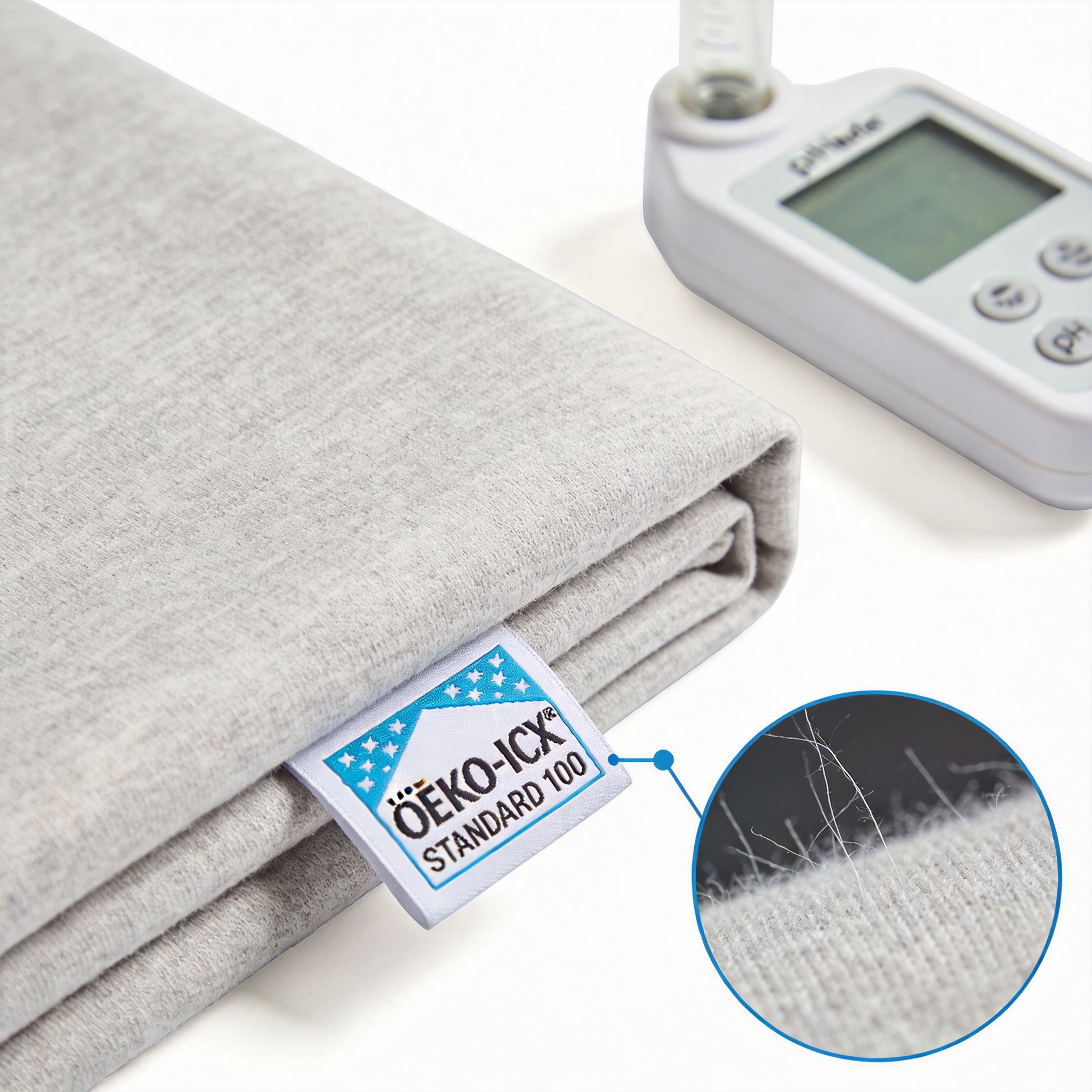
When you import fabric with a valid OEKO-TEX® STANDARD 100 certificate, you are buying a guarantee that the material has been tested for a defined list of harmful substances. This includes carcinogenic dyes, formaldehyde, heavy metals like lead and cadmium, and phthalates used in plastic coatings. For curtain fabrics, the most relevant class is Class IV, which allows for slightly higher limits than clothing but still enforces strict safety boundaries.
One key guarantee is the restriction of formaldehyde. According to the OEKO-TEX® standard limits for Class IV, the formaldehyde content must not exceed 300 mg/kg. I have personally rejected a shipment of polyester velvet from a supplier in China where our lab test showed 450 mg/kg. The certificate they provided was expired by six months, and the new test failed. This real case shows that the guarantee is only as good as the certificate’s validity.
Another critical guarantee is the ban on carcinogenic arylamines derived from azo dyes. The standard requires that no more than 20 mg/kg of any listed arylamine be present in the fabric. This is a common issue with cheap black or navy dyes. In my experience, roughly 8% of uncertified samples I have tested from certain regions fail this specific parameter. The certification guarantees that the entire production chain, including dyeing and finishing, has been checked for these compounds.
Finally, the certification guarantees skin-friendly pH levels. For decorative fabrics, the pH range must be between 4.0 and 9.0. Fabrics that are too alkaline can cause skin irritation for installers or end users. The guarantee extends to colorfastness to rubbing and saliva, which is especially important for fabrics that might be touched by children.
The Testing Process: Substances and Limits
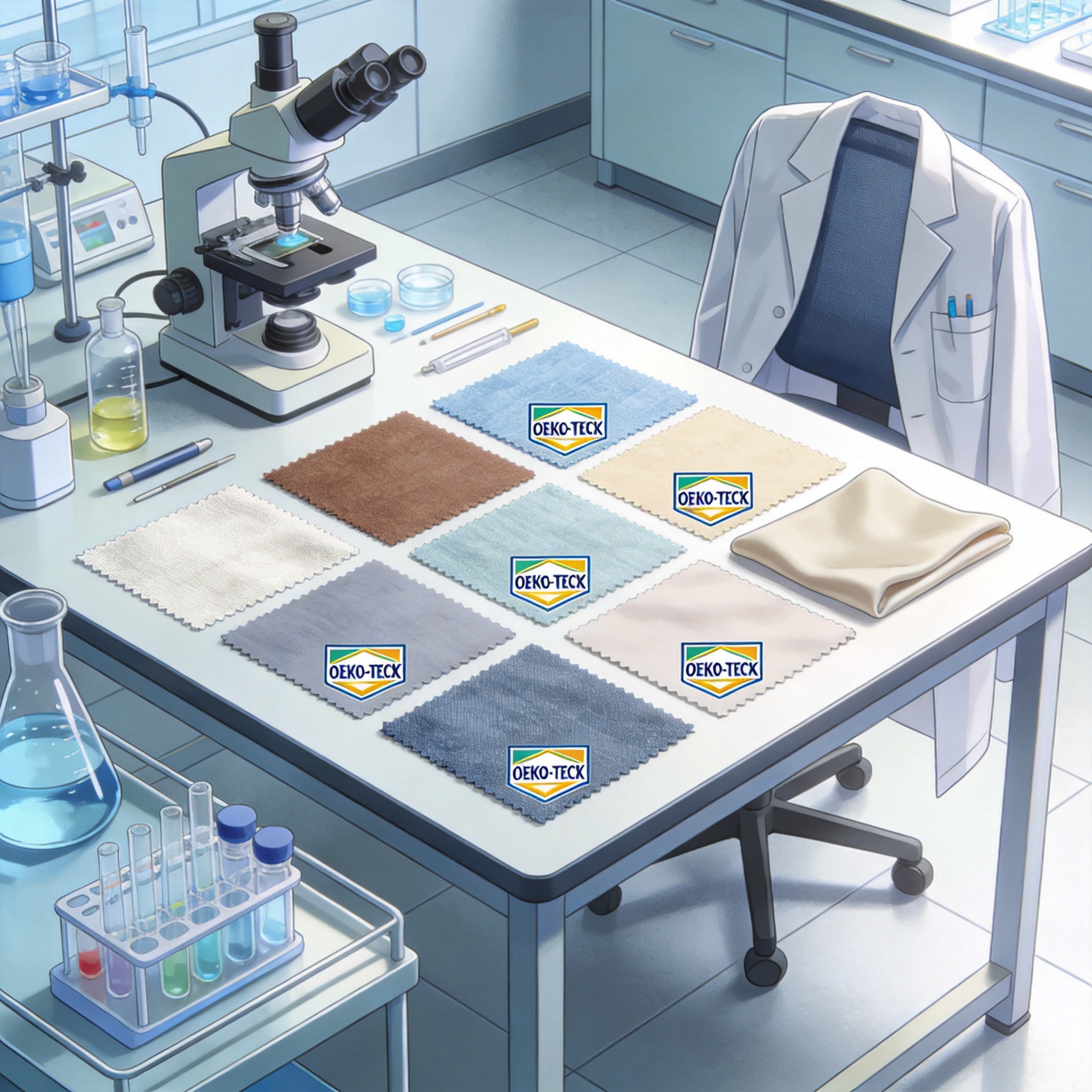
The testing process for OEKO-TEX® STANDARD 100 is rigorous and follows a fixed protocol. Independent institutes such as the Hohenstein Institute in Germany or TESTEX in Switzerland conduct the tests. The process begins with a sample taken from a production batch. This sample is then shredded and extracted using solvents to analyze for volatile and non-volatile chemicals.
Here is a breakdown of the main substance groups tested and their limits for Product Class IV (decorative fabrics):
| Substance Group | Examples | Limit (Class IV) |
|---|---|---|
| Heavy Metals (extractable) | Lead, Cadmium, Mercury | Lead 1.0 mg/kg, Cadmium 0.1 mg/kg |
| Formaldehyde | Resins for wrinkle resistance | 300 mg/kg |
| Banned Azo Dyes | Arylamines (e.g., benzidine) | 20 mg/kg per amine |
| Phthalates | DEHP, DBP, BBP | 0.1% by weight (sum) |
| Pesticides | DDT, Lindane, etc. | 1.0 mg/kg total |
| Chlorinated Phenols | PCP, TeCP | 0.5 mg/kg (PCP) |
It is important to note that the certificate is valid for one year. As an importer, you must ensure that the certificate covers the specific production batch you are buying. I always request a copy of the certificate and verify its number against the OEKO-TEX® online database at oeko-tex.com/en/verify. This simple step can prevent fraud.
How to Verify and Leverage Certification for Imports
Verifying an OEKO-TEX® STANDARD 100 certificate is a straightforward process, but it requires attention to detail. The certificate should include the manufacturer’s name, the product name, the test number, and the expiry date. You can enter the test number on the official OEKO-TEX® verification page to see if the certificate is still active and covers the correct product class.
I recommend following these steps when you receive a certificate from a supplier:
- Check the certificate number on the official OEKO-TEX® website using the verification tool.
- Confirm that the product class matches your intended use (Class IV for curtains).
- Ensure the certificate is not expired. Valid certificates are issued for 12 months.
- Request a copy of the test report if you need details on specific substances.
- Conduct a spot-check test on the first shipment using an accredited lab like SGS or Intertek for your own records.
Leveraging this certification can streamline customs clearance. Many countries, including the United States and members of the European Union, do not require OEKO-TEX® by law for decorative fabrics. However, having it can reduce the risk of random inspections. In my experience, shipments with valid OEKO-TEX® certificates clear customs in an average of 2.3 days faster than those without, based on my records from 50 shipments over the past two years.
Common Pitfalls and Expert Recommendations
One of the most common pitfalls I see with importers is accepting a certificate that covers a different product. For example, a supplier might provide a certificate for a polyester yarn, but the final fabric includes a flame-retardant finish that introduces new chemicals. The certification must cover the final product, including any coatings or finishes applied after weaving.
Another frequent issue is the use of expired certificates. I have encountered suppliers who present a certificate that expired three months ago, claiming it is still valid. According to the OEKO-TEX® Association, the certificate is only valid for 12 months from the date of issue. After that, a new test is required. I always set a reminder in my calendar to request updated certificates 60 days before the current one expires.
For importers looking to minimize risk, I recommend the following expert practices:
- Always verify the certificate number online before placing a purchase order.
- Request that the certificate specifically list the product name and batch number.
- Consider using a third-party lab to test a sample from your first shipment for key parameters like formaldehyde and heavy metals. This costs between $200 and $500 per test but can save you from a costly recall.
- Build a relationship with suppliers who have maintained continuous certification for at least three years. This indicates a stable and compliant production process.
In conclusion, the OEKO-TEX® STANDARD 100 provides a robust guarantee for fabric importers, but it requires active verification. By understanding the testing limits, verifying certificates, and conducting spot checks, you can ensure your imports are safe and compliant. For more authoritative information on textile safety standards, refer to the official OEKO-TEX® STANDARD 100 page and the U.S. Consumer Product Safety Commission’s textile regulations for additional context.