Picture this: a serene morning light filtering softly through your windows, casting a gentle glow across your living room. The secret to this tranquil scenario? Roman blinds. These versatile window treatments have been gracing homes for centuries, offering an unparalleled blend of style and functionality. As you explore the subtle sophistication that Roman blinds bring to any space, you’ll soon understand why they remain a timeless choice for décor enthusiasts worldwide.
Stepping beyond the realm of ordinary curtains, Roman blinds offer a unique opportunity to enhance your home’s aesthetic while also providing practical benefits like privacy and light control. Whether you’re drawn to their sleek, modern appeal or their ability to complement a classic interior, Roman blinds can transform your living spaces into elegant sanctuaries. Join us as we delve into the enduring allure of Roman shades and uncover how they can redefine the ambiance of your home.
The History of Roman Blinds: An Ancient Elegance
The story of Roman blinds dates back to the grandeur of ancient Rome, where early inhabitants crafted simple fabric panels to shield their villas from the sun. Artisans of the time employed linen and coarse cotton to create flat panels that could be rolled or draped to regulate light and airflow. Although these early window coverings lacked the intricate mechanisms we see today, they demonstrated a clear appreciation for both comfort and aesthetic harmony—a hallmark that would endure through the centuries.
During the Middle Ages, the use of window fabrics waned in many parts of Europe, as heavy draperies and wooden shutters took precedence in castles and manors. It was not until the Renaissance that the concept of lightweight, easily adjustable window coverings experienced a revival. Italian designers began experimenting with pleated fabrics, introducing folds that cascaded softly when lowered. This innovation laid the groundwork for what we now recognize as the quintessential Roman curtain.
Fast-forward to the 19th and 20th centuries, and the Industrial Revolution facilitated mass production of textiles and hardware, making Roman blinds more accessible to a growing urban population. Today’s Roman window shades blend tradition with modern engineering: you’ll find energy-efficient liners, cordless lift systems, and an array of textiles from silk to faux burlap. Despite these advancements, the core appeal remains the same—timeless elegance, seamless functionality, and the ability to adapt to virtually any décor style.
Design Options: Finding the Perfect Style for Your Space
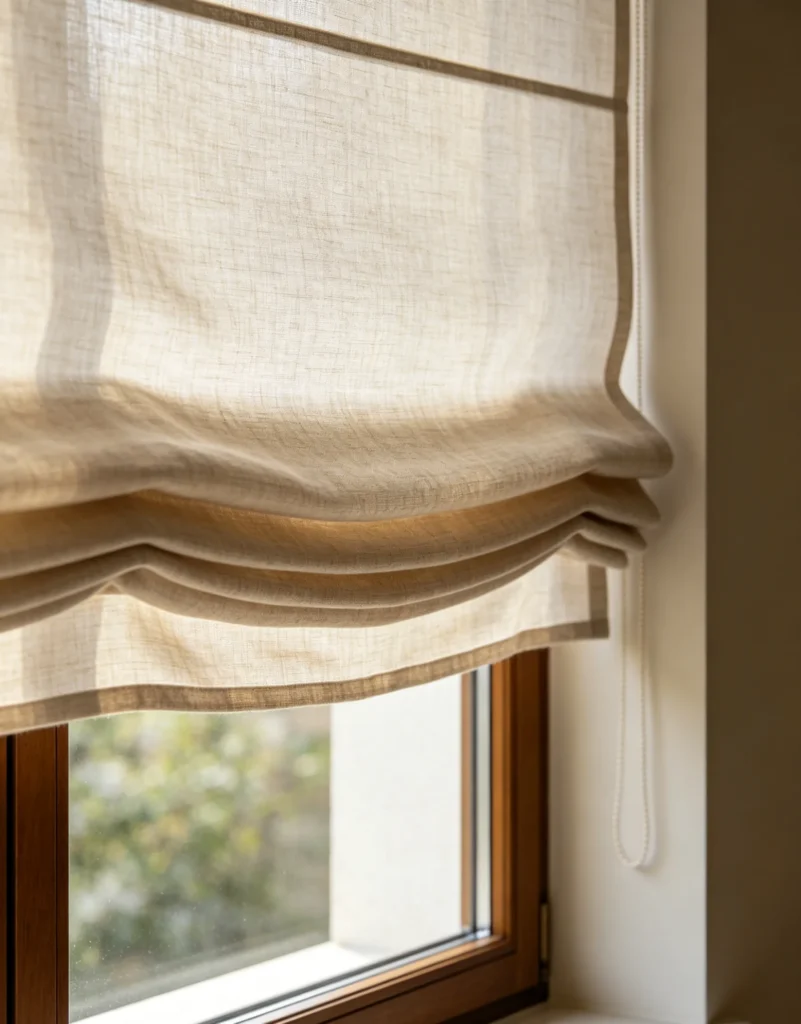
Roman blinds come in an astonishing variety of styles, each offering a unique visual impact. The most popular style is the flat fold, characterized by crisp, horizontal lines that stack neatly when raised. This minimalist approach complements contemporary interiors and underscores clean architectural features. For a softer silhouette, the hobbled fold (also known as the cascading fold) uses stitched pleats that create gentle waves, lending a more relaxed, romantic vibe.
If you’re aiming for a more casual look, the relaxed Roman shade drapes naturally, forming a subtle curve when lowered and pooling slightly at the bottom edge. This style pairs beautifully with coastal or cottage-inspired décor. Conversely, for formal living rooms or dining areas, consider weighted hem bars and metal chain lifts to achieve precise, uniform folds. Regardless of the style, incorporating contrasting trims, tassels, or decorative rods can elevate your Roman blinds from functional window treatment to focal point.
Customization doesn’t end with fold style: consider window size and shape, surrounding furniture, and color palette. A wide window may benefit from a single, unbroken panel for visual cohesion, while smaller windows can host multiple narrow blinds for a tailored, modular look. Ultimately, selecting the ideal design hinges on balancing form and function, ensuring your Roman blinds both enhance and harmonize with your space.
Material Matters: Choosing the Right Fabric for Function and Style
When it comes to selecting fabric for your Roman blinds, considerations extend beyond aesthetics to include durability, light permeability, and maintenance. Cotton and linen blends are perennial favorites for their soft texture and natural elegance. They diffuse sunlight beautifully, creating a warm, inviting atmosphere. However, if you need more robust light-blocking capabilities, look for cotton-backed or blackout-lined options, which enhance privacy and improve energy efficiency by insulating against heat and cold.
For those seeking an upscale finish, silk or silk-blend fabrics impart a subtle sheen and luxurious hand feel. Keep in mind that these fabrics may require professional cleaning and more gentle handling to preserve their luster. Faux silk and polyester alternatives offer durability and stain resistance at a lower cost, making them ideal for high-traffic areas like kitchens or children’s rooms. Sheer fabrics, such as voile or organza, can be layered beneath a heavier Roman curtain to combine diffused daylight with blackout functionality when needed.
Eco-conscious homeowners might explore fabrics made from recycled materials or sustainably sourced fibers. Bamboo and hemp canvases, for example, are gaining popularity for their natural textures and reduced environmental footprint. Whichever material you choose, ensure it complements your overall décor scheme while meeting practical requirements like UV resistance, ease of cleaning, and compatibility with cordless or motorized operating systems.
Installation Made Easy: A Step-by-Step Guide
Installing Roman blinds can seem daunting, but with a systematic approach, you can achieve professional results in just a few simple steps. First, gather all necessary tools: a drill with appropriate bits, a level, a tape measure, pencil, screws, and the mounting brackets included with your Roman window shades kit. Clear the installation area and lay out your Roman blinds and hardware to confirm that all components are present.
Next, measure your window opening precisely. Decide whether you prefer an inside-mount (fitted within the window frame for a streamlined look) or outside-mount (extending beyond the frame to maximize coverage and light control). Mark bracket positions on the frame or wall, ensuring they are level and spaced according to the manufacturer’s guidelines. Pre-drill pilot holes to prevent splitting, then secure the brackets firmly with screws.
With brackets in place, attach the Roman blinds to the mounting headrail, ensuring the lift cords run freely through the pulleys. Test the operation by raising and lowering the blinds several times, adjusting cord tension or tilt if necessary. Finally, install any decorative valances or side channels. Always adhere to safety recommendations—especially for homes with children—to secure cords out of reach or opt for a cordless system for added peace of mind.
Light Control: Maximizing Ambiance with Roman Blinds
One of the most celebrated features of Roman blinds is their ability to modulate light, creating the perfect ambiance for any time of day. Because the fabric lies flat against the window when lowered, these blinds offer an even diffusion of sunlight that softens harsh rays and reduces glare. This quality makes them ideal for living rooms, where a cozy, inviting environment is paramount.
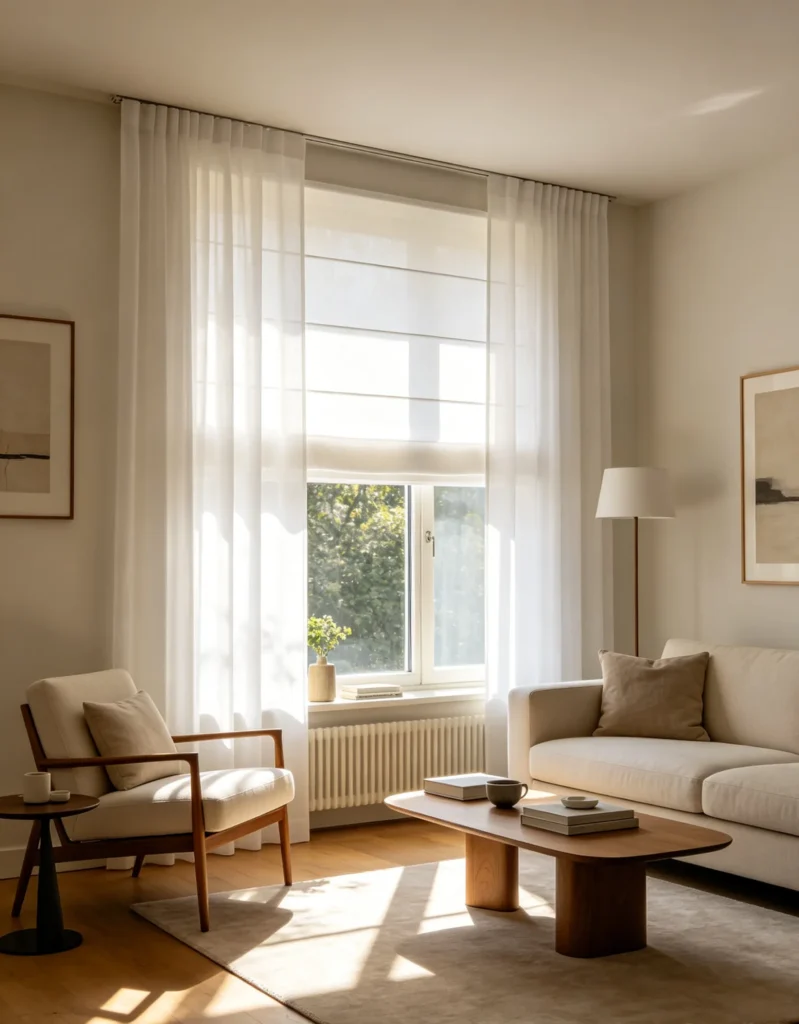
For spaces that demand full darkness—such as media rooms or bedrooms—consider blackout-lined Roman blinds or adding a separate blackout panel. Some homeowners opt for a double-shade system: pairing sheer roman shades against the window for daytime brightness, and a heavier roman curtain mounted in front to block light at night. This layered approach provides unparalleled flexibility, allowing you to tailor the room’s ambiance to your mood.
If UV protection is a priority, look for fabrics with built-in UV inhibitors. These specialized treatments help preserve furniture and flooring from sun damage while still permitting natural light. By carefully selecting the right fabric and layering strategy, you can harness the full potential of Roman blinds to balance illumination, comfort, and style.
Privacy Solutions: Balancing Seclusion and Style
Privacy is a key consideration in any room, and Roman blinds deliver an elegant solution. When fully lowered, they form a solid barrier that shields interiors from outside view without the bulkiness of heavy drapery. For urban environments or ground-floor rooms, choose opaque or blackout-lined fabrics to ensure complete privacy after dusk.
However, you don’t have to sacrifice natural light for seclusion. Semi-sheer roman blinds allow daylight to filter through while obscuring the view from the outside. This option is especially effective in bathrooms or front-facing windows, where you want to maintain a bright interior without compromising discretion. For extra peace of mind, combine a sheer roman curtain layer with a secondary opaque panel—offering a versatile two-in-one solution that can be adjusted throughout the day.
Maintenance Tips: Keeping Your Roman Blinds Pristine
Maintaining the fresh, crisp look of your Roman blinds requires regular care, but it need not be time-consuming. Begin by vacuuming your blinds weekly using the brush attachment to remove dust and prevent buildup. For light stains or spots, use a damp cloth with a mild detergent, gently blotting the affected area without saturating the fabric. Always follow the manufacturer’s cleaning guidelines to avoid damage.
For deeper cleaning, detachable components like valances and liners can often be hand-washed or taken to a professional cleaner. Avoid machine washing unless the fabric specifically permits it, as agitation can distort pleats and weaken seams. Cordless Roman window shades are particularly easy to maintain since they lack complex pulley systems; simply dust and spot-clean as needed.
Periodic inspections help extend the lifespan of your window treatments. Check cords, pulleys, and mounting hardware for signs of wear or loosening. Tighten screws and replace frayed cords promptly to ensure smooth operation. With these straightforward practices, your Roman blinds will remain a beautiful, functional feature of your home for years to come.
Roman Blinds in Different Spaces: Ideas for Every Room
Roman blinds adapt gracefully to any room, making them a versatile choice for interior design. In the bedroom, blackout-lined Roman blinds ensure restful sleep by blocking external light and reducing noise. Coordinate the fabric color with your bedding and accessories to create a cohesive, calming retreat. For a child’s room, choose playful patterns or durable, stain-resistant fabrics that can stand up to the rigors of daily use.
In living areas, consider neutral or textured fabrics that complement your upholstery and rug choices. Hobbled folds offer a soft, inviting look, while flat folds suit modern furniture and clean lines. Kitchens can benefit from moisture-resistant blends or vinyl-coated materials that withstand humidity and spills. In bathrooms, pair lightweight roman shades with water-resistant liners to maintain privacy without sacrificing a spa-like atmosphere.
Home offices and dining rooms are excellent candidates for layered installations: sheer roman window shades during the day to diffuse daylight, combined with an opaque roman curtain for evening gatherings or focused work. No matter the space, the diversity of shapes, sizes, and fabrics ensures that Roman blinds can be tailored to fit both functional needs and aesthetic goals.
DIY Projects: Customizing Roman Blinds to Suit Your Taste
If you enjoy hands-on home décor, customizing your own Roman blinds can be a rewarding project. Start by sourcing a basic Roman shade kit, which typically includes the headrail, lifting system, and rings. Choose a fabric that speaks to your personal style—bold geometric patterns for a contemporary flair, or vintage-inspired florals for a touch of nostalgia. Pre-wash and iron your fabric to ensure a snug, wrinkle-free fit.
One popular customization involves adding decorative trim or fringe along the bottom edge for a bespoke finish. You can also stencil patterns onto plain fabrics using fabric paint, creating personalized motifs that coordinate with your room’s palette. For an extra layer of texture, sew on appliqués or pom-pom edging, turning a simple roman curtain into a statement piece. For safety-conscious DIYers, consider installing a cordless lift system, which not only looks sleek but also reduces hazards in homes with children and pets.
Finally, experiment with layering by combining a sheer back panel with a heavier front panel. Mount both on the same headrail, then adjust each layer independently for versatile light control and privacy. With attention to detail and a dash of creativity, your customized Roman blinds will reflect your unique aesthetic while showcasing the timeless elegance of this classic window treatment.
Conclusion: Timeless Sophistication at Your Windows
Roman blinds seamlessly blend form and function, offering a window treatment that stands the test of time. From their ancient origins to modern-day innovations, they continue to elevate interiors with their graceful folds and versatile design options.
Whether you’re drawn to the minimalist lines of a flat fold or the soft curves of a hobbled style, Roman blinds provide endless possibilities for customization. Embrace their enduring elegance and let them transform your home into a sanctuary of style and comfort.