Buyers argue about elongation more than about any other figure in non-woven, and they usually argue about the wrong part of it: the number itself rather than the tolerance behind it.
What elongation actually controls in non-woven
Low elongation is brittle; high elongation bags out.
That makes it a design decision rather than a purchasing one, which is why changing it after the product is fixed costs more than changing the material.
For Non-woven fabric, the working range is 20-80 %. Inside that band the choice is commercial; outside it, the product changes category and so does the price.
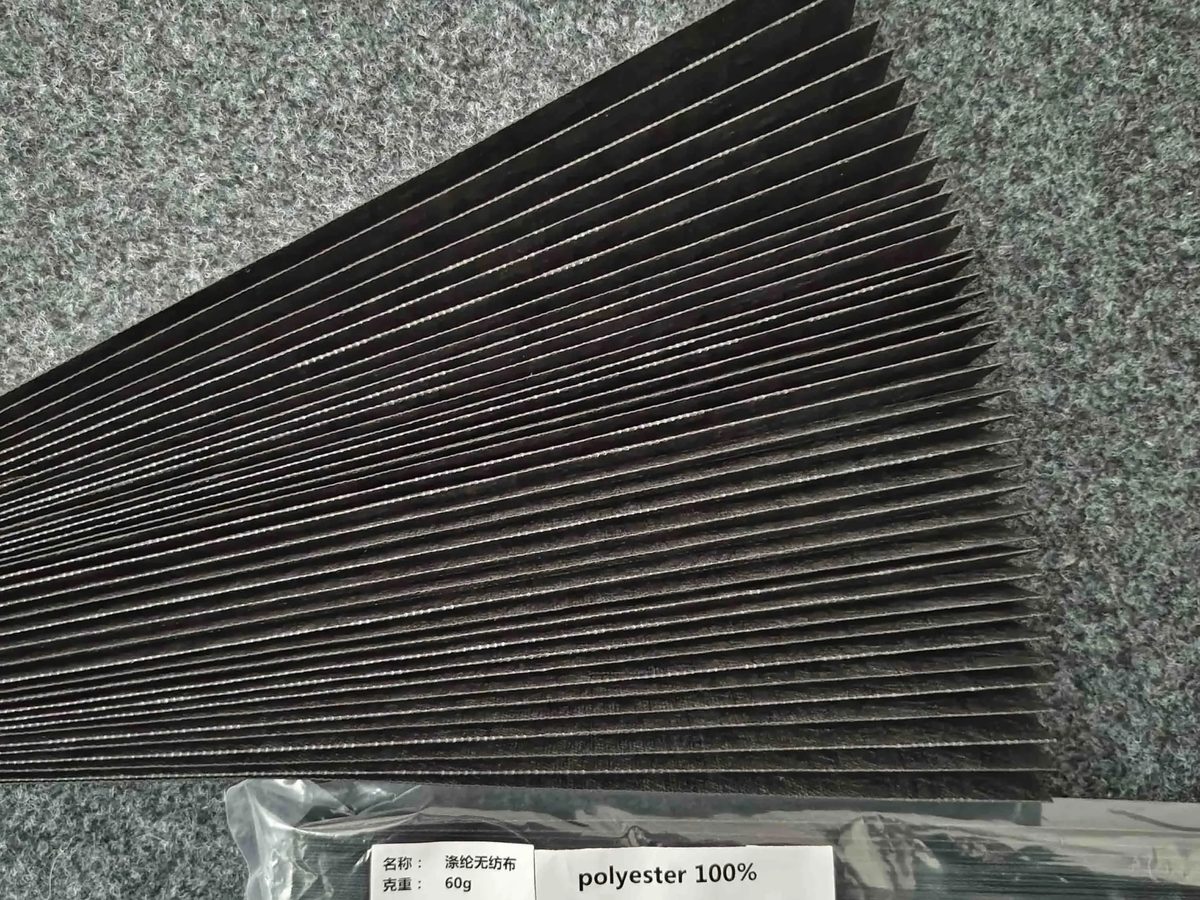
What 20-80 % does not tell you
| Position | Value | Effect on non-woven | Where it shows up |
|---|---|---|---|
| Floor | 20 | Lowest cost, least margin for process variation | Edge fraying within a season |
| Working middle | 20-80 % | Predictable performance at a normal price | Nothing to negotiate, nothing to explain |
| Ceiling | 80 % | Best performance, highest cost | Cost the end product may not recover |
Buyers default to the floor because it is the cheapest compliant answer. That is rational until the first claim, and then the saving is measured against a replacement shipment.
The figure that decides the outcome is not elongation itself but the tolerance around it. A supplier who quotes 20-80 % without a tolerance has not quoted a specification, and the first lot will define the tolerance for you.
How to measure elongation
The reference method here is Tear resistance, run to ISO 9073-4, with an acceptance of report. The method is the easy part; sampling and conditioning are where reports diverge.
Ask which instrument was used. For elongation, two instruments that both claim the same standard can differ by enough to move a marginal lot from pass to fail.
Record the measured value rather than pass or fail. A marginal pass on elongation tells you the process is running at the edge, which is the information you need before the next lot rather than after it.
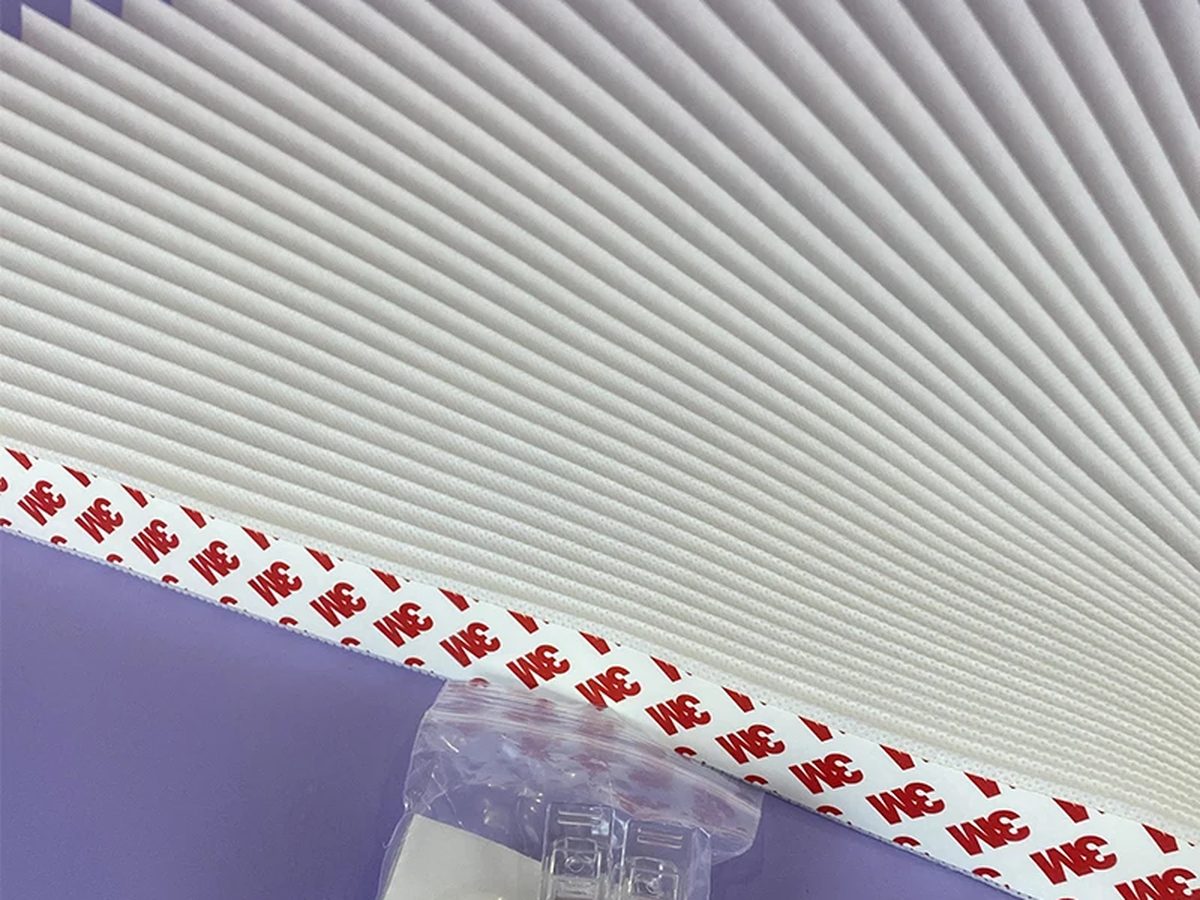
Elongation does not stand alone
Elongation moves with width (160-320 cm) and with hydrophilic / hydrophobic (specified, not assumed). Tightening one usually costs money in another, and a supplier who accepts every tolerance without comment has either not understood the interaction or is planning to substitute.
This is why a specification written as a list of independent tolerances is weaker than one written as a construction. The list lets a supplier satisfy each line while missing the product.
The clause to write for elongation
The line below is the version we can quote against without inventing anything. Elongation appears with a tolerance and a test, not as a standalone number.
Polypropylene spunbond, 80 gsm +/- 5 %, 160 cm, MD tensile >= 30 N/5 cm, CD >= 18 N/5 cm, UV stabilised, Pantone 19-3906 TCX
A specification without a test method is a preference. It becomes a requirement when the method and the acceptance value are both named, because then a substitution is visible.
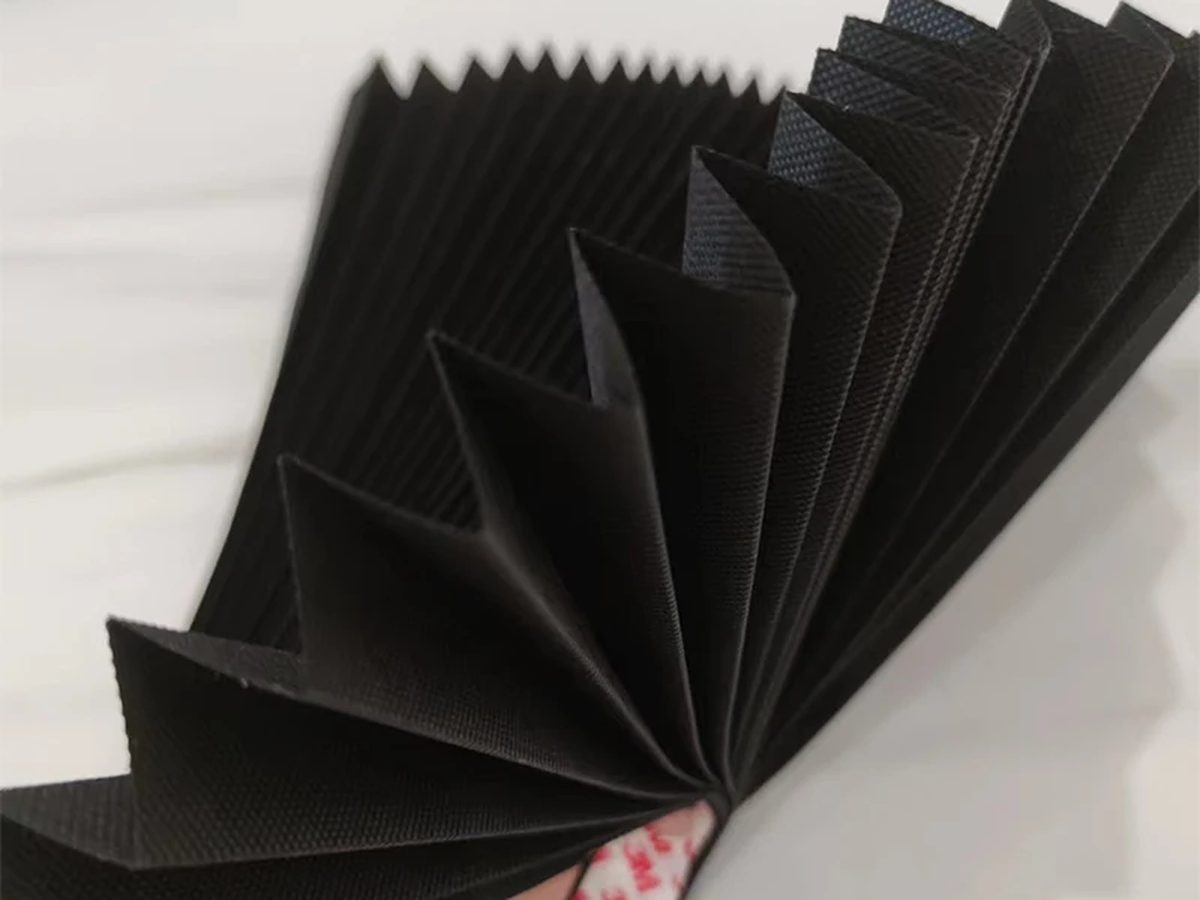
When elongation goes wrong
Edge fraying. Cut edges shed fibre into the product.
The cause is usually needle-punch or spunbond without edge sealing.
The test that catches it: Manual rub test and a tape-lift test on cut edges.
What to specify instead: Ultrasonic or heat-sealed edges for clean-room and medical-adjacent uses.
None of this is visible in a quotation. It becomes visible in a retained sample and a lot record, which is why the paperwork matters more than the price on this parameter.
Four questions about elongation, before you order
- What tolerance do you hold on elongation, and what did your last three lots measure against it?
- Which method do you use for tear resistance, and which laboratory signs the report?
- When elongation falls outside 20-80 %, do you rework, downgrade, or ship and hope?
- Which of width or hydrophilic / hydrophobic would you move first to hit a lower price?
The answers are more useful than a certificate, because they show whether the process is controlled or merely inspected. Full ranges for non-woven are on the product page, and the measurement regime is described on the quality control page.
Questions buyers ask before ordering
Is non-woven printable?
Yes, but surface energy matters. Corona treatment before printing prevents ink rub-off, and we specify it for any printed bag programme.
Do you quote MD and CD strength?
Yes, and you should insist on it. A single tensile figure usually means MD only, which hides the direction that fails.
Failure modes, and the test that catches each one
A specification only earns its keep if it names the failure it prevents. These are the two that matter for the non-woven figures on this page.
| Failure | What triggers it | Test to demand on the production lot |
|---|---|---|
| Edge fraying | Needle-punch or spunbond without edge sealing. | Tear resistance — ISO 9073-4; acceptance report |
| Low CD strength | Fibre orientation biased to machine direction, typical of cheap spunbond. | Colour fastness to rubbing — ISO 105-X12; acceptance >= grade 3-4 |
The other two, with acceptance numbers attached, are in the full failure analysis for non-woven. A supplier who cannot name the mode he sees most often is describing a catalogue, not a process.
From quotation to specification in seven lines
Leave the tolerance and the method out and every dispute is settled by whoever needs the goods more.
- Colour fastness (>= grade 3-4): state where in the band this order sits. The middle of the band is not what a tolerance is for.
- Hand: the figure you will accept inside the soft / crisp / embossed band, the tolerance on it, and the method used to measure it.
- Process (spunbond / spunlace / needle punch / SMS): name the number, not the word. If the answer only repeats the band, ask which point inside it is being offered for this order.
- Weight: 15-200 gsm is the market band. Fix the figure you will test at goods-in, and the instrument you will test it with.
- Who inspects: third-party, in-house or none, decided in advance, with the AQL level written down.
- Reference sample: the signed sample is the definition of the colour, not the photograph in the catalogue.
- Price validity: the period during which the quoted figure holds, and what happens to it when the raw-material index moves.
Need elongation specified and tested against your end use?
Send the end use, the quantity and the destination market, and we will come back with a specification that meets it, a price at your volume and the test reports that back it up. Samples are free for qualified programmes; we charge the courier only.
Related reading
Sample cut with your values on it · Neutral packing and private label · Consolidation, documents and lead times