PU leather is where “looks the same” costs the most. A bag that peels after eight months in a humid warehouse is not a quality complaint you can argue — it is a specification you did not write.
Thickness by application
| Application | Thickness | Backing |
|---|---|---|
| Garment / light accessories | 0.5-0.6 mm | Knitted |
| Bags and luggage | 0.8-1.2 mm | Woven or brushed |
| Furniture upholstery | 1.0-1.4 mm | Woven, high count |
| Automotive interior | 1.2-1.4 mm | Woven + hydrolytic stabiliser |
Hydrolysis: the failure nobody tests for
PU coatings degrade in warm humid conditions — the coating hydrolyses and the surface peels away from the backing. Standard abrasion tests will not catch it, because the material is intact until it is not.
Ask for an accelerated hydrolysis test: 70°C at 95% relative humidity for 7 days, then a peel strength check. Polyether-based PU resists hydrolysis far better than polyester-based PU, and the price difference is small compared with a container of returns.
Specification checklist
- Thickness with tolerance (±0.05 mm)
- Backing type and weight
- Coating chemistry (polyether vs polyester PU) — ask explicitly
- Martindale abrasion target (30,000+ for furniture)
- Peel strength ≥ 30 N/3 cm
- Colour fastness to rubbing, grade 4
- REACH SVHC declaration
Microfiber vs conventional PU
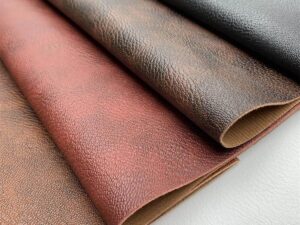
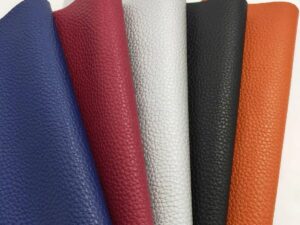
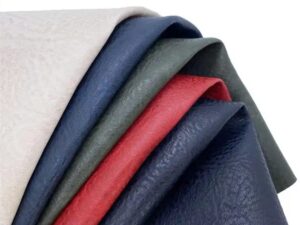
Microfiber suede uses a non-woven microfiber base that behaves much closer to real leather — better hand, better tear resistance, roughly 1.5-2× the price. For automotive and premium furniture it is usually the right choice; for promotional bags it is over-specified. Our PU and PVC leather range covers both, with thickness and abrasion data per article.
How price is built up
PU leather pricing is driven by backing weight, coating thickness and chemistry. A 0.8 mm article with a 100 g/m² knitted backing and 0.25 mm PU skin costs materially less than the same thickness with a 180 g/m² woven backing — and the second one is what holds its shape on a structured bag.
Storage and handling
Rolls should be stored vertically in a dry space below 30°C and 65% RH. Stacked horizontally under load, the coating takes a permanent impression that shows on the finished panel. If your warehouse is not climate controlled, polyether-based PU is not a preference, it is a requirement.
Cut panels should be used within a few weeks; PU is affected by plasticiser migration from PVC materials stored nearby, so keep the two apart.
Related guides
Tell us the end product and climate. For humid markets we will quote polyether-based PU by default, even though it costs slightly more.
Sample cut with your values on it · Neutral packing and private label · Consolidation, documents and lead times