Two suppliers can quote the same motorised blinds at the same headline figure and deliver different products. The difference is in the numbers nobody puts in the quotation, and in the tolerance behind the number that is quoted.
Why the headline number is the least useful one
Every quotation leads with power. It is easy to compare and it is the number the factory can hit most cheaply. But it tells you almost nothing on its own: power sets the frame, and the parameters below set whether the product survives its first year in service. A buyer who compares only the headline figure is buying a sample, not a supply agreement.
For motorised blinds, the practical rule is to fix the headline figure at the level your product needs and then spend your negotiating attention on noise and torque. Those two are where cheap goods differ from adequate goods, and they are usually absent from the quotation sheet.

The numbers that decide performance
| Parameter | Typical range | What it changes |
|---|---|---|
| Power | Li-ion battery / 12 V DC / hardwired | Battery avoids an electrician; hardwired avoids battery replacement. |
| Protocol | RF 433 / Zigbee / WiFi / Matter / Z-Wave | Protocol decides which smart home systems you can sell into. |
| Noise | <= 35 dB at 1 m | Guest rooms and bedrooms are unforgiving above 40 dB. |
| Torque | 1.2-3.0 Nm | Must be matched to blind width and weight; undersized motors stall. |
| Battery life | 300-500 cycles per charge | Real life is lower with heavy wooden blinds. |
| Limit setting | electronic with memory | Mechanical limits drift and are the main commissioning complaint. |
| Integration | Alexa / Google / HomeKit / control system | Decides whether you can sell to integrators. |
| Manual override | required | Essential for hotels and rentals, and often forgotten in the spec. |
Read the table as a set of trade-offs rather than a checklist. Moving any single line usually costs money somewhere else, and the cheapest way to hit one figure is often to let another slip.
Power
Typical range: Li-ion battery / 12 V DC / hardwired. Battery avoids an electrician; hardwired avoids battery replacement.
Protocol
Typical range: RF 433 / Zigbee / WiFi / Matter / Z-Wave. Protocol decides which smart home systems you can sell into.
Noise
Typical range: <= 35 dB at 1 m. Guest rooms and bedrooms are unforgiving above 40 dB.
Torque
Typical range: 1.2-3.0 Nm. Must be matched to blind width and weight; undersized motors stall.
Battery life
Typical range: 300-500 cycles per charge. Real life is lower with heavy wooden blinds.
How to write a motorised blinds specification that protects you
A specification is only useful if a substitution becomes visible. That means writing the construction and the performance together, and naming the test that proves each one. For motorised blinds, the clause has to pin noise and torque, because those two separate a compliant lot from an adequate one:
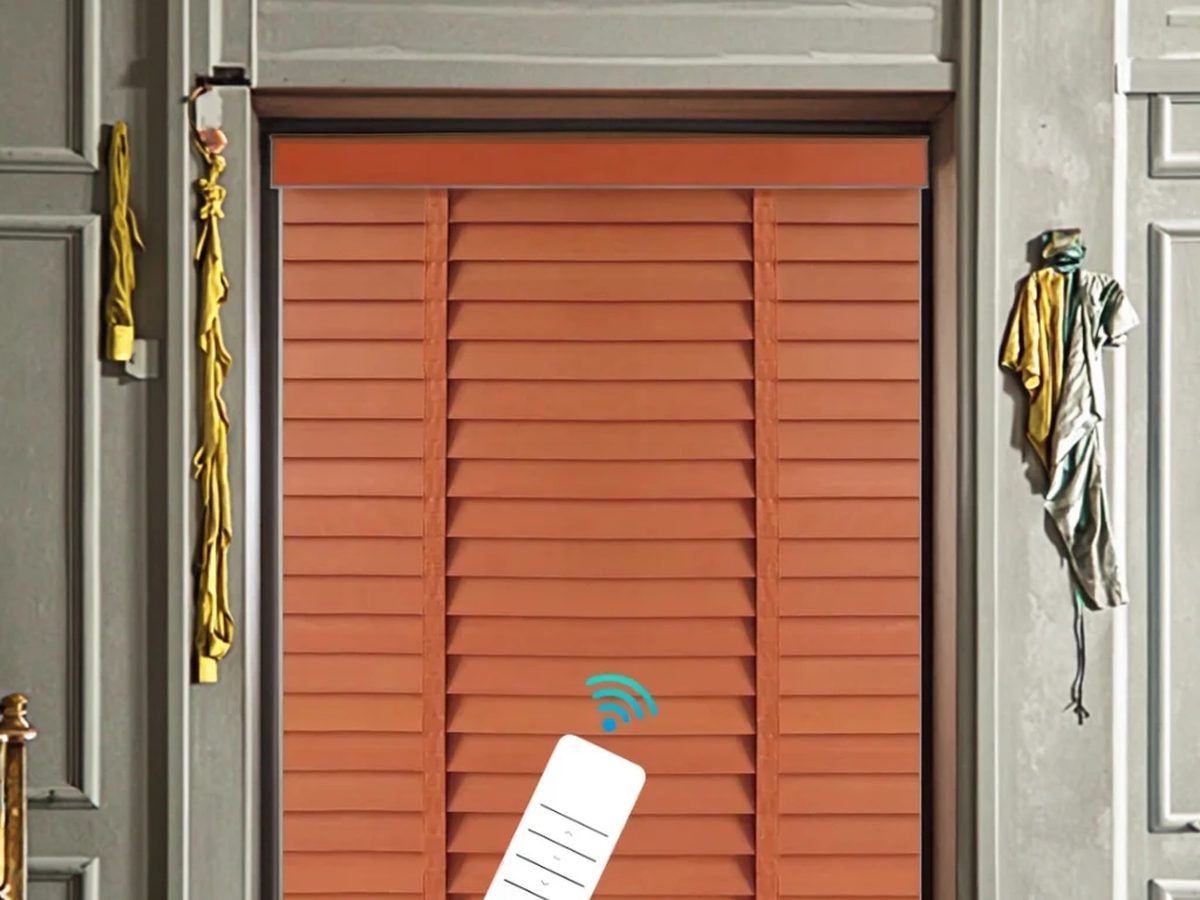
Motorised 50 mm basswood venetian blind, Li-ion battery, Zigbee 3.0, <= 32 dB, 2.0 Nm, electronic limits, manual override, 400 cycles per charge, EN 13120 safety
Note what is missing from that line: adjectives. No ‘high quality’, no ‘premium’, no ‘export grade’. Every clause is either a number with a tolerance or a named test. If a supplier cannot quote against a line written this way, that is information about the supplier.
Where the specification usually breaks down
The first failure is motor stall on wide blinds. The blind stops halfway or hums without moving. The cause is usually torque below what the blind weight and friction require. The test that exposes it before you order: Measure running current at full load and compare against the motor curve.
The second is battery drain. Batteries need charging every few weeks instead of twice a year. It comes from friction in the headrail, or a motor with high standby current. Test with Cycle test with a logged current draw over 300 cycles. and write the result into the purchase order, not just the enquiry.
Both failures share a pattern: they appear months after delivery, they are hard to attribute, and the cost lands on the buyer rather than the mill. That is exactly why the test belongs in the specification and the report belongs in the shipment file.
What to put in a motorised blinds enquiry
- End use and the conditions, which together decide where noise has to sit inside <= 35 dB at 1 m.
- The one figure that must hold, with operation noise named as the proof.
- Quantity per colour and per delivery, against a typical MOQ of 100-300 sets per model.
- Destination market, because compliance changes the construction, not just the paperwork.
- A physical standard viewed under a stated light source, not a screen proof.
With those five points we can quote against a real requirement instead of a generic range. Full ranges sit on the motorised blinds page, and the manufacturing side of the same question is on our quality control page.

Questions buyers ask before ordering
How many cycles will the battery really do?
300-500 on a 50 mm wooden blind, less on wide heavy blinds. We quote the tested figure and will send the cycle log; treat any figure above 600 with suspicion.
Can it work with Home Assistant?
Yes if you choose Zigbee or Matter. RF 433 needs a bridge and is not a smart-home answer, whatever the listing says.
Is a hub required?
For WiFi, no. For Zigbee, yes, unless your buyer already has one. This is the most common pre-sales question and the most common source of returns.
Failure modes worth a clause in the purchase order
Claims rarely come from a batch that was obviously wrong. They come from a integration figure that sat inside the quoted band and outside what the product needed.
| Failure | What triggers it | Test to demand on the production lot |
|---|---|---|
| Motor stall on wide blinds | Torque below what the blind weight and friction require. | Operation noise — 1 m, anechoic or quiet room; acceptance <= 35 dB |
| Battery drain | Friction in the headrail, or a motor with high standby current. | Cycle endurance — 1000 cycles with load; acceptance position drift <= 2 mm |
The other two, with acceptance numbers attached, are in the full failure analysis for motorised blinds. A supplier who cannot name the mode he sees most often is describing a catalogue, not a process.
Seven lines that turn a quotation into a specification
Most post-delivery arguments are not about quality. They are about a document that never said which figure would be measured, on which instrument, at whose cost.
- Manual override: required is the market band. Fix the figure you will test at goods-in, and the instrument you will test it with.
- Power (Li-ion battery / 12 V DC / hardwired): fix the value per shipment, and state who pays for the re-test if a lot lands outside it.
- Protocol: RF 433 / Zigbee / WiFi / Matter / Z-Wave is not an answer on its own. Ask for the last three lots’ actual readings and the spread behind them.
- Noise: agree the test method with the number. Two labs, two methods, two answers, one argument.
- Price validity: the period during which the quoted figure holds, and what happens to it when the raw-material index moves.
- Remedy: rework, replacement or credit, and the point at which each applies.
- Sample retention: one production sample per lot stays with the mill for twelve months. Claims are settled against it, not against memory.
Need this specified against your end use?
Send a window schedule or a single set size and we will return a quotation with the loading plan, the safety standard that applies to your market and the lead time for the colour you need. Catalogue and current price list on request.
Related reading
- Battery life in Motorised blinds
- Motorised Blinds for Rental and hospitality
- How to Test Motorised Blinds Before You Commit to a Container
Catalogue and current price list · Neutral packing and private label · Consolidation, documents and lead times