The same cotton and T/C fabric article, quoted by two mills, can differ by 18 % on composition alone — and both quotes are honest.
Cotton T/C: why the headline number is the least useful one
Every quotation leads with composition. But it tells you almost nothing on its own: composition sets the frame, and the parameters below set whether the product survives its first year in service.
For cotton/T.C, the practical rule is to fix the headline figure at the level your product needs and then spend your negotiating attention on construction and density.

The cotton T/C numbers that decide performance
| Parameter | Typical range | What it changes | Composition | 100 % cotton / 65-35 / 80-20 T/C | Shrinkage, hand, price and the care label all follow from this. | Yarn count | 16s / 20s / 21s / 32s / 40s | Finer yarn is smoother and weaker; 20s-21s is the workwear sweet spot. | Construction | 1/1 plain / 2/1 twill / ripstop | Twill drapes and hides stains; plain is cheapest and shows everything. | Density | 88×56 to 133×72 threads/inch | The real weight and durability driver, and the number suppliers omit. | Weight | 100-250 gsm | Workwear needs >= 180 gsm for a two-year life claim. | Shrinkage | <= 3 % pre-shrunk, <= 6 % raw | The number that decides whether the garment fits after the first wash. | Colour fastness to washing; measured on composition, 100 % cotton, 65-35 or 80-20 T/C | >= grade 4 | Dark shades in workwear fail here first. | Finish | mercerised / sanforised / easy-care / FR | Each finish adds cost and changes the hand; easy-care reduces strength. |
|---|
Composition
Typical range: 100 % cotton / 65-35 / 80-20 T/C. Shrinkage, hand, price and the care label all follow from this.
Yarn count
Typical range: 16s / 20s / 21s / 32s / 40s. Finer yarn is smoother and weaker; 20s-21s is the workwear sweet spot.
Construction
Typical range: 1/1 plain / 2/1 twill / ripstop. Twill drapes and hides stains; plain is cheapest and shows everything.
Density
Typical range: 88×56 to 133×72 threads/inch. The real weight and durability driver, and the number suppliers omit.
Weight
Typical range: 100-250 gsm. Workwear needs >= 180 gsm for a two-year life claim.
Composition on cotton T/C: range, tolerance and the clause
It also explains why composition is the first line a buyer loosens and the last line a claim refers to.
For Cotton and T/C fabric, the working range is 100 % cotton / 65-35 / 80-20 T/C.

How to choose a composition option
| Option | What it changes in cotton/T.C | When it is the right choice | 100 % cotton | Shrinkage is where it usually ends up. | Cost-led programmes with a short service life; held at composition, 100 % cotton, 65-35 or 80-20 T/C | 65-35 | The volume middle: enough margin for process variation without paying for headroom the end product cannot use; read against composition, 100 % cotton, 65-35 or 80-20 T/C | Most repeat programmes, and the safest default; written as composition 100 % cotton, 65-35 or 80-20 T/C | 80-20 T/C | The top of the family, where the process is controlled tightly enough to guarantee it; measured on composition, 100 % cotton, 65-35 or 80-20 T/C | A warranty, a tender, or a specification that cannot be renegotiated; held at composition, 100 % cotton, 65-35 or 80-20 T/C |
|---|
Composition is chosen by the application rather than by price, and a supplier who quotes one option as if it were interchangeable with another is quoting a different product.
A supplier who quotes 100 % cotton / 65-35 / 80-20 T/C without a tolerance has not quoted a specification, and the first lot will define the tolerance for you.
How to measure composition on cotton T/C
The reference method here is Shrinkage, run to ISO 6330 + ISO 5077, with an acceptance of <= 3 % after 3 washes (pre-shrunk).
The clause to write for composition on cotton T/C
65/35 polyester/cotton twill, 21s x 21s, 108×58, 240 gsm, 160 cm, sanforised shrinkage = grade 4, Pantone 19-4127 TCX
Yarn count: range, tolerance and the clause
It also explains why yarn count is the first line a buyer loosens and the last line a claim refers to.
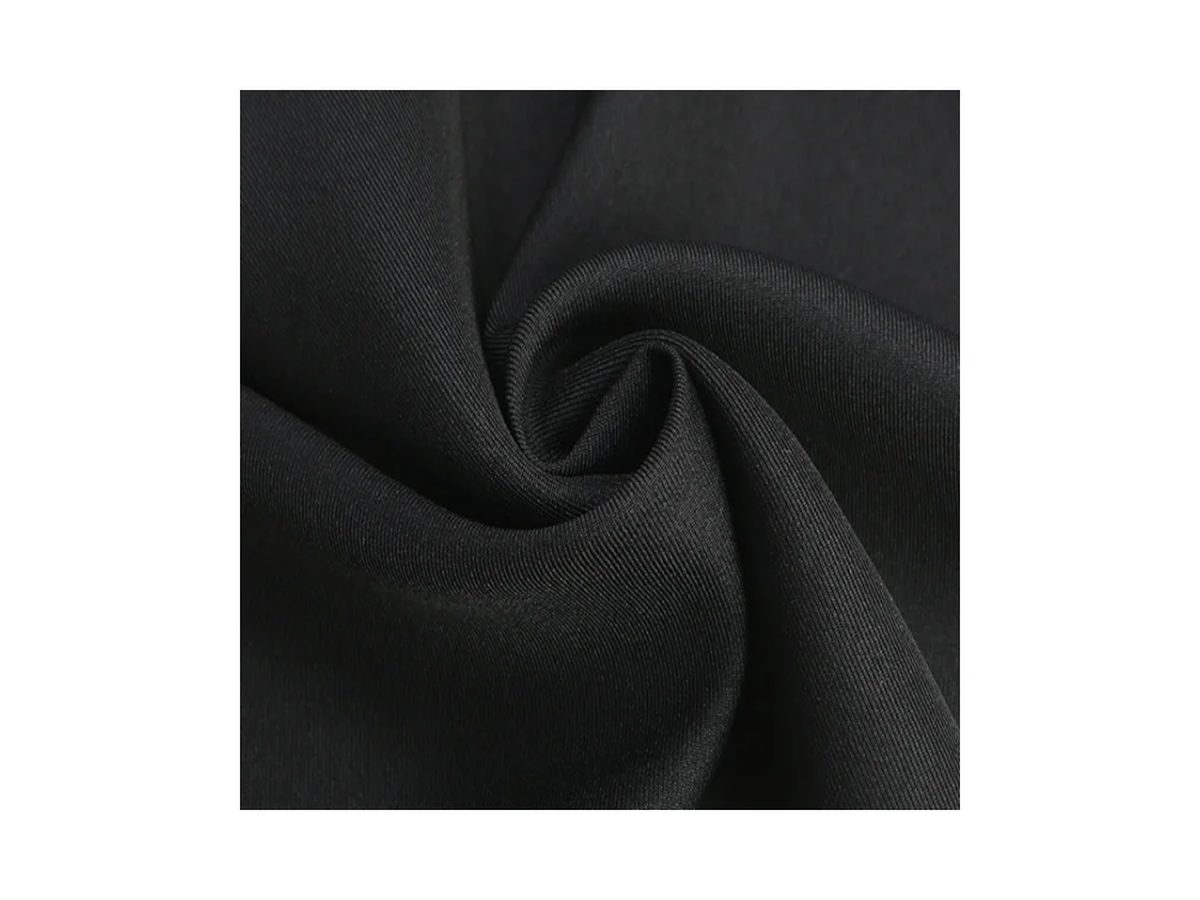
For Cotton and T/C fabric, the working range is 16s / 20s / 21s / 32s / 40s.
How to choose a yarn count option
| Option | What it changes in cotton/T.C | When it is the right choice | 16s | Shade variation between lots is where it usually ends up. | Cost-led programmes with a short service life; read against composition, 100 % cotton, 65-35 or 80-20 T/C | 21s | The volume middle: enough margin for process variation without paying for headroom the end product cannot use; written as composition 100 % cotton, 65-35 or 80-20 T/C | Most repeat programmes, and the safest default; measured on composition, 100 % cotton, 65-35 or 80-20 T/C | 40s | The top of the family, where the process is controlled tightly enough to guarantee it; held at composition, 100 % cotton, 65-35 or 80-20 T/C | A warranty, a tender, or a specification that cannot be renegotiated; read against composition, 100 % cotton, 65-35 or 80-20 T/C |
|---|
Yarn count is chosen by the application rather than by price, and a supplier who quotes one option as if it were interchangeable with another is quoting a different product.
The figure that decides the outcome is not yarn count itself but the tolerance around it. A supplier who quotes 16s / 20s / 21s / 32s / 40s without a tolerance has not quoted a specification, and the first lot will define the tolerance for you.
How to measure yarn count
The reference method here is Tear strength, run to ASTM D2261, with an acceptance of >= 20 N.
A marginal pass on yarn count tells you the process is running at the edge, which is the information you need before the next lot rather than after it.
The clause to write for yarn count
Yarn count appears with a tolerance and a test, not as a standalone number.
Construction: range, tolerance and the clause
It also explains why construction is the first line a buyer loosens and the last line a claim refers to.
For Cotton and T/C fabric, the working range is 1/1 plain / 2/1 twill / ripstop.

How to choose a construction option
| Option | What it changes in cotton/T.C | When it is the right choice | 1/1 plain | Tear at seam is where it usually ends up. | Cost-led programmes with a short service life; written as composition 100 % cotton, 65-35 or 80-20 T/C | 2/1 twill | The volume middle: enough margin for process variation without paying for headroom the end product cannot use; measured on composition, 100 % cotton, 65-35 or 80-20 T/C | Most repeat programmes, and the safest default; held at composition, 100 % cotton, 65-35 or 80-20 T/C | ripstop | The top of the family, where the process is controlled tightly enough to guarantee it; read against composition, 100 % cotton, 65-35 or 80-20 T/C | A warranty, a tender, or a specification that cannot be renegotiated; written as composition 100 % cotton, 65-35 or 80-20 T/C |
|---|
Construction is chosen by the application rather than by price, and a supplier who quotes one option as if it were interchangeable with another is quoting a different product.
The figure that decides the outcome is not construction itself but the tolerance around it. A supplier who quotes 1/1 plain / 2/1 twill / ripstop without a tolerance has not quoted a specification, and the first lot will define the tolerance for you.
How to measure construction
The reference method here is Tensile strength, run to ASTM D5034, with an acceptance of >= 350 N.
For construction, two instruments that both claim the same standard can differ by enough to move a marginal lot from pass to fail.
A marginal pass on construction tells you the process is running at the edge, which is the information you need before the next lot rather than after it.
The clause to write for construction
Construction appears with a tolerance and a test, not as a standalone number.
Density: range, tolerance and the clause
For Cotton and T/C fabric, the working range is 88×56 to 133×72 threads/inch.

What 88×56 to 133×72 threads/inch does not tell you
| Position | Value | Effect on cotton/T.C | Where it shows up | Floor | 88×56 to 133×72 threads/inch | Lowest cost, least margin for process variation; measured on composition, 100 % cotton, 65-35 or 80-20 T/C | Pilling on blends within a season | Working middle | 88×56 to 133×72 threads/inch | Predictable performance at a normal price; held at composition, 100 % cotton, 65-35 or 80-20 T/C | Nothing to negotiate, nothing to explain; read against composition, 100 % cotton, 65-35 or 80-20 T/C | Ceiling | 88×56 to 133×72 threads/inch | Best performance, highest cost; written as composition 100 % cotton, 65-35 or 80-20 T/C | Cost the end product may not recover; measured on composition, 100 % cotton, 65-35 or 80-20 T/C |
|---|
The figure that decides the outcome is not density itself but the tolerance around it. A supplier who quotes 88×56 to 133×72 threads/inch without a tolerance has not quoted a specification, and the first lot will define the tolerance for you.
How to measure density
The reference method here is Colour fastness to washing, run to ISO 105-C06, with an acceptance of >= grade 4.
A single sample from the top of a roll tells you about the top of that roll, and density varies more across a run than most buyers expect.
A marginal pass on density tells you the process is running at the edge, which is the information you need before the next lot rather than after it.
The clause to write for density
Density appears with a tolerance and a test, not as a standalone number.
Weight on cotton T/C: range, tolerance and the clause
For Cotton and T/C fabric, the working range is 100-250 gsm.

What 100-250 gsm does not tell you
| Position | Value | Effect on cotton/T.C | Where it shows up | Floor | 100 | Lowest cost, least margin for process variation; held at composition, 100 % cotton, 65-35 or 80-20 T/C | Shrinkage within a season | Working middle | 100-250 gsm | Predictable performance at a normal price; read against composition, 100 % cotton, 65-35 or 80-20 T/C | Nothing to negotiate, nothing to explain; written as composition 100 % cotton, 65-35 or 80-20 T/C | Ceiling | 250 gsm | Best performance, highest cost; measured on composition, 100 % cotton, 65-35 or 80-20 T/C | Cost the end product may not recover; held at composition, 100 % cotton, 65-35 or 80-20 T/C |
|---|
A supplier who quotes 100-250 gsm without a tolerance has not quoted a specification, and the first lot will define the tolerance for you.
How to measure weight on cotton T/C
The reference method here is Colour fastness to rubbing, run to ISO 105-X12, with an acceptance of >= grade 4.
For weight, two instruments that both claim the same standard can differ by enough to move a marginal lot from pass to fail.
The clause to write for weight on cotton T/C
How to write a cotton/T.C specification that protects you
For cotton/T.C, the clause has to pin construction and density, because those two separate a compliant lot from an adequate one:
65/35 polyester/cotton twill, 21s x 21s, 108×58, 240 gsm, 160 cm, sanforised shrinkage = grade 4, Pantone 19-4127 TCX
Cotton T/C: where the specification usually breaks down
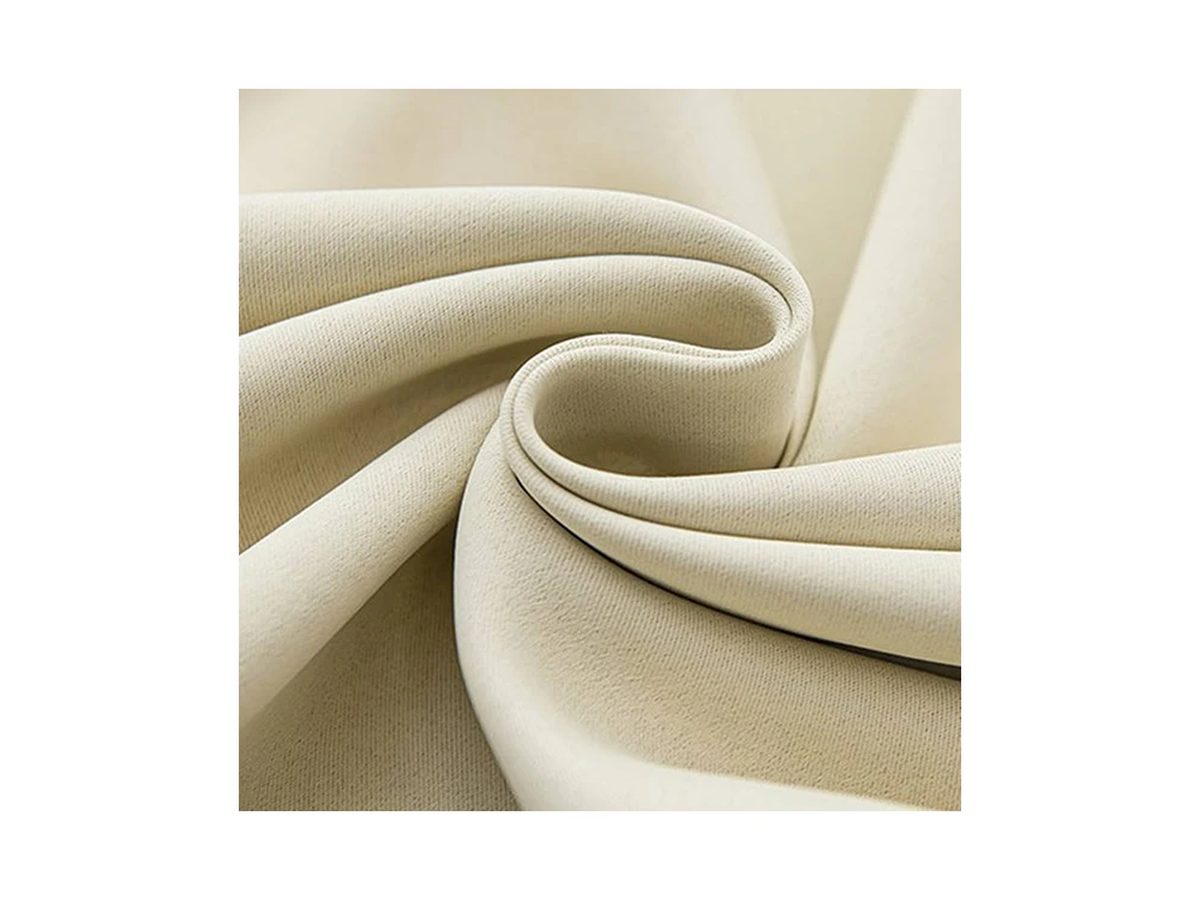
The first failure is shrinkage. Uniforms shrink a size after the first industrial wash. The cause is usually no sanforising, or sanforising settings not held between lots. The test that exposes it before you order: ISO 6330 at 60 C industrial cycle, 3 washes, then ISO 5077.
The second is shade variation between lots. Trousers from two deliveries do not match under shop lighting. It comes from dye lot change and metamerism, worst with t/c blends. Test with D65 and TL84 visual plus dE <= 1.0 spectrophotometer.
What to put in a cotton/T.C enquiry
- End use and the conditions, which together decide where construction has to sit inside 1/1 plain / 2/1 twill / ripstop.
- The one figure that must hold, with shrinkage named as the proof.
- Quantity per colour and per delivery, against a typical MOQ of 1000-2000 m per colour.
- Destination market, because compliance changes the construction, not just the paperwork On cotton T/C that is composition at 100 % cotton, 65-35 or 80-20 T/C.
- A physical standard viewed under a stated light source, not a screen proof For cotton and T/C fabric it is yarn count at 16s to 40s that settles it.
Full ranges sit on the cotton/T.C page, and the manufacturing side of the same question is on our quality control page.
Questions buyers ask before ordering
Can you hold tolerance at 100 % for tc specification explained on a repeat order?
On tc specification explained, the number to put on the PO is tolerance 100 %, with the method named alongside it.
What drives the price of tc specification explained at tolerance of 100 %?
On tc specification explained, we hold tolerance at 100 % across repeat lots.
Is 100 % achievable at our volume on tc specification explained?
On tc specification explained, our tolerance is 100 %.
Cotton T/C: failure modes worth a clause in the purchase order
| Failure | What triggers it | Test to demand on the production lot | Shrinkage | No sanforising, or sanforising settings not held between lots. | Tensile strength — ASTM D5034; acceptance >= 350 N | Shade variation between lots | Dye lot change and metamerism, worst with T/C blends. | Colour fastness to washing — ISO 105-C06; acceptance >= grade 4 |
|---|
The other two, with acceptance numbers attached, are in the full failure analysis for cotton/T.C.
Sourcing cotton T/C for a programme already in production?
Send the composition you are running now and the failure you are trying to design out. The reply names the test that separates the two options and what each one costs.
Products in this range
Related reading
- Oxford fabric: Four Failures Buyers Report, and the Tests That Catch Them
- How to Vet a Textile and Window Covering Supplier: Twelve Questions That Reveal the Factory
- Hotel Window Blinds Specification: What Project Consultants Actually Check
Sample cut with your values on it · Neutral packing and private label · Consolidation, documents and lead times