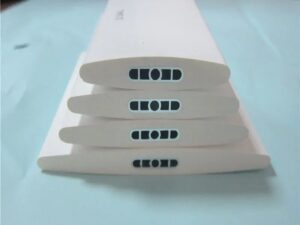
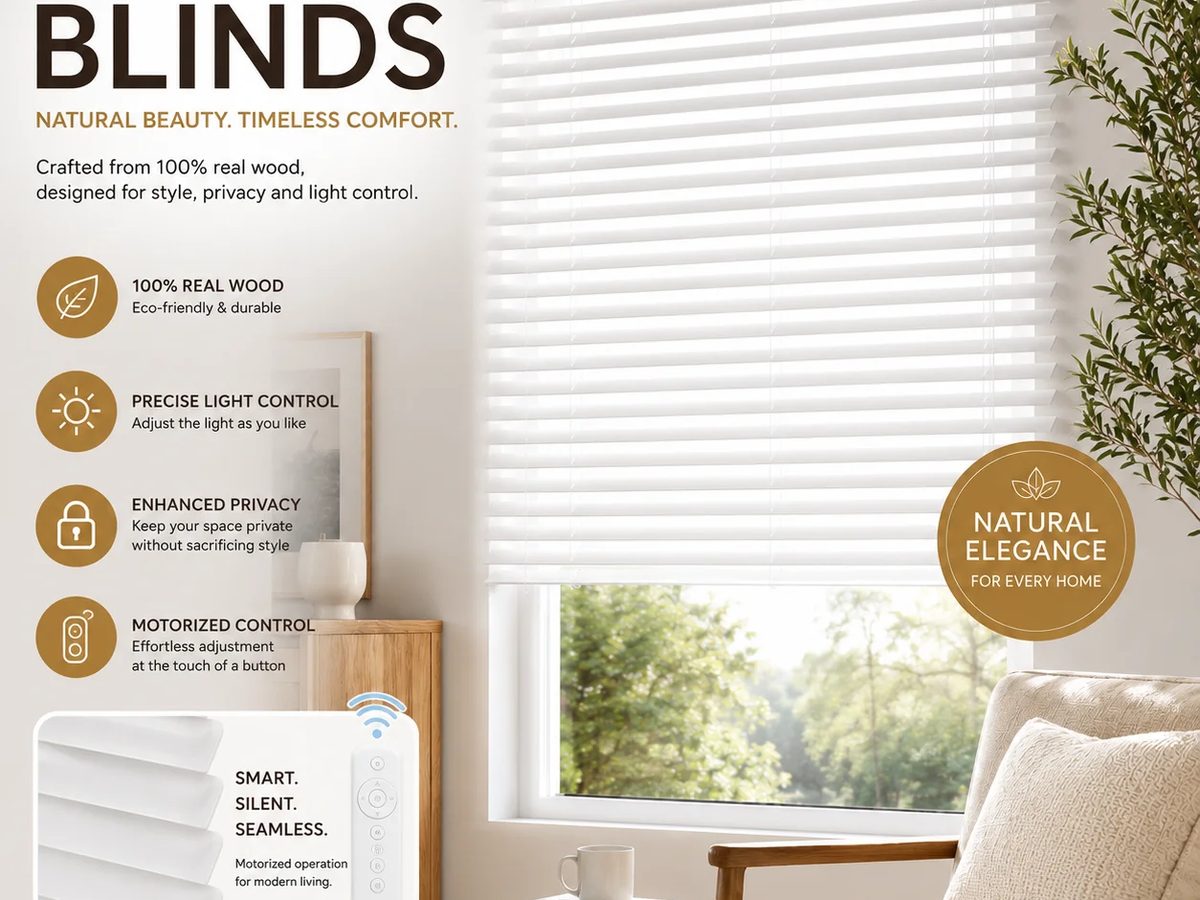
Of the four motorised blinds failures below, the motor stalling on a wide wooden blind is the one that reaches the end user before it reaches the inspection report.
Motorised blinds: why failures cluster around one or two parameters
In motorised blinds, the parameters in the table below are not independent. Noise and Torque between them explain most field failures, and both are routinely omitted from quotations because they are expensive to guarantee and easy to leave vague.
| Parameter | Typical range | Why it decides failure | Noise | <= 35 dB at 1 m | Guest rooms and bedrooms are unforgiving above 40 dB. | Torque | 1.2-3.0 Nm | Must be matched to blind width and weight; undersized motors stall. | Battery life | 300-500 cycles per charge | Real life is lower with heavy wooden blinds. | Limit setting | electronic with memory | Mechanical limits drift and are the main commissioning complaint. |
|---|
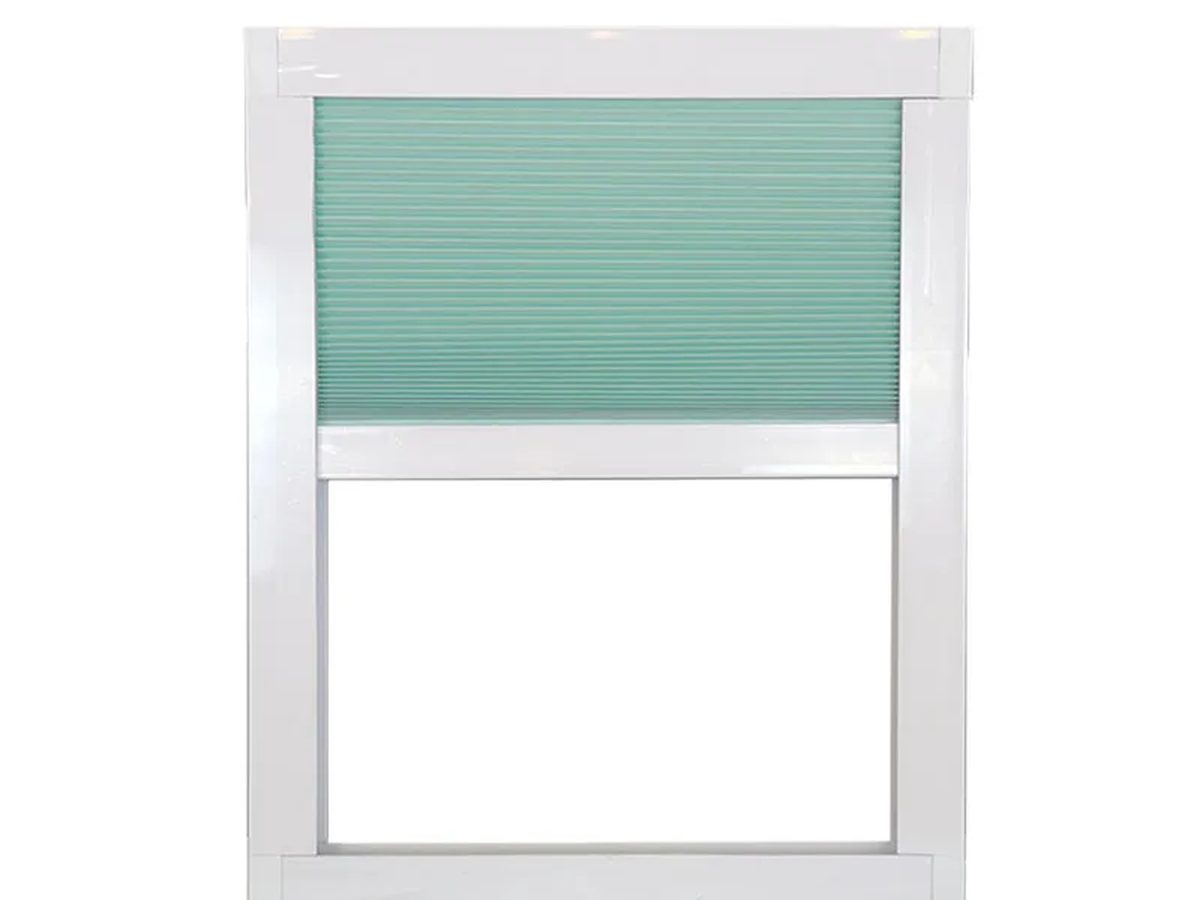
1. Motor stall on wide blinds
What you see. The blind stops halfway or hums without moving.
Why it happens. Torque below what the blind weight and friction require.
Measure running current at full load and compare against the motor curve.
What to specify instead. Size the motor to the widest blind in the range, not the average; add a margin for wooden slats.
2. Battery drain
What you see. Batteries need charging every few weeks instead of twice a year.
Why it happens. Friction in the headrail, or a motor with high standby current.
Cycle test with a logged current draw over 300 cycles.
What to specify instead. Lower-friction headrail, deep-sleep standby, and a realistic cycle figure in the datasheet.
3. Protocol incompatibility
What you see. The blind works on the app but not on the building system.
Why it happens. Proprietary RF presented as ‘smart’, or a gateway that is not certified for the system.
Bench test with the actual third-party controller before shipping.
What to specify instead. Specify a certified protocol and test with the buyer’s controller, not a demo unit.
4. Limit drift
What you see. The blind creeps past its top or bottom limit over months.
Why it happens. Mechanical limit switches or unstable encoder counts.
1000-cycle endurance with position measurement every 100 cycles.
What to specify instead. Electronic limits with non-volatile memory, and re-calibration as a documented service step.
Motorised blinds: building a test plan you will actually run
| Test | Method | Acceptance | Operation noise | 1 m, anechoic or quiet room | <= 35 dB | Cycle endurance | 1000 cycles with load | position drift <= 2 mm | Torque and current | full load | within motor curve | Battery cycles | 300 cycles | >= 80 % capacity retained | Protocol conformance | certification test | pass for declared protocol |
|---|
Motorised blinds: what the report should contain
- Power Li-ion battery, 12 V DC or hardwired — measured at three positions on the roll, recorded as a number rather than pass or fail On motorised blinds that is power at Li-ion battery, 12 V DC or hardwired.
- Protocol RF 433, Zigbee, WiFi or Matter — cut from the middle of the lot, not from the end of the roll For motorised blinds it is protocol at RF 433, Zigbee, WiFi or Matter that settles it.
- Noise 35 dB or less at 1 m — read at 23 C / 50 % RH after conditioning, not straight off the machine On motorised blinds, skipping this is what produces the motor stalling on a wide wooden blind.
- Torque 1.2-3.0 Nm — checked on production material, at in-process rather than only at pre-shipment For motorised blinds, the figure to write down is noise at 35 dB or less at 1 m.
- Battery life 300-500 cycles per charge — stated in the purchase order with the test method beside it On motorised blinds that is power at Li-ion battery, 12 V DC or hardwired.
- EN 60335-2-97 for drives, EN 300 220 for RF, EN 13120 for the blind itself — run to the method named above; the report travels with the lot For motorised blinds it is protocol at RF 433, Zigbee, WiFi or Matter that settles it.
Specification ranges for motorised blinds are on the product page.
Questions buyers ask before ordering
What happens to failure modes and tests if we need tolerance tighter than 1 m?
On failure modes and tests, the limit is 1 m.
Can you hold tolerance at 1 m for failure modes and tests on a repeat order?
On failure modes and tests, tolerance of 1 m is what the line holds without special setup, which is why it is the standard quotation.
What drives the price of failure modes and tests at tolerance of 1 m?
On failure modes and tests, below 1 m on tolerance the failure mode changes from appearance to function, and visual inspection stops helping.
The test plan for motorised blinds
The minimum set on motorised blinds
| Test | Method | Acceptance | Operation noise | 1 m, anechoic or quiet room | <= 35 dB | Cycle endurance | 1000 cycles with load | position drift <= 2 mm | Torque and current | full load | within motor curve | Battery cycles | 300 cycles | >= 80 % capacity retained | Protocol conformance | certification test | pass for declared protocol | IP rating | IEC 60529 | IP44 for bathroom use |
|---|
Sampling for motorised blinds, and where it goes wrong
For a first order of motorised blinds, take three positions along the run and one sample per colour, then test operation noise on all of them rather than on a composite.
Several motorised blinds results move by 10-20 % between a dry laboratory and a humid one, which is why two labs can disagree on the same material without either being wrong.
Reading a motorised blinds report properly
- Power Li-ion battery, 12 V DC or hardwired — measured at three positions on the roll, recorded as a number rather than pass or fail On motorised blinds, skipping this is what produces the motor stalling on a wide wooden blind.
- Protocol RF 433, Zigbee, WiFi or Matter — cut from the middle of the lot, not from the end of the roll For motorised blinds, the figure to write down is noise at 35 dB or less at 1 m.
- Noise 35 dB or less at 1 m — read at 23 C / 50 % RH after conditioning, not straight off the machine On motorised blinds that is power at Li-ion battery, 12 V DC or hardwired.
- Torque 1.2-3.0 Nm — checked on production material, at in-process rather than only at pre-shipment For motorised blinds it is protocol at RF 433, Zigbee, WiFi or Matter that settles it.
- Battery life 300-500 cycles per charge — stated in the purchase order with the test method beside it On motorised blinds, skipping this is what produces the motor stalling on a wide wooden blind.
- EN 60335-2-97 for drives, EN 300 220 for RF, EN 13120 for the blind itself — run to the method named above; the report travels with the lot For motorised blinds, the figure to write down is noise at 35 dB or less at 1 m.
The three tests buyers skip and regret on motorised blinds
For motorised blinds that usually means cycle endurance measured after the wash or exposure the product will actually see, because motor stall on wide blinds does not appear in a conditioned laboratory.
Battery drain is usually a construction failure rather than a material one.
Third, retention. It is the only way to know whether noise changed or the conditions did.
Turning test results into a purchase order clause on motorised blinds
Full parameter ranges are on the motorised blinds page; the checks that hold those ranges in production are described on the quality control page.
How often to re-test on motorised blinds
| Stage | What to test | Frequency | Development sample | All parameters in the specification; measured on power, Li-ion battery, 12 V DC or hardwired | Once per development | First production lot | All parameters, plus the end-use test; held at power, Li-ion battery, 12 V DC or hardwired | Every lot for the first three; read against power, Li-ion battery, 12 V DC or hardwired | Repeat lots | Critical parameters and the one that failed before; written as power Li-ion battery, 12 V DC or hardwired | Every lot | Annual | Full panel, including ageing where relevant; measured on power, Li-ion battery, 12 V DC or hardwired | Once a year, or after any process change; held at power, Li-ion battery, 12 V DC or hardwired |
|---|
Retained samples: the cheapest insurance in the order on motorised blinds
For motorised blinds, the sample should include the finish, not just the base material, because motor stall on wide blinds usually starts in the finish or the additive rather than the substrate.
The test plan for motorised blinds, by order size
| Order | Tests to run | What it establishes | Sample or trial | Operation noise | Whether the material can meet the requirement at all; read against power, Li-ion battery, 12 V DC or hardwired | First production order | Operation noise, Cycle endurance, Torque and current | The baseline every later lot is compared against; written as power Li-ion battery, 12 V DC or hardwired | Repeat orders | Operation noise plus the parameter that failed last time | Whether the process has drifted; measured on power, Li-ion battery, 12 V DC or hardwired | Annual or after a process change; held at power, Li-ion battery, 12 V DC or hardwired | Full panel | That nothing has moved in the background; read against power, Li-ion battery, 12 V DC or hardwired |
|---|
For motorised blinds, the one test never worth dropping is operation noise, because it is the one that predicts motor stall on wide blinds.
The claim file for motorised blinds, and how long to keep it
Claims on motorised blinds are lost on documentation far more often than on material. By the time the motor stalling on a wide wooden blind appears, the sample is gone and the motorised blinds lot is cut, so the file is the case.
- The signed specification, with power at Li-ion battery, 12 V DC or hardwired and protocol at RF 433, Zigbee, WiFi or Matter on the same page as the motorised blinds price.
- The sealed bulk approval sample for motorised blinds, dated — not the development sample.
- The lot record showing power as measured on motorised blinds, not as passed.
- Photographs of the motorised blinds consignment at goods-in, before the material was cut.
- The motorised blinds inspection report naming the method: EN 60335-2-97 for drives, EN 300 220 for RF, EN 13120 for the blind itself.
Keep the motorised blinds file for the warranty period plus one season — usually 24 months in export. A shelf costs nothing; a motorised blinds shipment without the file costs the whole order.
Two of the five are almost always missing on motorised blinds, and they are the two that decide it: the bulk approval sample and the measured power value.
Need motorised blinds quoted against your specification?
Send the power and the destination market. The reply states the range we hold, the price at that volume, and which test report travels with the goods.
Products in this range
Related reading
- Paulownia blinds and slats: Four Failures Buyers Report, and the Tests That Catch Them
- Landed Cost for Importers: The Six Lines Buyers Forget
- Bags Fabric Sourcing: 600D vs 1680D, Coating and Seam Failure
Catalogue and current price list · Neutral packing and private label · Consolidation, documents and lead times