Recovery, opacity in a squat test and colour fastness to sweat. The third one is the one buyers forget.
Opacity in a squat test is the requirement buyers forget, and it is decided by cover factor rather than by weight. Two fabrics at the same gsm can differ visibly under stretch.
The second is colour fastness to sweat, which is a separate test from wash fastness and the one that produces complaints after a few wears rather than after a wash.
The requirements this application imposes
- knitted fabric: Weight at 120-320 gsm — Apparel hand and opacity. Tolerance of +/- 5 % is normal, +/- 10 % is a claim waiting to happen.
- swimwear fabric: Stretch at 4-way, 80-120 % elongation — Two-way stretch is cheaper and wrong for a one-piece.
- Service life: Recovery, opacity in a squat test and colour fastness to sweat. The third one is the one buyers forget.
- Destination: the compliance regime changes the construction, not only the paperwork, so confirm the market before the sample is approved.

Candidate materials and where each one loses
| Material | Decisive parameter | Characteristic failure |
|---|---|---|
| knitted fabric | Weight: 120-320 gsm | Skew / torque |
| swimwear fabric | Stretch: 4-way, 80-120 % elongation | Spandex degradation in chlorine |
The table is a shortlist, not a ranking. In practice the choice is made by the failure you can service in the field, because that is the cost that repeats.
A specification you can send
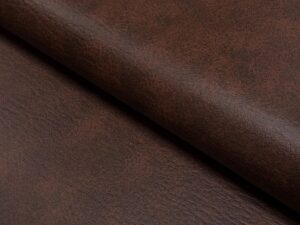
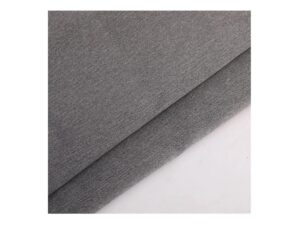
Knitted Fabric
Single jersey, 100 % combed cotton, 180 gsm +/- 5 %, open width 175 cm, stitch length 2.9 mm, shrinkage <= 5 % after 3 washes, skew <= 5 %, reactive dyed, Pantone 19-1664 TCX — that line covers the parameters that decide performance in this application. Adjust weight first if the requirement is unusual; it moves the price least and the outcome most.
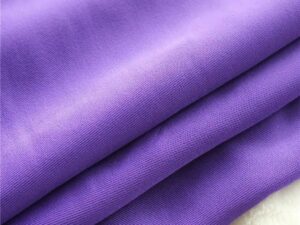
Swimwear Fabric
80/20 nylon/spandex, 220 gsm, 4-way stretch, recovery >= 90 % after 5 cycles, chlorine-resistant spandex, UPF 50+, colour fastness to chlorinated water >= grade 4, Pantone 19-2430 TCX — that line covers the parameters that decide performance in this application. Adjust stretch first if the requirement is unusual; it moves the price least and the outcome most.

Failure patterns to test before you commit
knitted fabric. Skew / torque: Side seams spiral after washing, garments twist on the body. Cause: high twist yarn, poor relaxation, or tubular fabric slit without rest. Test: AATCC 179 skew after home laundering, measure before and after.
swimwear fabric. Spandex degradation in chlorine: Swimsuits go limp and baggy after a season in a pool. Cause: standard spandex breaks down in chlorinated water; resistance is a polymer choice, not a finish. Test: ISO 105-E03 colour fastness plus retained elongation after 50 h chlorine immersion.
Sourcing notes
- Ask for samples in the exact construction. For knitted fabric that means structure at jersey / interlock / rib / fleece, not the nearest stock line.
- Run the sample through the process your factory will use: shrinkage and skew are the whole game.
- Confirm the destination market; REACH and 16 CFR 1120 both change the finish rather than the substrate.
- Check the MOQ per colour: 500-800 kg per colour for knitted fabric, 300-500 kg per colour or print for swimwear fabric.
Material pages for each option are linked from our category overview, and the manufacturing side is on the OEM/ODM page.

Questions buyers ask before ordering
What is the most common mistake in sportswear and activewear sourcing?
Specifying from a catalogue rather than from the service conditions. The second most common is accepting a development sample as evidence of production performance.
Can you supply samples for this application?
Yes, in the exact construction, with the courier charged at cost. We ask for the end use and the quantity so the sample matches the programme rather than the nearest stock line.
What the first sample should prove
- That structure sits inside jersey / interlock / rib / fleece on production material, not on a development sample.
- That dimensional change passes after the process your factory will use, not only in the laboratory condition.
- That the colour matches the approved standard under D65, on the actual knitted fabric lot that will ship.
- That the packing and MOQ (500-800 kg per colour) match what the quotation assumed.
Requirements by sub-application
| Sub-application | What dominates | Starting specification |
|---|---|---|
| T-shirts and basics | Shrinkage and skew are the whole game | Jersey 160-180 gsm, 100 % cotton, compacted |
| Competition and training swimwear | Chlorine resistance and compression | Nylon/spandex 200-240 gsm, chlorine-resistant |
Within one application category the requirements move. A bag for a laptop and a bag for a trolley share a construction and not a test plan, and the difference is decided by the load path rather than by the material.
Certification class by destination
The same product can be compliant in one market and not in another, and the difference is usually a finish or an additive rather than the substrate. Confirm the destination before the construction is fixed; changing it afterwards means re-sampling, not re-labelling.
| Market | What it usually changes |
|---|---|
| the EU | REACH — SVHC screening and azo dye limits; ask for the current candidate list check, not a generic certificate |
| the US | 16 CFR 1120 — corded window coverings are regulated; cordless or short-cord is the practical route |
| the UK | BS EN 13120 — mirrors the EU safety standard but is a separate declaration |
| Australia | Corded internal window coverings regulation — mandatory safety standard; cordless or tension device |
From quotation to specification in seven lines
Leave the tolerance and the method out and every dispute is settled by whoever needs the goods more.
- Structure: jersey / interlock / rib / fleece is the market band. Fix the figure you will test at goods-in, and the instrument you will test it with.
- Composition (100 % cotton / CVC / TC / 100 % polyester): fix the value per shipment, and state who pays for the re-test if a lot lands outside it.
- Weight: 120-320 gsm is not an answer on its own. Ask for the last three lots’ actual readings and the spread behind them.
- Stitch length: agree the test method with the number. Two labs, two methods, two answers, one argument.
- Sample retention: one production sample per lot stays with the mill for twelve months. Claims are settled against it, not against memory.
- Test reports: name the standard as well as the test. A pass on a development sample is not a pass on a production lot.
- Deviation rule: anything outside the agreed bands is reported before shipment, not after arrival.
Questions worth asking before the price is agreed
The questions below are the ones that cannot be answered from a catalogue, which is exactly why they are worth asking.
| Question | Answer that should worry you | Answer that holds up |
|---|---|---|
| Who signs the test report, and against which standard? | “Our QC department signs it.” | A named standard, a named method and a signature that belongs to somebody who can be asked again next year. |
| How do you hold composition inside 100 % cotton / CVC / TC / 100 % polyester? | “That is standard for us, no problem.” | The last three lots’ readings, the instrument used and who signs the report. Shrinkage beyond claim starts here. |
| What happens if stitch length misses the 2.6-3.4 mm requirement? | “It will not happen.” | A re-test clause, the tolerance on the re-test, and the point at which the lot is remade rather than discounted. |
Developing a product for sportswear and activewear?
Send the end use, the quantity and the destination market, and we will come back with a specification that meets it, a price at your volume and the test reports that back it up. Samples are free for qualified programmes; we charge the courier only.
Related reading
Sample cut with your values on it · Neutral packing and private label · Consolidation, documents and lead times