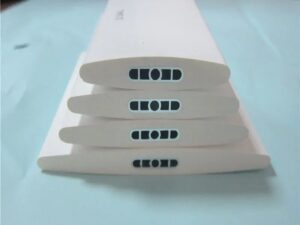
In residential refurbishment, basswood is judged on slat width at 25, 35, 50 or 63 mm; the same article fails there and passes in a different product.
What residential refurbishment demands
25 mm or 35 mm, stock stains.
Where the application changes the basswood
| Application | What dominates | Starting specification | Residential windows | Light control, warmth, child safety; measured on slat width, 25, 35, 50 or 63 mm | 50 mm, 2.8 mm, cordless or tension device; held at slat width, 25, 35, 50 or 63 mm | Hotel guest rooms | Durability, blackout options, maintenance | 50 mm, >= 2.8 mm, contract-grade cord | Heritage and period properties | Authentic look, custom widths | 35 mm or 50 mm, custom stain | Office interiors | Glare control, large widths | 50 mm, reinforced cord holes | Retail and hospitality | Brand colour match, volume | 50 mm, custom stain to Pantone | Residential refurbishment | Value, standard sizes | 25 mm or 35 mm, stock stains |
|---|
Basswood: the two parameters that matter most here
For this use, moisture content is decisive because the single most important number.
Basswood: failure patterns specific to this use
Warping and bowing
The cause is moisture content outside 8-12 %, or slats packed before equalising. Test with Moisture meter on 10 slats per carton plus a 48 h conditioning test at 23 C / 50 % RH. and specify: Buy on measured moisture content, require kiln-drying records, and insist on 7 days of equalising before packing.
Colour mismatch between slats
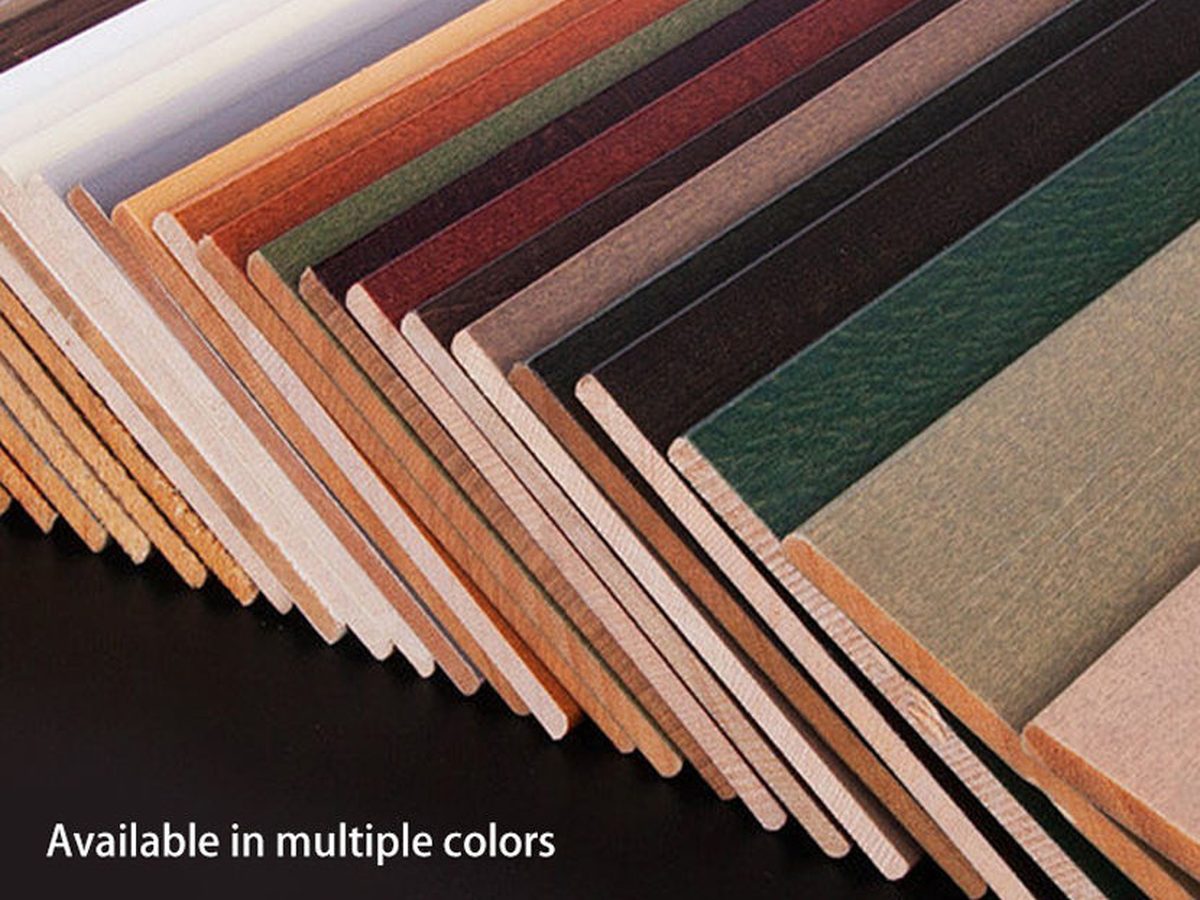
The cause is stain bath drift and mixing slats from two production days. Test with Visual under D65 on an assembled blind, plus dE <= 1.5 against the approved standard. and specify: One stain batch per order, slat numbering, and assembly from a single batch.
Basswood: specifying for the application, not the catalogue
- Slat width 25, 35, 50 or 63 mm — measured at three positions on the roll, recorded as a number rather than pass or fail On basswood that is slat width at 25, 35, 50 or 63 mm.
- Slat thickness 2.3-3.2 mm — cut from the middle of the lot, not from the end of the roll For basswood slats it is slat thickness at 2.3-3.2 mm that settles it.
- Moisture content 8-12 % — read at 23 C / 50 % RH after conditioning, not straight off the machine On basswood, skipping this is what produces warping after the first heating season.
- Warp tolerance 1.5 mm per metre — checked on production material, at in-process rather than only at pre-shipment For basswood slats, the figure to write down is moisture content at 8-12 %.
- ISO 9424 for dimensions, EN 13501-1 for reaction to fire, ISO 105 for colour fastness — run to the method named above; the report travels with the lot On basswood that is slat width at 25, 35, 50 or 63 mm.
Questions buyers ask before ordering
What drives the price of basswood for residential refurbishment at tolerance of 25 mm?
On basswood for residential refurbishment, tolerance sits at 25 mm for this construction.
Is 25 mm achievable at our volume on basswood for residential refurbishment?
On basswood for residential refurbishment, the figure for tolerance is 25 mm, measured at pre-shipment and written on the lot record rather than the brochure.
How do you verify tolerance against 25 mm on basswood for residential refurbishment?
On basswood for residential refurbishment, the value is 25 mm, and it holds for the fabric as specified.
Basswood: when the first specification fails, change this first
- Change the parameter, not the material. Moving moisture content from the bottom of 8-12 % to the middle fixes most failures at a fraction of the cost of a substitution.
- Change the finish or the additive. Warping and bowing is usually a finish problem; the substrate is often adequate.
- Change the construction. A seam, a fold or a fixing point fails before the material does in most assembled products For basswood slats it is slat thickness at 2.3-3.2 mm that settles it.
- Change the material. Do this last, and take the whole programme through re-approval when you do On basswood, skipping this is what produces warping after the first heating season.
Basswood: what the application will not forgive
Residential refurbishment has one requirement that cannot be traded against price: value, standard sizes.
Basswood: failure modes worth a clause in the purchase order
| Failure | What triggers it | Test to demand on the production lot | Cord hole tearing | Thickness below 2.5 mm or holes drilled too close to the edge. | Moisture content — oven-dry method / pin meter; acceptance 8-12 %; read against slat width, 25, 35, 50 or 63 mm | Warping and bowing | Moisture content outside 8-12 %, or slats packed before equalising; written as slat width 25, 35, 50 or 63 mm | Warp — 48 h at 23 C / 50 % RH; acceptance <= 1.5 mm per 1 m; measured on slat width, 25, 35, 50 or 63 mm |
|---|
Writing the residential refurbishment order against basswood
For residential refurbishment, three numbers on basswood slats do most of the work, and none of them is the headline figure on the datasheet.
- Slat width: 25, 35, 50 or 63 mm. Below the low end of that band on basswood, warping after the first heating season arrives early; above it, the basswood price steps up without changing the failure rate.
- Slat thickness: 2.3-3.2 mm. This figure decides whether the basswood survives a season of residential refurbishment rather than a single inspection.
- Moisture content: 8-12 %. Tightening moisture content is where a basswood quotation gains its reputation and where most of the dispute cost is avoided in advance.
- Warp tolerance: 1.5 mm per metre on basswood slats. Ask for that basswood figure on the lot record, not on the sample card.
Write those four lines into the residential refurbishment order and two things change on basswood: the supplier stops quoting the catalogue, and the arrival argument moves from “is it acceptable” to “does it match the line”. Only the second can be settled with a document, and only if slat width at 25, 35, 50 or 63 mm is on the basswood order.
For residential refurbishment in basswood slats, the inspection point matters as much as the figure. The slat width reading taken at goods-in is not the reading the user experiences, because warping after the first heating season moves between the two.
What goes wrong first when basswood reaches residential refurbishment
In residential refurbishment, the complaint that arrives first is warping after the first heating season. It is the predictable result of slat width sitting at the bottom of 25, 35, 50 or 63 mm while everything else on the basswood specification is met.
The mechanism on basswood decides where you inspect it. Slat width is measured on the roll at 25, 35, 50 or 63 mm; the user sees the same figure after a season in residential refurbishment, and the drop between them depends on slat width, which is not on most basswood datasheets.
So the inspection that catches it is not the final one for basswood. Take the slat width at 25, 35, 50 or 63 mm reading on basswood slats at in-process, on production material, and record the number rather than pass or fail.
One line covers this on basswood slats: slat width at 25, 35, 50 or 63 mm, measured at in-process, recorded per lot. That is the whole difference between a basswood claim and a conversation.
Packing and documents for residential refurbishment basswood
The basswood slats order is usually lost in the last three hundred metres, between the loading bay and the line. Three decisions carry it.
- Roll or pack format. basswood travelling loose arrives with the outer laps crushed, and the first ten metres of every basswood roll become waste. Specify a core and a basswood carton height that stacks.
- Moisture, not weight. A container on a tropical route sweats, and warping after the first heating season is what arrives three weeks later at 90 % RH. A desiccant bag per basswood carton costs less than the basswood claim.
- One basswood slats document that names slat width. The invoice, the packing list and the inspection report should all quote slat width at 25, 35, 50 or 63 mm; when they disagree, the broker delays the basswood container.
At arrival, inspect the basswood before you cut. The reading that matters for residential refurbishment is moisture content at 8-12 %, and it is cheapest to take on the roll, with the packing list in hand.
Retain one unopened basswood carton per lot for thirty days — it is the only clean evidence if the warping after the first heating season turns out to be transit damage rather than production.
Need basswood quoted against your specification?
Send the slat width and the destination market. The reply states the range we hold, the price at that volume, and which test report travels with the goods.
Products in this range
Related reading
- Finished venetian blinds: Four Failures Buyers Report, and the Tests That Catch Them
- Shipping Textile and Window Covering from China: Container Maths, Packaging and Damage Control
- Knitted Fabric Sourcing Guide: Gauge, Stretch and Shrinkage Control
Catalogue and current price list · Neutral packing and private label · Consolidation, documents and lead times