Retail frontage looks like a straightforward use until the first claim. The requirements below are the ones that decide whether the product survives its warranty.
What retail frontage demands
The requirement. Security and display control.
The specification that meets it. 114 mm, reinforced.
That combination is a starting point, not a final answer. The adjustments below come from programmes in this application where the first specification passed the lab and failed in service.
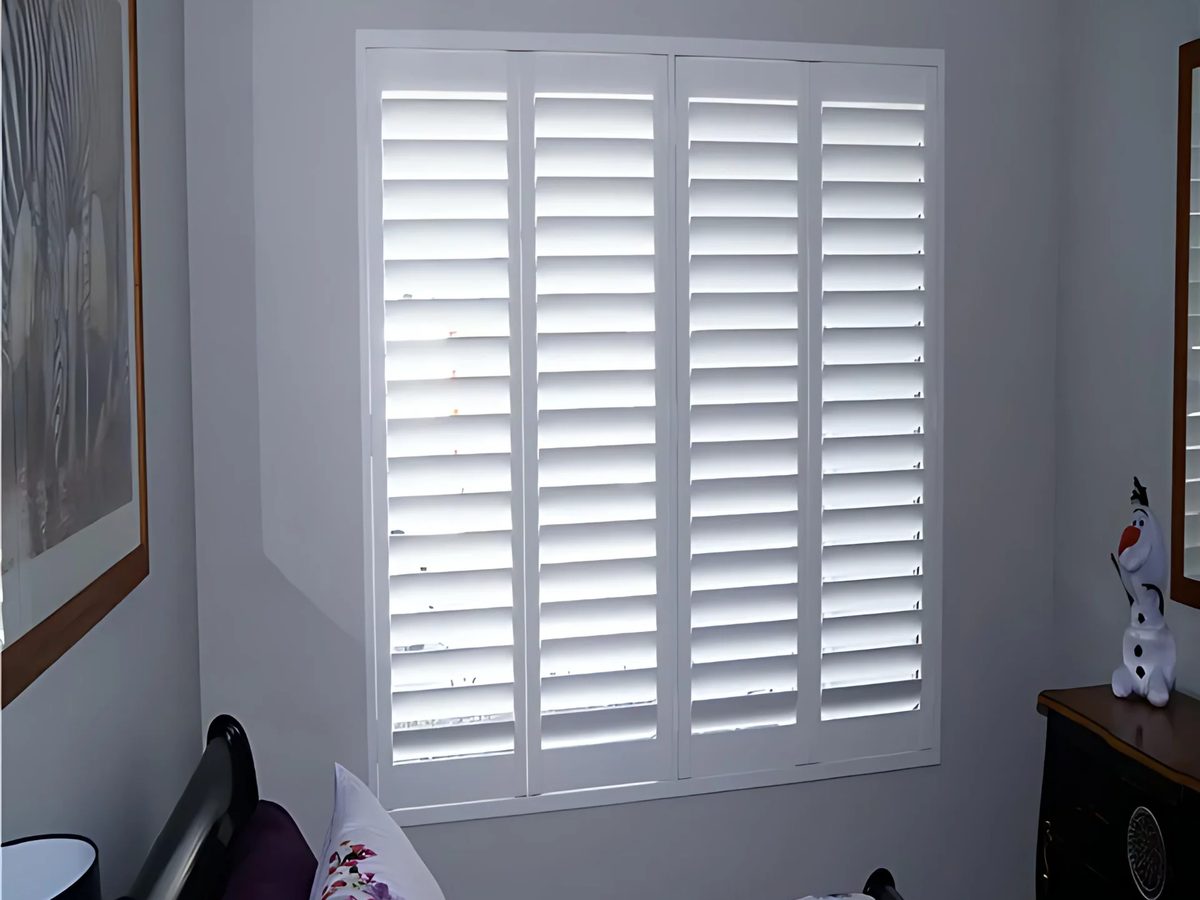
Where the application changes the material
| Application | What dominates | Starting specification |
|---|---|---|
| Residential premium | Light control, privacy, property value | 89 mm basswood, hidden hinge, L-frame |
| Bathrooms | Moisture resistance | 63 mm PVC, Z-frame |
| Heritage properties | Authentic proportions | 63 mm or 89 mm, custom paint |
| Hotel suites | Durability, blackout, maintenance | 89 mm, contract hinge, painted finish |
| Office and boardrooms | Glare, privacy, large openings | 89/114 mm, multi-panel |
| Retail frontage | Security and display control | 114 mm, reinforced |
The two parameters that matter most here
For this use, material is decisive because wood is premium; pvc suits wet rooms; mdf is mid-market. In practice that means setting a floor rather than a range: the bottom of the range is where the claims come from.
The second is panel configuration. Panel count drives hinge count and light-gap performance. It is also the parameter most often missing from a quotation, so it is the first thing to add to your enquiry.
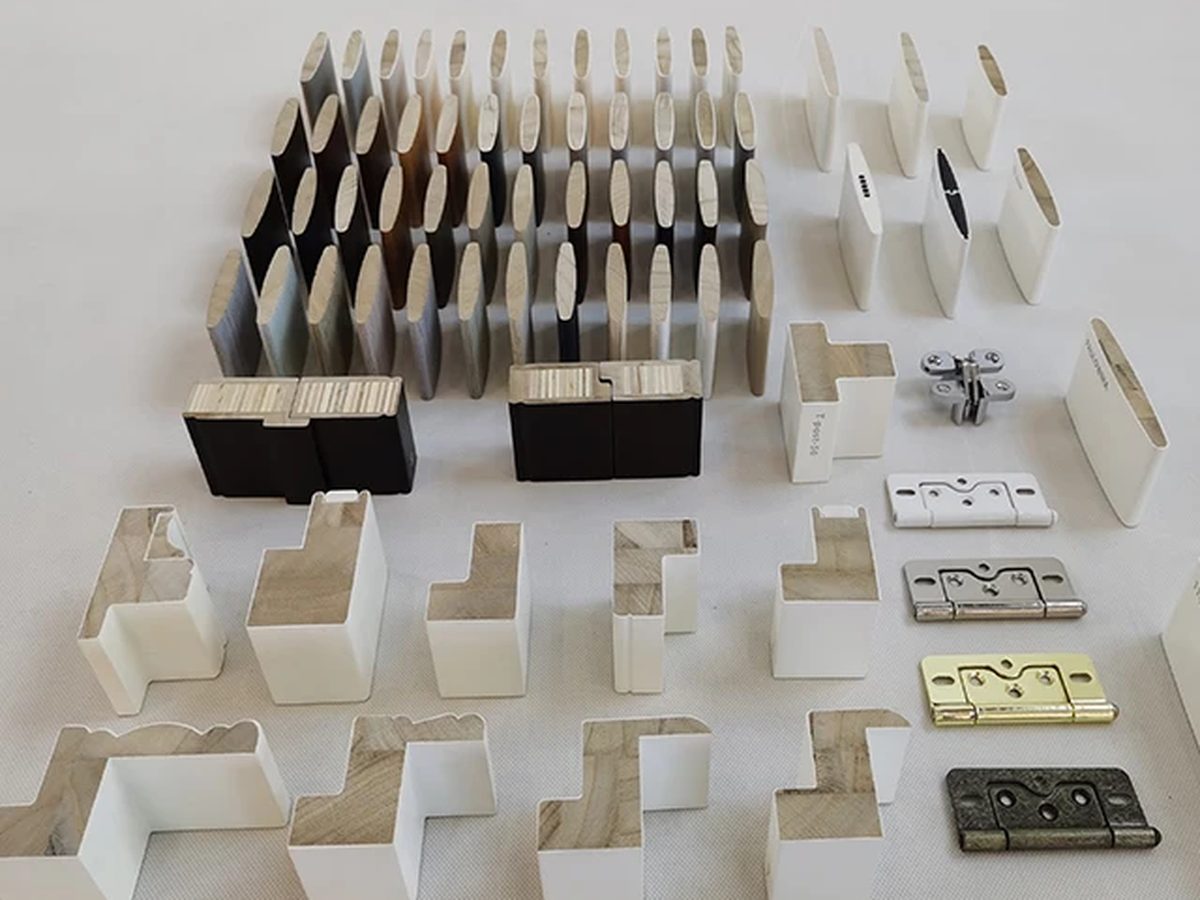
Failure patterns specific to this use
Visible light gaps
Daylight shows through between panels and frame. The cause is frame out of square, or panels machined without a jig. Test with Assemble on a flat table, measure gaps at three heights. and specify: Jig-based machining plus a final assembly check; specify <= 3 mm and inspect every unit.
Louver sag
Wide louvers droop in the middle. The cause is louver width beyond the material’s stiffness, or too few tilt pins. Test with Load test at the louver centre; measure deflection. and specify: Limit louver width by material: 89 mm for basswood, 114 mm only with a reinforced core.
Specifying for the application, not the catalogue
- Write the service conditions down: security and display control.
- Ask for the test that reproduces those conditions, not the generic test.
- Sample in the exact construction, not the closest stock item.
- Run the sample through the process your factory will use, including washing or assembly.
- Keep the approved sample, labelled, for the life of the programme.
The full range is on the shutters page. If you are developing a product in this application, our applications overview shows how the construction behaves once it is made up.
Questions buyers ask before ordering
Which louver width should I stock?
89 mm covers 80 % of residential demand. 114 mm is a premium upgrade that needs a deeper frame, so stock it only if you sell design-led projects.
Can shutters be fitted inside a recess?
Yes with an L-frame. Outside the recess with a Z-frame. The measuring method differs and getting it wrong is the most common installation complaint.
What light gap is acceptable?
3 mm or less between panels. Buyers inspect this first, and it is the clearest signal of machining quality.
When the first specification fails, change this first
Buyers often respond to a failure by changing material. That is the most expensive lever and usually the wrong first move. Work through the sequence below before changing supplier or substrate.
- Change the parameter, not the material. Moving material from the bottom of basswood / PVC / MDF / hybrid to the middle fixes most failures at a fraction of the cost of a substitution.
- Change the finish or the additive. Visible light gaps is usually a finish problem; the substrate is often adequate.
- Change the construction. A seam, a fold or a fixing point fails before the material does in most assembled products.
- Change the material. Do this last, and take the whole programme through re-approval when you do.
What the application will not forgive
Retail frontage has one requirement that cannot be traded against price: security and display control. Everything else is negotiable to some degree. Buyers who treat that line as a cost decision usually meet it again as a claim.
Questions worth asking before the price is agreed
The questions below are the ones that cannot be answered from a catalogue, which is exactly why they are worth asking.
| Question | Answer that should worry you | Answer that holds up |
|---|---|---|
| Who signs the test report, and against which standard? | “Our QC department signs it.” | A named standard, a named method and a signature that belongs to somebody who can be asked again next year. |
| How do you hold light gap at <= 3 mm between panels? | “That is standard for us, no problem.” | The last three lots’ readings, the instrument used and who signs the report. Louver sag starts here. |
| What happens if finish misses the painted / stained / primed requirement? | “It will not happen.” | A re-test clause, the tolerance on the re-test, and the point at which the lot is remade rather than discounted. |
Failure modes worth a clause in the purchase order
Claims rarely come from a batch that was obviously wrong. They come from a tilt rod figure that sat inside the quoted band and outside what the product needed.
| Failure | What triggers it | Test to demand on the production lot |
|---|---|---|
| Paint bridging | Paint applied after assembly without clearing the gaps. | Light gap — assembly measurement; acceptance <= 3 mm |
| Visible light gaps | Frame out of square, or panels machined without a jig. | Hinge cycles — 10 000 open/close; acceptance no torque loss |
The other two, with acceptance numbers attached, are in the full failure analysis for shutters. A supplier who cannot name the mode he sees most often is describing a catalogue, not a process.
Developing a product for retail frontage?
Send a window schedule or a single set size and we will return a quotation with the loading plan, the safety standard that applies to your market and the lead time for the colour you need. Catalogue and current price list on request.
Related reading
Catalogue and current price list · Neutral packing and private label · Consolidation, documents and lead times