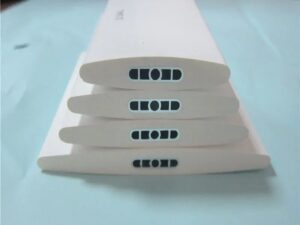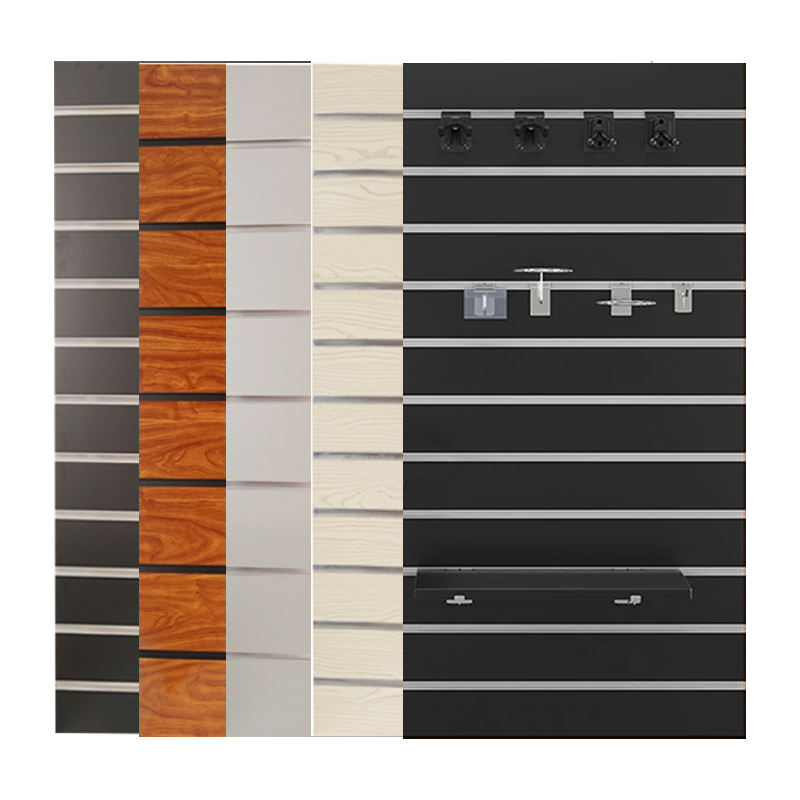
Of the four shutters failures below, light leaking through a panel gap is the one that reaches the end user before it reaches the inspection report.
Shutters: why failures cluster around one or two parameters
In shutters, the parameters in the table below are not independent. Material and Panel configuration between them explain most field failures, and both are routinely omitted from quotations because they are expensive to guarantee and easy to leave vague.
| Parameter | Typical range | Why it decides failure | Material | basswood / PVC / MDF / hybrid | Wood is premium; PVC suits wet rooms; MDF is mid-market. | Panel configuration | 1-4 panels per opening | Panel count drives hinge count and light-gap performance. | Hinge | hidden / aluminium / stainless | Hidden hinges cost more and eliminate the visible line. | Light gap | <= 3 mm between panels | The number buyers inspect first, and the one that reveals poor machining. |
|---|
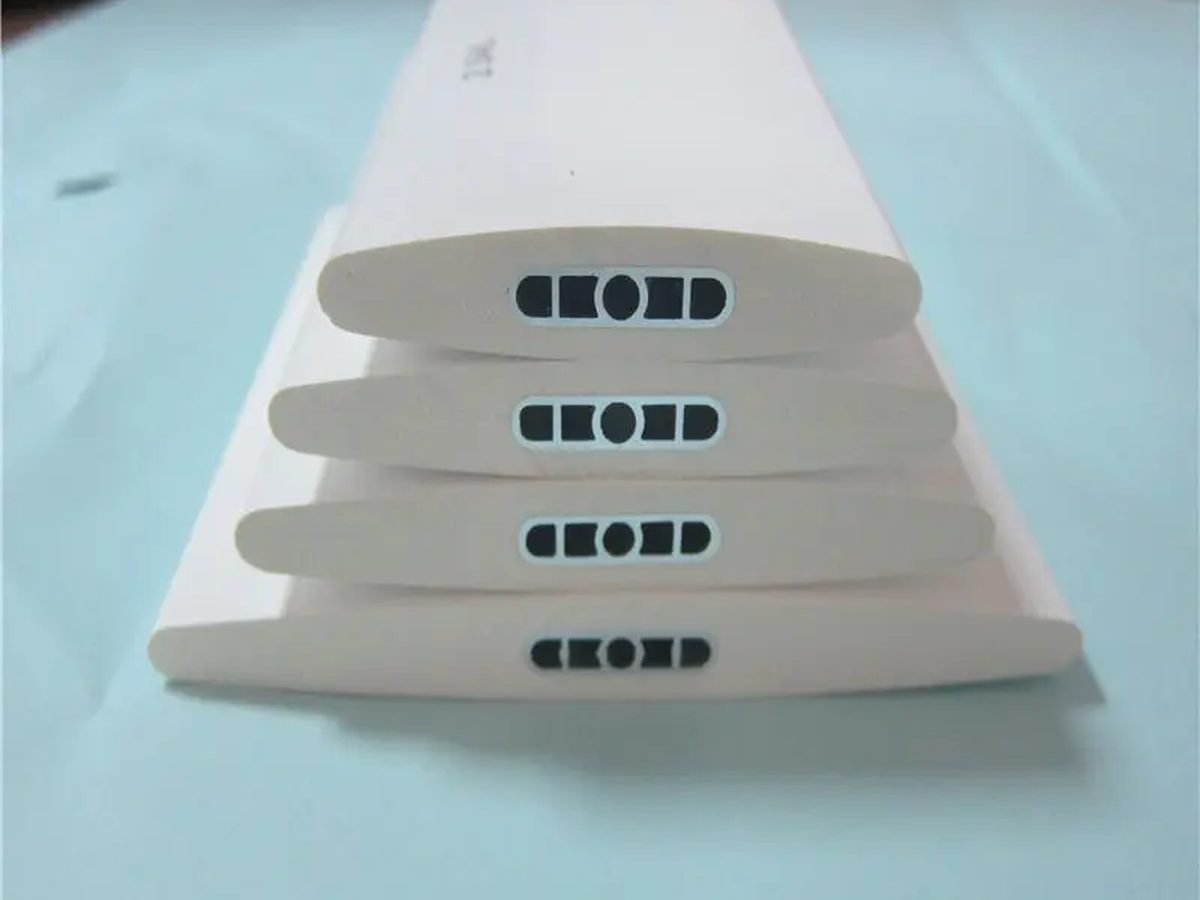
1. Visible light gaps
What you see. Daylight shows through between panels and frame.
Why it happens. Frame out of square, or panels machined without a jig.
Assemble on a flat table, measure gaps at three heights.
What to specify instead. Jig-based machining plus a final assembly check; specify <= 3 mm and inspect every unit.
2. Louver sag
Why it happens. Louver width beyond the material’s stiffness, or too few tilt pins.
Load test at the louver centre; measure deflection.
What to specify instead. Limit louver width by material: 89 mm for basswood, 114 mm only with a reinforced core.
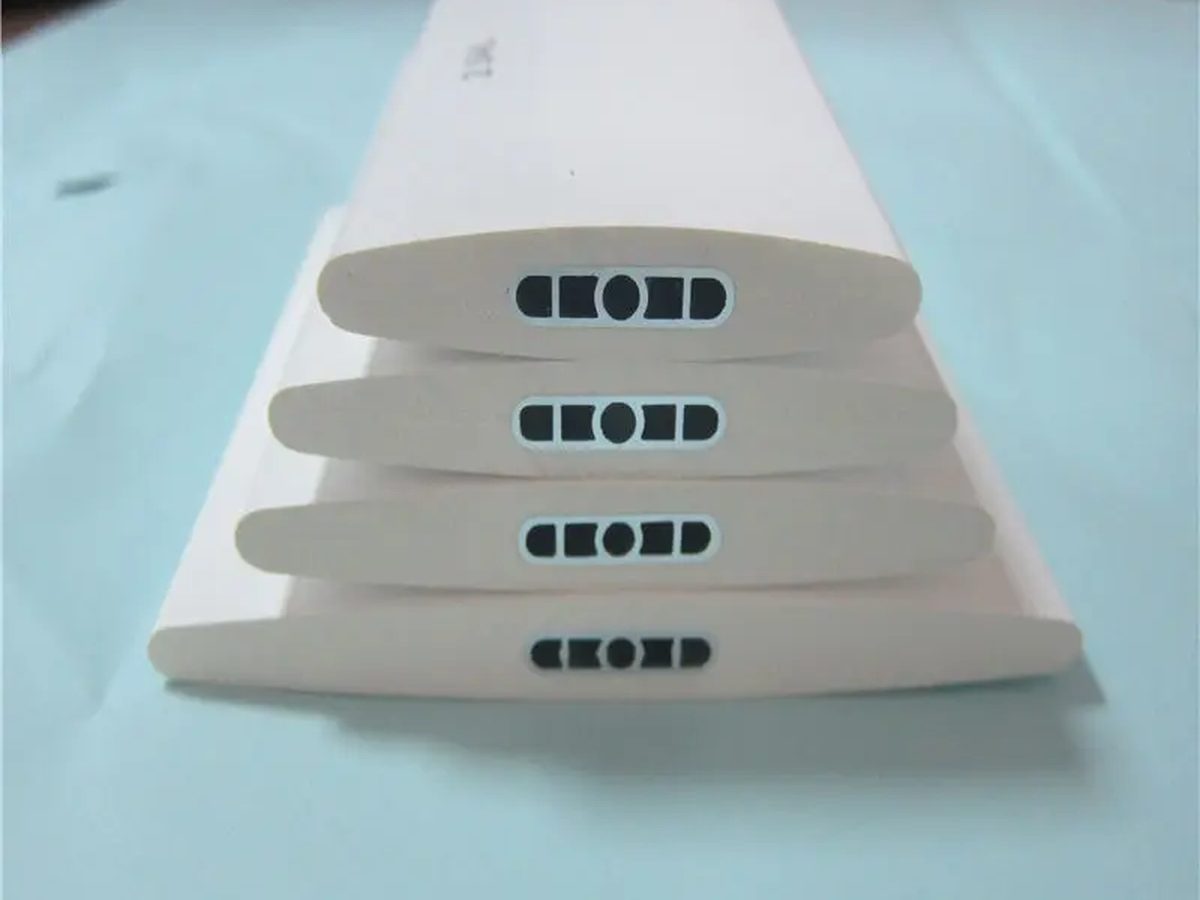
3. Hinge pull-out
Why it happens. Thin frame section or the wrong screw for the material.
Cycle test 10 000 open/close, then check screw torque.
What to specify instead. Reinforced hinge stile and the correct screw; specify cycle testing.
4. Paint bridging
Why it happens. Paint applied after assembly without clearing the gaps.
Operate every louver through full travel after finishing.
What to specify instead. Paint before assembly or mask the pivot points; 100 % operation check before packing.
Shutters: building a test plan you will actually run
| Test | Method | Acceptance | Light gap | assembly measurement | <= 3 mm | Hinge cycles | 10 000 open/close | no torque loss | Louver deflection | centre load | <= 2 mm | Finish adhesion | cross-hatch | no lift | Moisture content (wood) | meter | 8-12 % |
|---|
Shutters: what the report should contain
- Louver width 63, 89 or 114 mm — measured at three positions on the roll, recorded as a number rather than pass or fail On shutters that is louver width at 63, 89 or 114 mm.
- Frame type L-frame, Z-frame or deco frame — cut from the middle of the lot, not from the end of the roll For plantation shutters it is frame type at L-frame, Z-frame or deco frame that settles it.
- Light gap 3 mm or less between panels — read at 23 C / 50 % RH after conditioning, not straight off the machine On shutters, skipping this is what produces light leaking through a panel gap.
- Hinge hidden, aluminium or stainless — checked on production material, at in-process rather than only at pre-shipment For plantation shutters, the figure to write down is light gap at 3 mm or less between panels.
- EN 13120 for internal blinds, EN 16433 for cord safety, EN 13501-1 for reaction to fire — run to the method named above; the report travels with the lot On shutters that is louver width at 63, 89 or 114 mm.
Specification ranges for shutters are on the product page .
Questions buyers ask before ordering
What happens to failure modes and tests if we need tolerance tighter than 89 mm?
On failure modes and tests, set 89 mm as the acceptance figure.
Is 89 mm a limit or a typical value for failure modes and tests?
On failure modes and tests, the answer is 89 mm, and the reason is the slat machining.
What is the actual tolerance behind failure modes and tests?
On failure modes and tests, our standard is 89 mm, verified by lab certificate.
The test plan for shutters
The minimum set on shutters
| Test | Method | Acceptance | Light gap | assembly measurement | <= 3 mm | Hinge cycles | 10 000 open/close | no torque loss | Louver deflection | centre load | <= 2 mm | Finish adhesion | cross-hatch | no lift | Moisture content (wood) | meter | 8-12 % | Squareness | diagonal | <= 2 mm |
|---|
Sampling for shutters, and where it goes wrong
For a first order of shutters, take three positions along the run and one sample per colour, then test light gap on all of them rather than on a composite.
Several shutters results move by 10-20 % between a dry laboratory and a humid one, which is why two labs can disagree on the same material without either being wrong.
Reading a shutters report properly
- Louver width 63, 89 or 114 mm — measured at three positions on the roll, recorded as a number rather than pass or fail For plantation shutters it is frame type at L-frame, Z-frame or deco frame that settles it.
- Frame type L-frame, Z-frame or deco frame — cut from the middle of the lot, not from the end of the roll On shutters, skipping this is what produces light leaking through a panel gap.
- Light gap 3 mm or less between panels — read at 23 C / 50 % RH after conditioning, not straight off the machine For plantation shutters, the figure to write down is light gap at 3 mm or less between panels.
- Hinge hidden, aluminium or stainless — checked on production material, at in-process rather than only at pre-shipment On shutters that is louver width at 63, 89 or 114 mm.
- EN 13120 for internal blinds, EN 16433 for cord safety, EN 13501-1 for reaction to fire — run to the method named above; the report travels with the lot For plantation shutters it is frame type at L-frame, Z-frame or deco frame that settles it.
The three tests buyers skip and regret on shutters
For shutters that usually means hinge cycles measured after the wash or exposure the product will actually see, because visible light gaps does not appear in a conditioned laboratory.
Louver sag is usually a construction failure rather than a material one.
Third, retention. It is the only way to know whether material changed or the conditions did.
Turning test results into a purchase order clause on shutters
Full parameter ranges are on the shutters page ; the checks that hold those ranges in production are described on the quality control page .
How often to re-test on shutters
| Stage | What to test | Frequency | Development sample | All parameters in the specification; measured on louver width, 63, 89 or 114 mm | Once per development | First production lot | All parameters, plus the end-use test; held at louver width, 63, 89 or 114 mm | Every lot for the first three; read against louver width, 63, 89 or 114 mm | Repeat lots | Critical parameters and the one that failed before; written as louver width 63, 89 or 114 mm | Every lot | Annual | Full panel, including ageing where relevant; measured on louver width, 63, 89 or 114 mm | Once a year, or after any process change; held at louver width, 63, 89 or 114 mm |
|---|
Retained samples: the cheapest insurance in the order on shutters
For shutters, the sample should include the finish, not just the base material, because visible light gaps usually starts in the finish or the additive rather than the substrate.
The test plan for shutters, by order size
| Order | Tests to run | What it establishes | Sample or trial | Light gap | Whether the material can meet the requirement at all; read against louver width, 63, 89 or 114 mm | First production order | Light gap, Hinge cycles, Louver deflection | The baseline every later lot is compared against; written as louver width 63, 89 or 114 mm | Repeat orders | Light gap plus the parameter that failed last time | Whether the process has drifted; measured on louver width, 63, 89 or 114 mm | Annual or after a process change; held at louver width, 63, 89 or 114 mm | Full panel | That nothing has moved in the background; read against louver width, 63, 89 or 114 mm |
|---|
For shutters, the one test never worth dropping is light gap, because it is the one that predicts visible light gaps.
The claim file for shutters, and how long to keep it
Claims on plantation shutters are lost on documentation far more often than on material. By the time light leaking through a panel gap appears, the sample is gone and the shutters lot is cut, so the file is the case.
- The signed specification, with louver width at 63, 89 or 114 mm and frame type at L-frame, Z-frame or deco frame on the same page as the shutters price.
- The sealed bulk approval sample for shutters, dated — not the development sample.
- The lot record showing louver width as measured on plantation shutters, not as passed.
- Photographs of the shutters consignment at goods-in, before the material was cut.
- The shutters inspection report naming the method: EN 13120 for internal blinds, EN 16433 for cord safety, EN 13501-1 for reaction to fire.
Keep the shutters file for the warranty period plus one season — usually 24 months in export. A shelf costs nothing; a shutters shipment without the file costs the whole order.
Two of the five are almost always missing on shutters, and they are the two that decide it: the bulk approval sample and the measured louver width value.
Is 89 mm the figure your customer will measure on failure modes and tests?
On failure modes and tests, 89 mm is quoted with the inspection point named, because the two get separated at the claim stage.
Related reading
- What Shutters Really Costs
- Plantation shutters Specification: What Each Number Actually Changes On shutters, skipping this is what produces light leaking through a panel gap.
- What Shutters Really Costs: A Line-by-Line Breakdown
Catalogue and current price list · Neutral packing and private label · Consolidation, documents and lead times