Every market looks similar on a price list and different on a purchase order. This is what changes when the destination is Canada, for both product lines, from the specification through to the label.
The regulatory frame
| Requirement | What it changes |
|---|---|
| CCPSA | corded window covering safety requirements |
| SOR/2016-188 | phthalate limits, relevant for PVC slats |
| Bilingual labelling | English and French on retail packaging |
| Formaldehyde | limits for composite wood, aligned with TSCA in practice |
What it means for textiles
CCPSA changes the finish or the additive, not the substrate. For Oxford, that usually means colour fastness to light rather than the base construction, which is why the cost appears in processing rather than in the material.
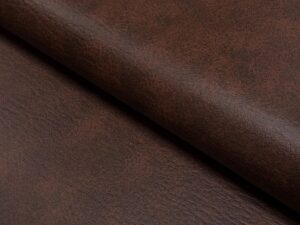
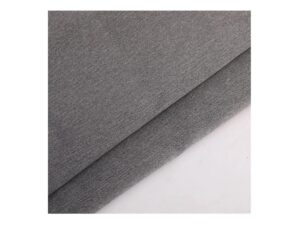
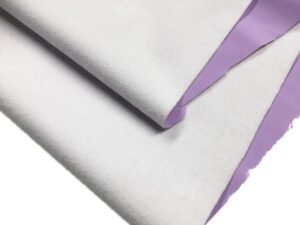
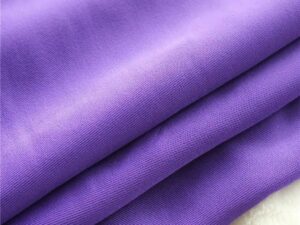
600D polyester oxford, 2-pass PU coating with primer, 1500 mm hydrostatic head, 155 cm usable, 62 gsm total coating, tear >= 25 N, Pantone 19-4052 TCX, hydrolysis-resistant
What it means for window coverings
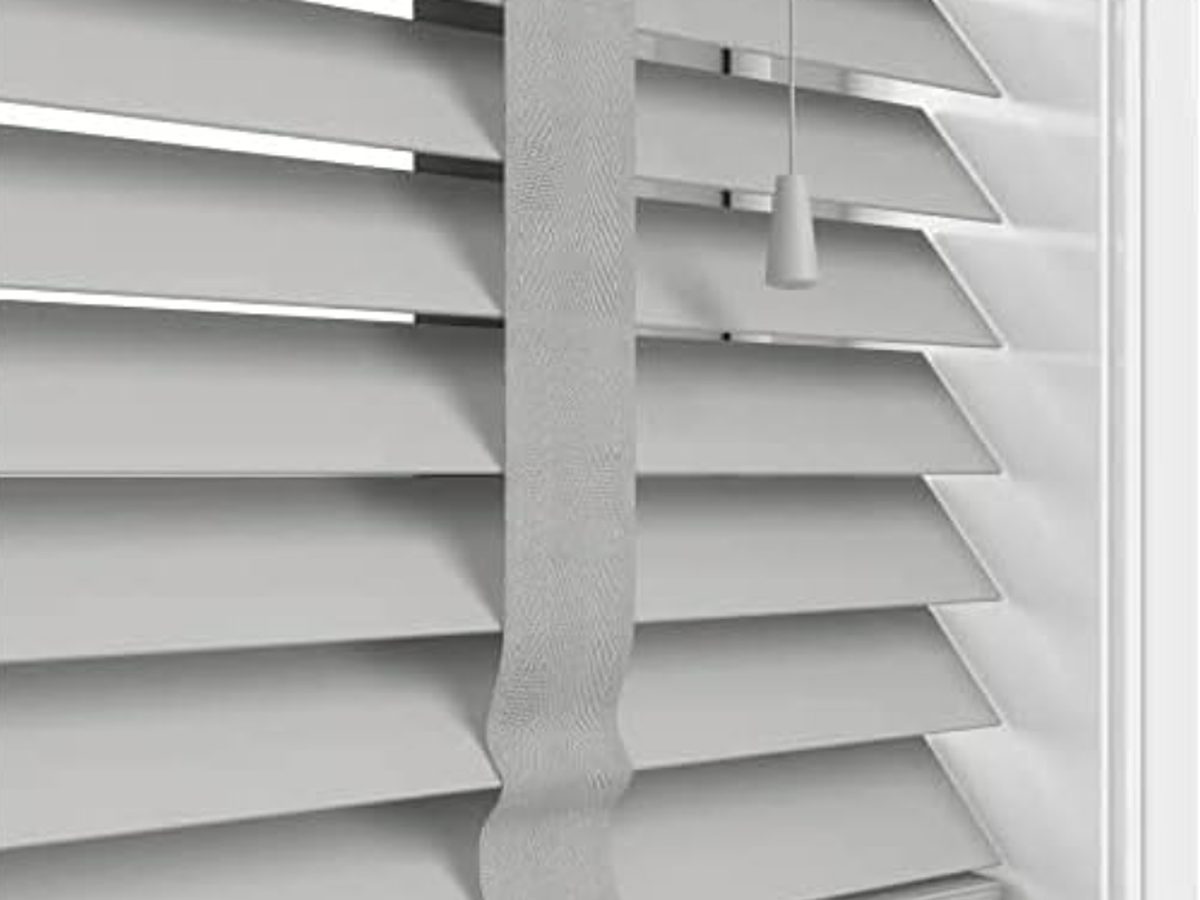
For finished blinds, the same requirement lands on the hardware and the safety device. Cord lock slipping is the failure that matters here, and it is decided by component choice rather than by the slat.
50 mm basswood venetian blind, 25 mm steel headrail, branded cord lock, 5000-cycle tested, cordless with tension device to EN 13120, square within 2 mm, stain 3A, valance included

How Canada actually buys
Who actually buys
Distributors and retail buying groups, with bilingual packaging requirements from the start. The market is smaller and more concentrated than the US, and one account can be most of a programme.
What they claim most
Cold-weather cracking in PVC and plasticiser compliance. Winter performance is a real specification requirement, not a theoretical one.
Price band
Mid. Buyers benchmark against US landed cost and expect parity plus a service advantage.
Payment habit
30/70 in USD or CAD. Confirm the labelling language requirement before the artwork is approved.
How buyers place orders here
| Buying model | What they need | What loses the order |
|---|---|---|
| Project and contract | Compliance pack, fixed date, installation sequence | A date that moves |
| Importer and distributor | Lot consistency, a price band, stock colours | Shade variation on a repeat |
| Online and retail | Low MOQ, speed, images, retail packaging | A 12-week lead time |

The documentation pack
Buyers in Canada do not ask for documents because they enjoy paperwork. They ask because an incomplete pack becomes their problem at the border or in an audit. A supplier who sends a complete pack with the quotation removes that problem and is very hard to replace on price alone.
- Test report for the parameter the regulation controls, with the lot number.
- Certificate with scope, site and validity visible.
- Declaration of conformity, signed and dated.
- Label artwork checked against the local rules.
- A written statement of what the supplier does not cover.
Where the price actually sits
Buyers compare landed cost against an incumbent, and the incumbent’s price already includes duty, freight and the paperwork. That is why a lower ex-works price does not automatically win, and why the useful conversation is about the three lines the buyer cannot easily see: claim rate, lead-time reliability and documentation completeness.
Where suppliers lose this market
Not on price. On documentation that does not name the material, and on a sample that does not match the quotation. Both are read as risk, and risk is priced higher than a five per cent difference in unit cost.
Product detail starts from the fabric overview and the wooden blinds overview; the documents we can supply are on the certifications page.
Questions buyers ask before ordering
Can you supply to Canada?
Yes, and we will tell you which requirement changes the construction before quoting, rather than after the order.
Do you provide test reports with the shipment?
Yes, for the parameters in the specification, with the lot number and the laboratory name.
Questions worth asking before the price is agreed
The questions below are the ones that cannot be answered from a catalogue, which is exactly why they are worth asking.
| Question | Answer that should worry you | Answer that holds up |
|---|---|---|
| Who signs the test report, and against which standard? | “Our QC department signs it.” | A named standard, a named method and a signature that belongs to somebody who can be asked again next year. |
| How do you hold shrinkage at <= 3 % pre-shrunk, <= 6 % raw? | “That is standard for us, no problem.” | The last three lots’ readings, the instrument used and who signs the report. Shade variation between lots starts here. |
| What happens if finish misses the mercerised / sanforised / easy-care / FR requirement? | “It will not happen.” | A re-test clause, the tolerance on the re-test, and the point at which the lot is remade rather than discounted. |
Failure modes worth a clause in the purchase order
Claims rarely come from a batch that was obviously wrong. They come from a colour fastness to washing figure that sat inside the quoted band and outside what the product needed.
| Failure | What triggers it | Test to demand on the production lot |
|---|---|---|
| Tear at seam | Low density plus a coarse yarn plus an over-locked seam. | Tensile strength — ASTM D5034; acceptance >= 350 N |
| Pilling on blends | Short staple and a high polyester content that migrates to the surface. | Colour fastness to washing — ISO 105-C06; acceptance >= grade 4 |
The other two, with acceptance numbers attached, are in the full failure analysis for cotton/T.C. A supplier who cannot name the mode he sees most often is describing a catalogue, not a process.
The same question, asked of motorised blinds
The two lines fail differently, so the wording that protects you differs too. On motorised blinds the recurring modes are these, caught with a different test.
| Failure | What triggers it | Test to demand on the production lot |
|---|---|---|
| motorised blinds: Battery drain | Friction in the headrail, or a motor with high standby current. | IP rating — IEC 60529; acceptance IP44 for bathroom use |
| motorised blinds: Protocol incompatibility | Proprietary RF presented as ‘smart’, or a gateway that is not certified for the system. | Operation noise — 1 m, anechoic or quiet room; acceptance <= 35 dB |
Quoting into Canada?
Send the end use, the quantity and the destination market, and we will come back with a specification that meets it, a price at your volume and the test reports that back it up. Samples are free for qualified programmes; we charge the courier only.
Related reading
Sample cut with your values on it · Neutral packing and private label · Consolidation, documents and lead times