Every market looks similar on a price list and different on a purchase order. This is what changes when the destination is the EU, for both product lines, from the specification through to the label.
The regulatory frame
| Requirement | What it changes |
|---|---|
| REACH | SVHC screening and azo dye limits; ask for the current candidate list check, not a generic certificate |
| EN 13120 | internal blinds must have a child-safety device; the tension device must be tested, not just fitted |
| GPSR | since 2024 the EU requires a responsible person and traceable product information on the label |
| EUTR / FSC | wood products need due-diligence documentation; FSC chain of custody is the simplest proof |

What it means for textiles
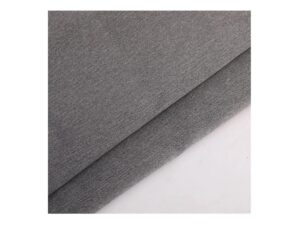
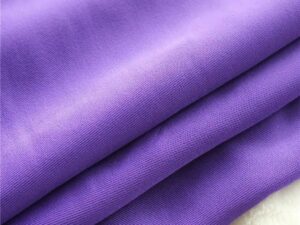
REACH changes the finish or the additive, not the substrate. For Oxford, that usually means colour fastness to light rather than the base construction, which is why the cost appears in processing rather than in the material.
600D polyester oxford, 2-pass PU coating with primer, 1500 mm hydrostatic head, 155 cm usable, 62 gsm total coating, tear >= 25 N, Pantone 19-4052 TCX, hydrolysis-resistant
What it means for window coverings
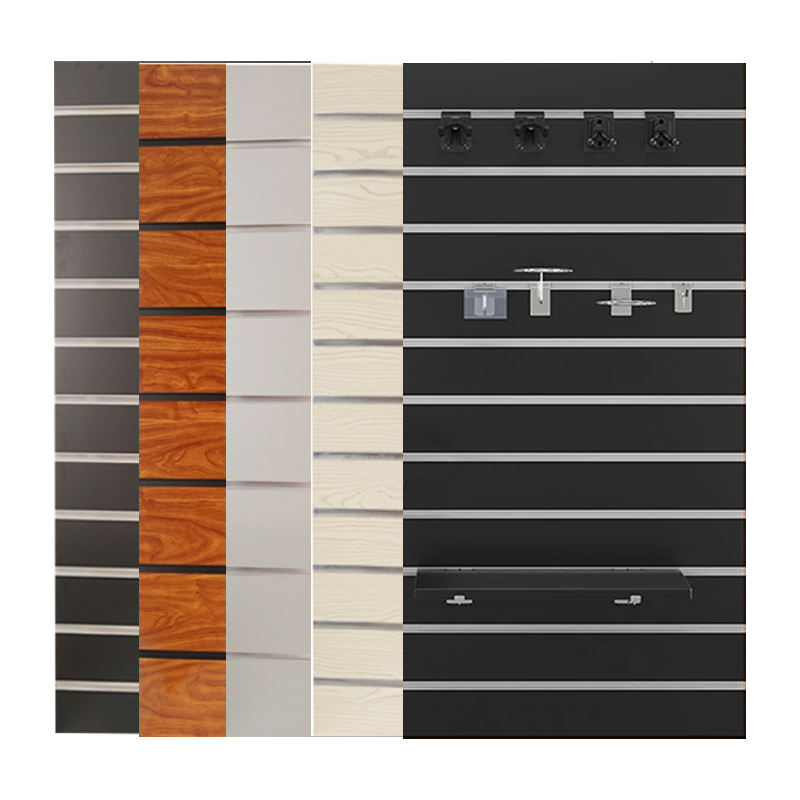
For finished blinds, the same requirement lands on the hardware and the safety device. Cord lock slipping is the failure that matters here, and it is decided by component choice rather than by the slat.
50 mm basswood venetian blind, 25 mm steel headrail, branded cord lock, 5000-cycle tested, cordless with tension device to EN 13120, square within 2 mm, stain 3A, valance included

How the EU actually buys
Who actually buys
Importers and brand sourcing teams, usually through an agent or a buying office. Decisions are made on a specification sheet, not on a visit, which is why documentation quality decides more orders here than factory size.
What they claim most
Shade variation between lots and incomplete compliance files. Both are avoidable and both are expensive at the border, so buyers test before ordering rather than after.
Price band
Mid to upper. The market will pay for documented consistency, and it will not pay for a story without a test report behind it.
Payment habit
30/70 against documents is standard; open account for repeat buyers after a year. Expect EPR registration questions before the first order.
How buyers place orders here
| Buying model | What they need | What loses the order |
|---|---|---|
| Project and contract | Compliance pack, fixed date, installation sequence | A date that moves |
| Importer and distributor | Lot consistency, a price band, stock colours | Shade variation on a repeat |
| Online and retail | Low MOQ, speed, images, retail packaging | A 12-week lead time |

The documentation pack
Buyers in the EU do not ask for documents because they enjoy paperwork. They ask because an incomplete pack becomes their problem at the border or in an audit. A supplier who sends a complete pack with the quotation removes that problem and is very hard to replace on price alone.
- Test report for the parameter the regulation controls, with the lot number.
- Certificate with scope, site and validity visible.
- Declaration of conformity, signed and dated.
- Label artwork checked against the local rules.
- A written statement of what the supplier does not cover.
Where the price actually sits
Buyers compare landed cost against an incumbent, and the incumbent’s price already includes duty, freight and the paperwork. That is why a lower ex-works price does not automatically win, and why the useful conversation is about the three lines the buyer cannot easily see: claim rate, lead-time reliability and documentation completeness.
Where suppliers lose this market
Not on price. On documentation that does not name the material, and on a sample that does not match the quotation. Both are read as risk, and risk is priced higher than a five per cent difference in unit cost.
Product detail starts from the fabric overview and the wooden blinds overview; the documents we can supply are on the certifications page.
Questions buyers ask before ordering
Can you supply to the EU?
Yes, and we will tell you which requirement changes the construction before quoting, rather than after the order.
Do you provide test reports with the shipment?
Yes, for the parameters in the specification, with the lot number and the laboratory name.
Seven lines that turn a quotation into a specification
Most post-delivery arguments are not about quality. They are about a document that never said which figure would be measured, on which instrument, at whose cost.
- Coating type: PU / PVC / PE / none is not an answer on its own. Ask for the last three lots’ actual readings and the spread behind them.
- Coating weight: agree the test method with the number. Two labs, two methods, two answers, one argument.
- Hydrostatic head (800-5000 mm): state where in the band this order sits. The middle of the band is not what a tolerance is for.
- Base weight: the figure you will accept inside the 90-260 gsm before coating band, the tolerance on it, and the method used to measure it.
- Deviation rule: anything outside the agreed bands is reported before shipment, not after arrival.
- Packing and marking: shipping mark, roll or carton count and the tolerance on quantity, since a short shipment is a claim too.
- Who inspects: third-party, in-house or none, decided in advance, with the AQL level written down.
Three questions, and the answers that separate mills
If this Oxford fabric programme is going to be decided on a call, take these three questions into it.
| Question | Answer that should worry you | Answer that holds up |
|---|---|---|
| Which test catches seam leakage? | “We have never had a complaint.” | Water repellency spray — on the production lot, with the acceptance figure written into the report and not into the email. |
| May I see a report for a lot you shipped last month? | “That is confidential customer information.” | A redacted report, which carries every number that matters and none of the customer’s identity. |
| Where in the 15-60 gsm per pass band will this order sit? | “In the middle, normally.” | A stated target and the readings behind it. Coating weight drifting inside the band is how a conforming lot still fails. |
The same question, asked of paulownia
The two lines fail differently, so the wording that protects you differs too. On paulownia the recurring modes are these, caught with a different test.
| Failure | What triggers it | Test to demand on the production lot |
|---|---|---|
| paulownia: Warping | High moisture variation and a porous structure that absorbs quickly. | Density — ISO 3131; acceptance 0.25-0.32 g/cm3 |
| paulownia: Patchy finish | Coarse pores without a sanding sealer. | Warp — 48 h at 23 C / 50 % RH; acceptance <= 2.0 mm per 1 m |
Quoting into the EU?
Send the end use, the quantity and the destination market, and we will come back with a specification that meets it, a price at your volume and the test reports that back it up. Samples are free for qualified programmes; we charge the courier only.
Related reading
Sample cut with your values on it · Neutral packing and private label · Consolidation, documents and lead times