Buyers usually ask this question after a quote comes in lower than expected. The price difference is real, and so is the reason for it.
The short answer on swimwear fabric
Choose swimwear fabric when better chlorine and uv resistance, lower cost. Choose polyester/spandex when the priority is less luxurious hand, harder to reach deep bright shades.
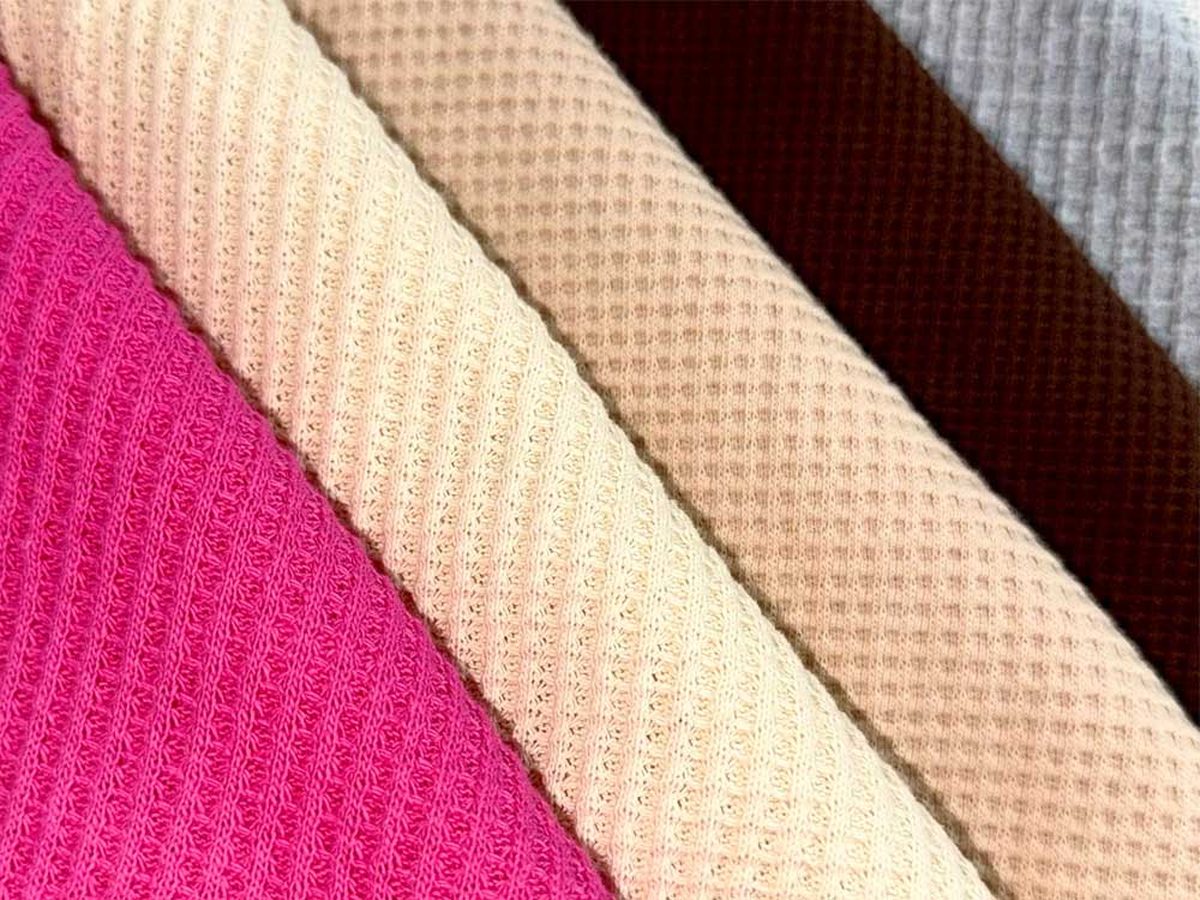
swimwear fabric against the alternatives, side by side
| Question | swimwear fabric | Polyester/spandex | Material | Swimwear fabric | Polyester/spandex | Where it wins | Better chlorine and UV resistance, lower cost | cheaper entry, simpler supply; measured on composition, 80/20 or 78/22 nylon/spandex | Where it costs you | Less luxurious hand, harder to reach deep bright shades | see the limits below | Typical MOQ | 300-500 kg per colour or print | often lower, because stock is common; held at composition, 80/20 or 78/22 nylon/spandex | Lead time | 25-35 days | usually shorter for stock items; read against composition, 80/20 or 78/22 nylon/spandex |
|---|
What swimwear fabric actually gives you
Composition (80/20 or 78/22 nylon/spandex; polyester/spandex). Nylon feels better and dyes deeper; polyester survives chlorine and price pressure better.
Weight (180-260 gsm). Coverage and opacity. Under 190 gsm, light colours need a lining.
Stretch (4-way, 80-120 % elongation).
That combination is why swimwear fabric holds the volume position in its category.
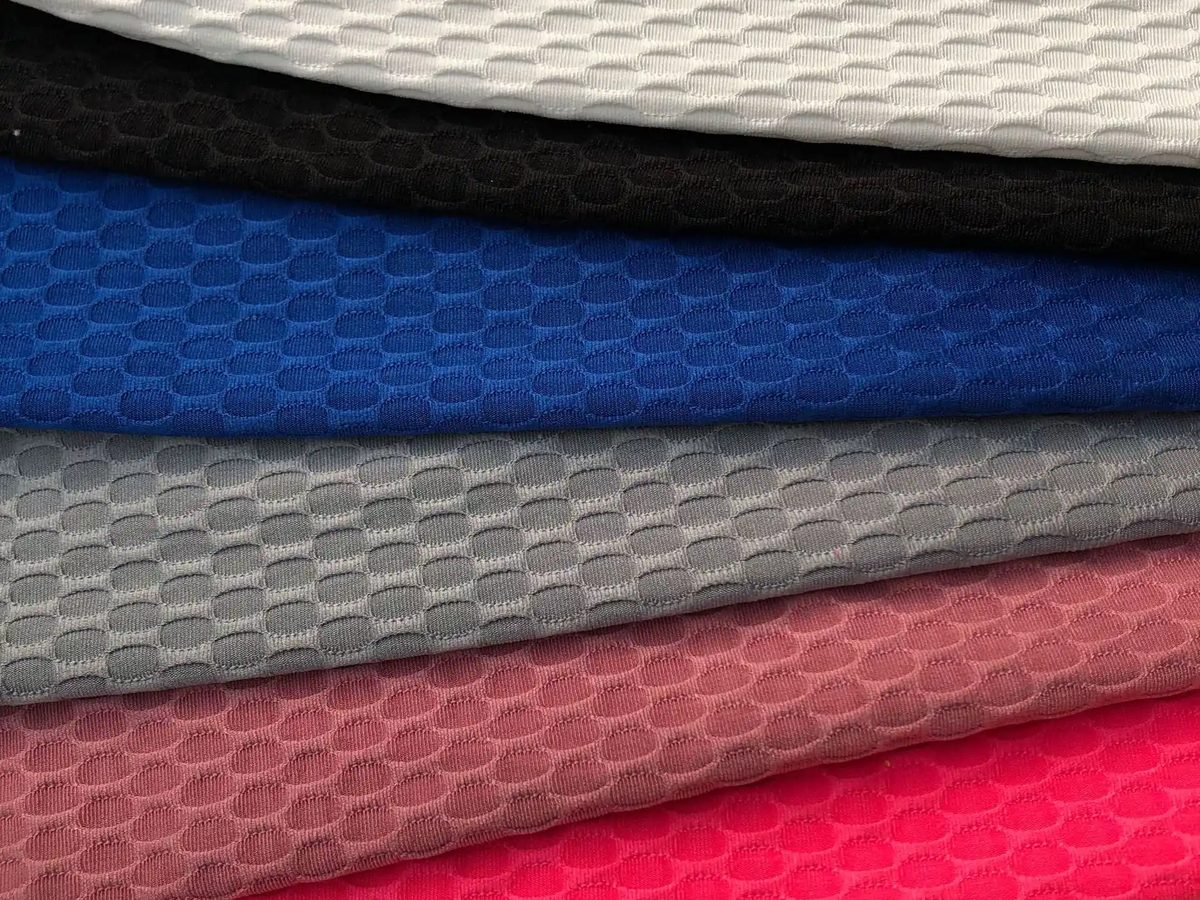
Where polyester/spandex wins
polyester/spandex wins when the order sits below 300-500 kg per colour or print, when the service life is shorter than the warranty, or when the buyer is testing a market before committing. Paying for stretch you cannot sell is as much a mistake as saving on a material that will come back.
Swimwear fabric: the cost of choosing wrong
The reverse mistake is also common: specifying swimwear fabric for a product that will be replaced in eighteen months.
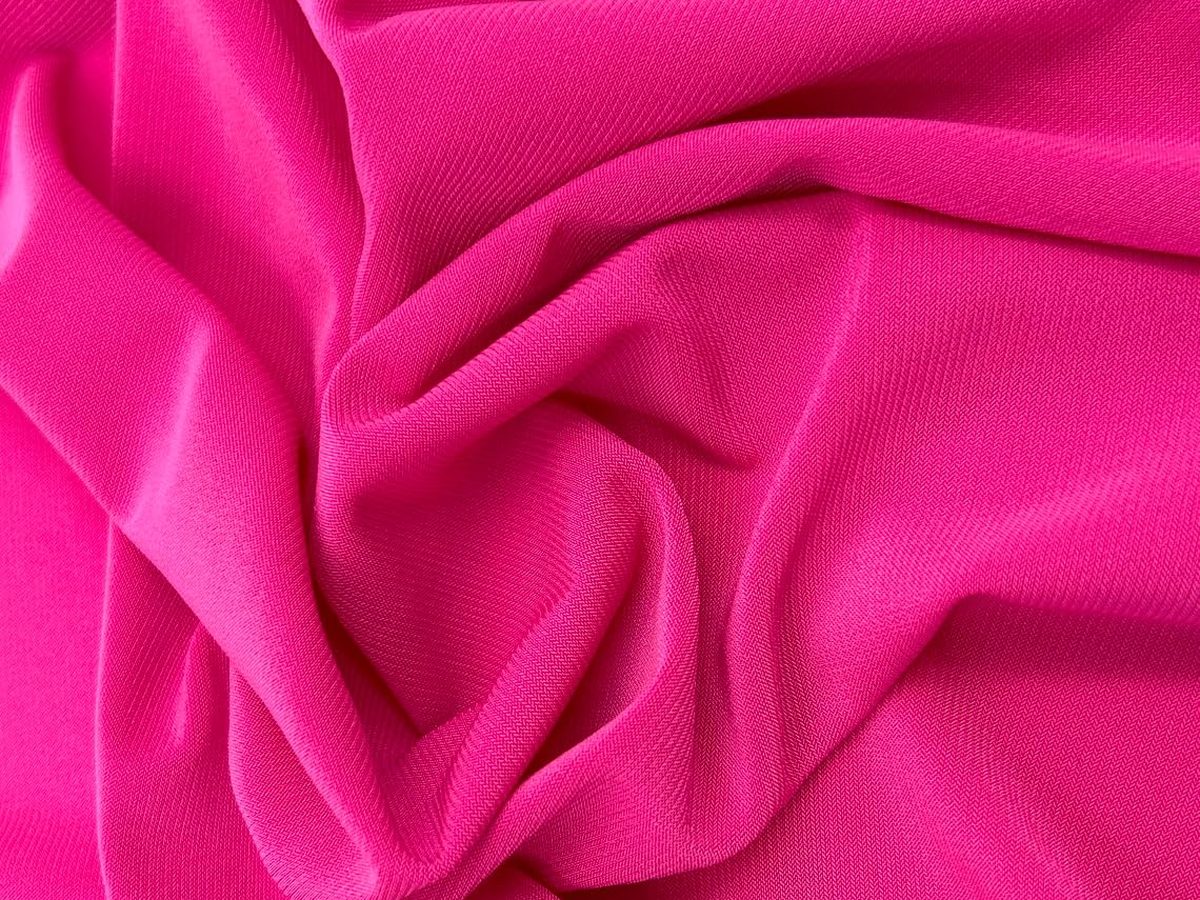
Swimwear fabric: how to decide in one meeting
If you want the numbers behind either column, they are on the swimwear fabric page and in our category overview.
Questions buyers ask before ordering
Is 300-500 kg achievable at our volume on vs polyester spandex?
On vs polyester spandex, expect tolerance around 300-500 kg.
How do you verify tolerance against 300-500 kg on vs polyester spandex?
On vs polyester spandex, capacity on tolerance is 300-500 kg.
Does tolerance move between the vs polyester spandex sample and bulk?
On vs polyester spandex, tolerance sits at 300-500 kg for this construction.
Swimwear fabric: the cost over the life of the product
| Cost item | swimwear fabric | Polyester/spandex | Who absorbs it | Unit price | higher | lower | Buyer, at the order | Claim rate | low if the spec matches the use; written as composition 80/20 or 78/22 nylon/spandex | higher if the failure mode hits; measured on composition, 80/20 or 78/22 nylon/spandex | Buyer, 6-18 months later | Replacement shipment | rare | likely once per programme; held at composition, 80/20 or 78/22 nylon/spandex | Buyer, plus the lost season; read against composition, 80/20 or 78/22 nylon/spandex | Customer relationship | protected | at risk | Buyer, permanently |
|---|
Swimwear fabric: a trial that costs one container, not a season
What swimwear fabric and polyester/spandex have in common
chlorine resistance and compression applies to either, and the test that matters is the one that reproduces it.
swimwear fabric fails as spandex degradation in chlorine; polyester/spandex fails earlier and more visibly.
Many programmes use both: swimwear fabric where the specification is tight, polyester/spandex in the range extensions where the price point matters more than the service life.
The other swimwear fabric comparison buyers ask about
Where swimwear fabric wins
The failure you are buying protection against is spandex degradation in chlorine: swimsuits go limp and baggy after a season in a pool. If that is the failure your customer will report, swimwear fabric is the cheaper decision even at a higher unit price.
How to decide without a trial order on swimwear fabric
Specifications for both are on the swimwear fabric page and the knitted fabric page.
Total cost over three years on swimwear fabric
| Line | swimwear fabric | knitted fabric | Note | Purchase | Higher unit price | Lower unit price | Paid at the order | Claims | Lower if the spec matches; written as composition 80/20 or 78/22 nylon/spandex | Higher if the failure mode hits; measured on composition, 80/20 or 78/22 nylon/spandex | Paid 6-18 months later | Replacement | Rare | Likely once | Paid in the season you cannot supply; held at composition, 80/20 or 78/22 nylon/spandex | Rework at your factory | Lower | Higher if the material behaves differently; read against composition, 80/20 or 78/22 nylon/spandex | Paid in labour |
|---|
swimwear fabric fails as spandex degradation in chlorine; knitted fabric fails as skew / torque.
A trial that answers the question in one container on swimwear fabric
How to test swimwear fabric against polyester/spandex without a season of stock
The swimwear fabric versus polyester/spandex question is usually settled by a trial order that was never designed to settle it. Four choices turn a swimwear fabric trial into evidence.
- Run swimwear fabric and polyester/spandex on the same product, in the same colour, cut by the same operator — most comparisons of this pair are lost because the two samples were made a month apart.
- Fix composition at 80/20 or 78/22 nylon/spandex and weight at 180-260 gsm on both sides, so the trial is about the material and not the specification.
- Inspect at in-process as well as pre-shipment: bagging at the knees and seat is the failure that appears between the two on swimwear fabric, and a final check alone will not show it.
- Agree the decision line before the run: stretch recovery at 90 % after 5 cycles or better, and weight at 180-260 gsm. A swimwear fabric trial without a written pass mark becomes an opinion.
One container is usually enough for a swimwear fabric decision if those four choices are fixed in advance, and the cost of the run is recovered the first time a lot is rejected at the destination instead of the factory.
Keep the swimwear fabric trial material. It is the reference for every later argument about whether the swimwear fabric composition has drifted, and it is the cheapest document in the file.
The five-year cost of swimwear fabric against polyester/spandex
On swimwear fabric, the purchase price is the smallest part of the five-year comparison against polyester/spandex. Three swimwear fabric lines decide the rest, and only one of them is on the invoice.
- Purchase price. Usually 10-25 % apart, in favour of polyester/spandex on a swimwear fabric comparison. That is a real number and it is the only line most buyers of swimwear fabric compare.
- Replacement rate. If swimwear fabric fails at bagging at the knees and seat within two seasons, the replacement costs the whole purchase price again, and carries the same freight and duty.
- The cost of the complaint. A sorted swimwear fabric consignment, a credit note, a customer who now inspects everything — a line that never appears in a spreadsheet until it has happened.
The break-even on swimwear fabric is arithmetic once the replacement rate is known: if swimwear fabric replaces more than one lot in five, the cheaper option has already lost on composition.
Which is why the trial above matters more than the quotation for swimwear fabric. It is the only way to put a number on the middle line, and weight at 180-260 gsm is the figure that number hangs on.
Chlorine, and the numbers behind a resistance claim
| Figure | Nylon/spandex, 80/20 | Polyester/spandex, 82/18 | What it decides |
|---|---|---|---|
| Chlorine resistance | ISO 105-E03, retained elongation >= 80 % after 50 h | Same test, typically 60-75 % after 50 h | Whether the suit bags in one season or three |
| Weight | 190-240 gsm | 180-230 gsm | Opacity when wet, and the hand |
| Elongation | 180-220 % | 160-200 % | Fit window across sizes |
| Colour fastness to chlorinated water | >= grade 4 | >= grade 4, harder on brights | Shade shift on the second season |
| UPF | UPF 50+ achievable at 200 gsm | UPF 50+ achievable at 180 gsm | Whether a sun claim can be made at all |
The claim to ask for is “retained elongation after 50 hours in chlorinated water”, with the figure. A supplier who answers “chlorine resistant” has answered nothing; the test is 50 hours at 20 ppm free chlorine, and the fabric either keeps 80 % of its elongation or it does not.
Building a swimwear fabric specification?
Send what you have — composition, weight, target market. We reply with the band we would hold and the two parameters we would test before the first bulk run.
Products in this range
Related reading
- Cotton/T.C for Promotional textiles: Specification and Failure Risk
- How to Document a Quality Claim So It Gets Resolved
- Hotel Window Blinds Specification: What Project Consultants Actually Check
Sample cut with your values on it · Neutral packing and private label · Consolidation, documents and lead times