Of the four 3D mesh failures below, compression set in the seat area is the one that reaches the end user before it reaches the inspection report.
3D mesh: why failures cluster around one or two parameters
In 3D mesh, the parameters in the table below are not independent. Compression recovery and Air permeability between them explain most field failures, and both are routinely omitted from quotations because they are expensive to guarantee and easy to leave vague.
| Parameter | Typical range | Why it decides failure | Compression recovery | >= 90 % | The single best predictor of whether a seat still looks new after a year of use. | Air permeability | 300-1200 L/m2/s | Breathability claim. A dense surface layer can halve this without changing thickness. | Monofilament diameter | 0.08-0.20 mm | Sets the resilience of the gap. Thin monofilament feels soft and collapses early. | Usable width | 150-160 cm | Affects cutting yield on bag panels and chair covers more than price per metre does. |
|---|
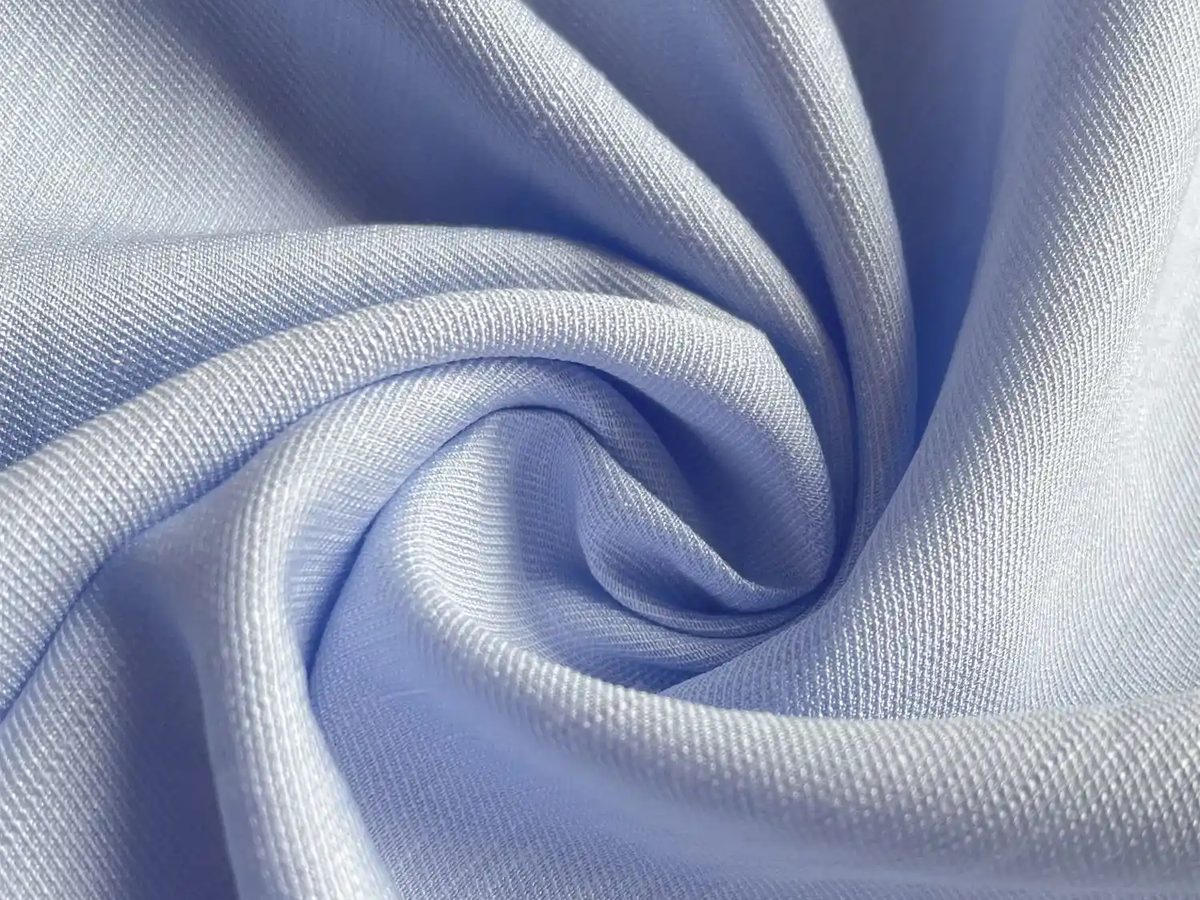
1. Compression set
What you see. Seat pads flatten in the first months; foam looks tired while the cover is intact.
Why it happens. Monofilament too thin or density too low for the load, or the wrong polymer for the climate.
How to catch it before you order. Load a 100 mm square with 5 kg at 40 C for 24 h, release, measure recovery after 30 min.
What to specify instead. Specify >= 90 % recovery and ask for the test on the production lot, not a development sample.
2. Delamination
What you see. Mesh separates from foam or backing after washing or dry cleaning.
Why it happens. Flame lamination is cheap and fails at the adhesive line under heat and solvent.
How to catch it before you order. ISO 2411 peel strength on a 50 mm strip, before and after one wash cycle.
What to specify instead. Require hot-melt adhesive or TPU film; flame lamination only for rigid, non-washed goods.
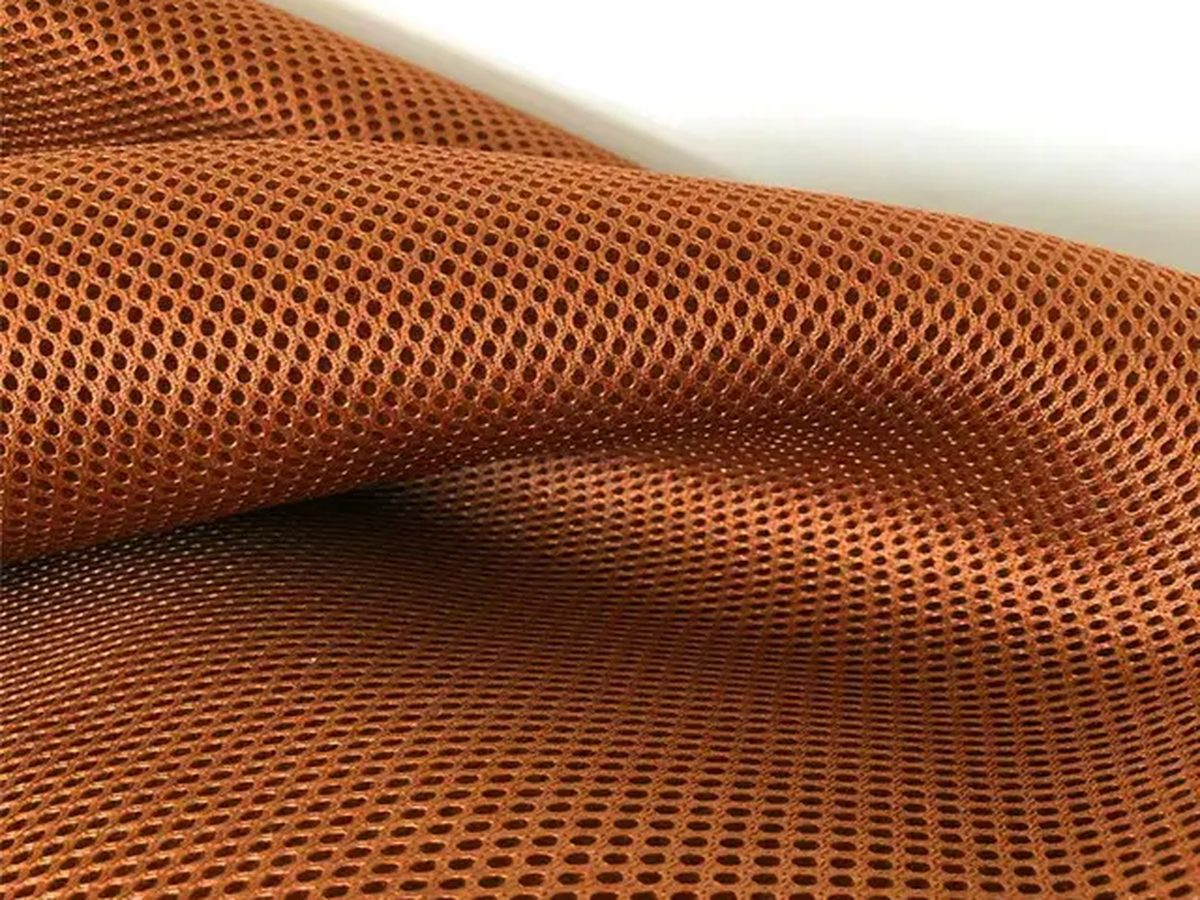
3. Snagging and pilling
What you see. Surface pulls into loops where bags rub or where Velcro touches.
Why it happens. Long float yarns on the face; loose stitch density.
How to catch it before you order. ISO 12945-2 Martindale pilling, 2000 rubs, plus a manual Velcro rub test.
What to specify instead. Choose tricot face, tighter stitch density, and specify a snag-resistant yarn for strap contact zones.
4. Odour after washing
What you see. A sour smell persists after drying, worst in humid climates.
Why it happens. Residual spinning oil trapped in the spacer gap; the gap dries slowly.
How to catch it before you order. Blind sniff panel after 3 wash-dry cycles at 40 C; ask for residual oil content.
What to specify instead. Require low-residual-oil yarn and a rinse after dyeing; specify quick-dry yarn for humid markets.
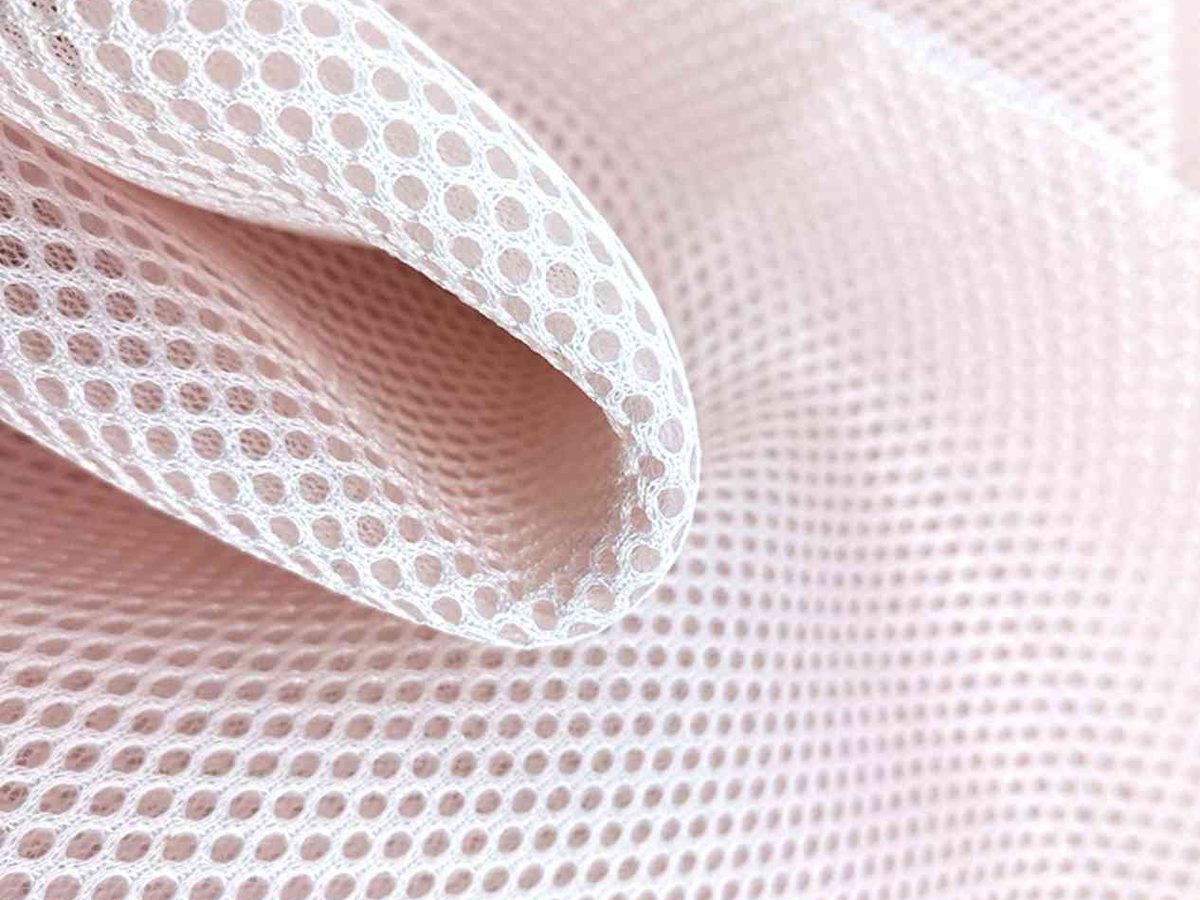
3D mesh: building a test plan you will actually run
| Test | Method | Acceptance | Compression recovery | internal 5 kg / 24 h / 40 C | >= 90 % | Peel strength (laminated) | ISO 2411 | >= 6 N/50 mm | Pilling | ISO 12945-2 | >= grade 3-4 | Colour fastness to rubbing; measured on thickness, 3-15 mm | ISO 105-X12 | >= grade 4 dry, >= 3-4 wet | Dimensional change | ISO 6330 / ISO 5077 | <= 3 % |
|---|
Five tests is enough for a first order. The point is not comprehensiveness, it is that the same five run on every lot, so a change becomes visible. A test nobody repeats is a story, not a control.
Run them on production material, not on a development sample. Ask for the report to carry the lot number and the date, and keep it with the shipment file. When a claim arrives two years later, that file is the difference between a discussion and a write-off.
3D mesh: what the report should contain
- Thickness 3-15 mm — measured at three positions on the roll, recorded as a number rather than pass or fail On 3D mesh that is thickness at 3-15 mm.
- Weight 180-420 gsm — cut from the middle of the lot, not from the end of the roll For 3D mesh fabric it is weight at 180-420 gsm that settles it.
- Compression recovery 90 % or better — read at 23 C / 50 % RH after conditioning, not straight off the machine On 3D mesh, skipping this is what produces compression set in the seat area.
- Air permeability 300-1200 L/m2/s — checked on production material, at in-process rather than only at pre-shipment For 3D mesh fabric, the figure to write down is compression recovery at 90 % or better.
- Monofilament diameter 0.08-0.20 mm — stated in the purchase order with the test method beside it On 3D mesh that is thickness at 3-15 mm.
- ISO 12947 for abrasion, ISO 6330 / ISO 5077 for dimensional change — run to the method named above; the report travels with the lot For 3D mesh fabric it is weight at 180-420 gsm that settles it.
Specification ranges for 3D mesh are on the product page. If a failure you are seeing is not covered here, send the batch details and photographs — we will tell you what we think caused it, including when the cause is upstream of the material.
Questions buyers ask before ordering
What happens to failure modes and tests if we need tolerance tighter than 90 %?
On failure modes and tests, our standard is 90 %, verified by lab certificate.
Is 90 % a limit or a typical value for failure modes and tests?
On failure modes and tests, the number to quote is 90 %.
What is the actual tolerance behind failure modes and tests?
On failure modes and tests, ask for 90 % in writing.
The test plan for 3D mesh
The minimum set on 3D mesh
| Test | Method | Acceptance | Compression recovery | internal 5 kg / 24 h / 40 C | >= 90 % | Peel strength (laminated) | ISO 2411 | >= 6 N/50 mm | Pilling | ISO 12945-2 | >= grade 3-4 | Colour fastness to rubbing; held at thickness, 3-15 mm | ISO 105-X12 | >= grade 4 dry, >= 3-4 wet | Dimensional change | ISO 6330 / ISO 5077 | <= 3 % | Air permeability | ISO 9237 | report value, no pass/fail |
|---|
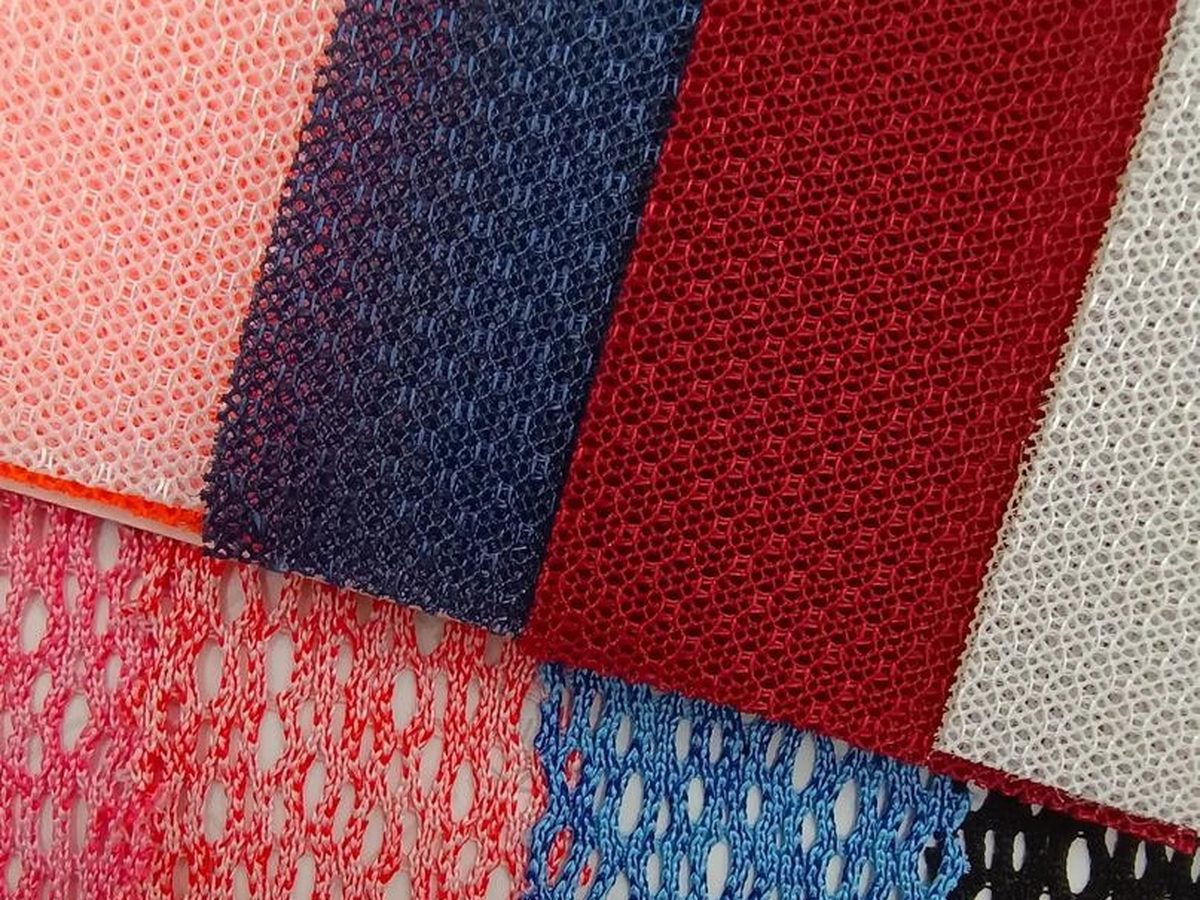
Sampling for 3D mesh, and where it goes wrong
A single sample from the top of a roll tells you about the top of that roll. For a first order of 3D mesh, take three positions along the run and one sample per colour, then test compression recovery on all of them rather than on a composite.
Condition the samples before testing. Several 3D mesh results move by 10-20 % between a dry laboratory and a humid one, which is why two labs can disagree on the same material without either being wrong.
Reading a 3D mesh report properly
- Thickness 3-15 mm — measured at three positions on the roll, recorded as a number rather than pass or fail On 3D mesh, skipping this is what produces compression set in the seat area.
- Weight 180-420 gsm — cut from the middle of the lot, not from the end of the roll For 3D mesh fabric, the figure to write down is compression recovery at 90 % or better.
- Compression recovery 90 % or better — read at 23 C / 50 % RH after conditioning, not straight off the machine On 3D mesh that is thickness at 3-15 mm.
- Air permeability 300-1200 L/m2/s — checked on production material, at in-process rather than only at pre-shipment For 3D mesh fabric it is weight at 180-420 gsm that settles it.
- Monofilament diameter 0.08-0.20 mm — stated in the purchase order with the test method beside it On 3D mesh, skipping this is what produces compression set in the seat area.
- ISO 12947 for abrasion, ISO 6330 / ISO 5077 for dimensional change — run to the method named above; the report travels with the lot For 3D mesh fabric, the figure to write down is compression recovery at 90 % or better.
The three tests buyers skip and regret on 3D mesh
First, the test that reproduces the end use rather than the laboratory condition. For 3D mesh that usually means peel strength (laminated) measured after the wash or exposure the product will actually see, because compression set does not appear in a conditioned laboratory.
Second, the test on the assembled product. Flat goods can pass every check and still fail at a seam, a fold or a fixing point. Delamination is usually a construction failure rather than a material one.
Third, retention. Keep one sealed sample per approved lot, labelled with the lot number and the date, for at least two years. It is the only way to know whether compression recovery changed or the conditions did.
Turning test results into a purchase order clause on 3D mesh
Write the acceptance value into the PO, name the method, and state what happens on failure: replacement, credit, or rejection at whose cost. A test without a consequence is advisory, and advisory tests get skipped when the schedule is tight.
Full parameter ranges are on the 3D mesh page; the checks that hold those ranges in production are described on the quality control page.
How often to re-test on 3D mesh
| Stage | What to test | Frequency | Development sample | All parameters in the specification; read against thickness, 3-15 mm | Once per development | First production lot | All parameters, plus the end-use test; written as thickness 3-15 mm | Every lot for the first three; measured on thickness, 3-15 mm | Repeat lots | Critical parameters and the one that failed before; held at thickness, 3-15 mm | Every lot | Annual | Full panel, including ageing where relevant; read against thickness, 3-15 mm | Once a year, or after any process change; written as thickness 3-15 mm |
|---|
The rule behind the table is simple: test most when you know least. A supplier with three clean lots has earned a lighter regime; a supplier with a process change has not, even after five years.
Retained samples: the cheapest insurance in the order on 3D mesh
Keep one sealed sample per approved lot, labelled with the lot number and the date, for at least two years. It costs a shelf. It is also the only way to answer the question that decides most claims: did the material change, or did the conditions?
Without a retained sample, a claim becomes an argument about memory. With one, it becomes a measurement, and measurements get resolved.
For 3D mesh, the sample should include the finish, not just the base material, because compression set usually starts in the finish or the additive rather than the substrate.
The test plan for 3D mesh, by order size
| Order | Tests to run | What it establishes | Sample or trial | Compression recovery | Whether the material can meet the requirement at all; measured on thickness, 3-15 mm | First production order | Compression recovery, Peel strength (laminated), Pilling | The baseline every later lot is compared against; held at thickness, 3-15 mm | Repeat orders | Compression recovery plus the parameter that failed last time | Whether the process has drifted; read against thickness, 3-15 mm | Annual or after a process change; written as thickness 3-15 mm | Full panel | That nothing has moved in the background; measured on thickness, 3-15 mm |
|---|
Testing more on a repeat order is waste; testing less on a first order is a gamble. The table is deliberately asymmetric, because the risk is. For 3D mesh, the one test never worth dropping is compression recovery, because it is the one that predicts compression set.
The claim file for 3D mesh, and how long to keep it
Claims on 3D mesh fabric are lost on documentation far more often than on material. By the time compression set in the seat area appears, the sample is gone and the 3D mesh lot is cut, so the file is the case.
- The signed specification, with thickness at 3-15 mm and weight at 180-420 gsm on the same page as the 3D mesh price.
- The sealed bulk approval sample for 3D mesh, dated — not the development sample.
- The lot record showing thickness as measured on 3D mesh fabric, not as passed.
- Photographs of the 3D mesh consignment at goods-in, before the material was cut.
- The 3D mesh inspection report naming the method: ISO 12947 for abrasion, ISO 6330 / ISO 5077 for dimensional change.
Keep the 3D mesh file for the warranty period plus one season — usually 24 months in export. A shelf costs nothing; a 3D mesh shipment without the file costs the whole order.
Two of the five are almost always missing on 3D mesh, and they are the two that decide it: the bulk approval sample and the measured thickness value.
Want a 3D mesh quotation you can compare line by line?
Tell us the weight and the annual volume. The quotation comes back with the tolerance band, the MOQ per colour, and the test standard named against each figure.
Products in this range
Related reading
- What Bag Fabric Really Costs: A Line-by-Line Breakdown
- Inspecting Textile and Window Covering: Checkpoints, AQL and the Defects That Matter
- Cotton and T/C Fabric Guide: Yarn Count, Density and Shrinkage
Sample cut with your values on it · Neutral packing and private label · Consolidation, documents and lead times