A RFQ succeeds when the factory can price a process rather than guess at a product. That takes five inputs, and four of them are usually missing.
The five inputs
| Input | What to write | What it decides | End use | The product and the conditions it will see | Sets the parameter floors | Performance figure | One number that must hold, with a test method | Makes substitution visible | Quantity | Per colour, per delivery, annual forecast | MOQ and setup amortisation | Destination | Country and channel | Compliance and labelling | Date | When you need it in hand | The production slot |
|---|
Send only the first three and the quotation will be technically valid and commercially useless. The factory will quote a stock construction at a volume that suits them, with a lead time measured from a date you did not specify.
Writing the specification line
Pick the two or three figures that decide the outcome and write those tightly; leave the rest at the supplier’s standard and say so. Two examples from this category:
3D mesh: 3D spacer mesh, 100 % polyester, 6 mm, 320 gsm, 155 cm usable, compression recovery >= 90 %, laminated to 2 mm PU foam with hot-melt adhesive, Pantone 19-4013 TCX
Oxford: 600D polyester oxford, 2-pass PU coating with primer, 1500 mm hydrostatic head, 155 cm usable, 62 gsm total coating, tear >= 25 N, Pantone 19-4052 TCX, hydrolysis-resistant
Phrases that invite substitution
‘High quality’, ‘export grade’, ‘premium’, ‘as per your standard’ and ‘or equivalent’ cannot be tested, so they cannot be enforced. Each one is an instruction to the factory to choose, and the factory will choose the cheapest option that satisfies their own definition.
What to ask for alongside the price
- MOQ per colour, separately from the order minimum.
- Lead time from approval, not from order.
- What is included: testing, packing, certification, sample courier.
- The price validity period.
- What the supplier assumed where your enquiry was silent.
That last question is the most useful in the exchange. It shows where the quote is soft, and it takes one line to fix before the order rather than one claim after it.
What to leave out of the first email

Related detail for RFQs
Questions buyers ask before ordering
What drives the price of rfq writing guide at tolerance of 100 %?
On rfq writing guide, the figure for tolerance is 100 %, measured at bulk approval and written on the lot record rather than the brochure.
Is 100 % achievable at our volume on rfq writing guide?
On rfq writing guide, the value is 100 %, and it holds for the fabric as specified.
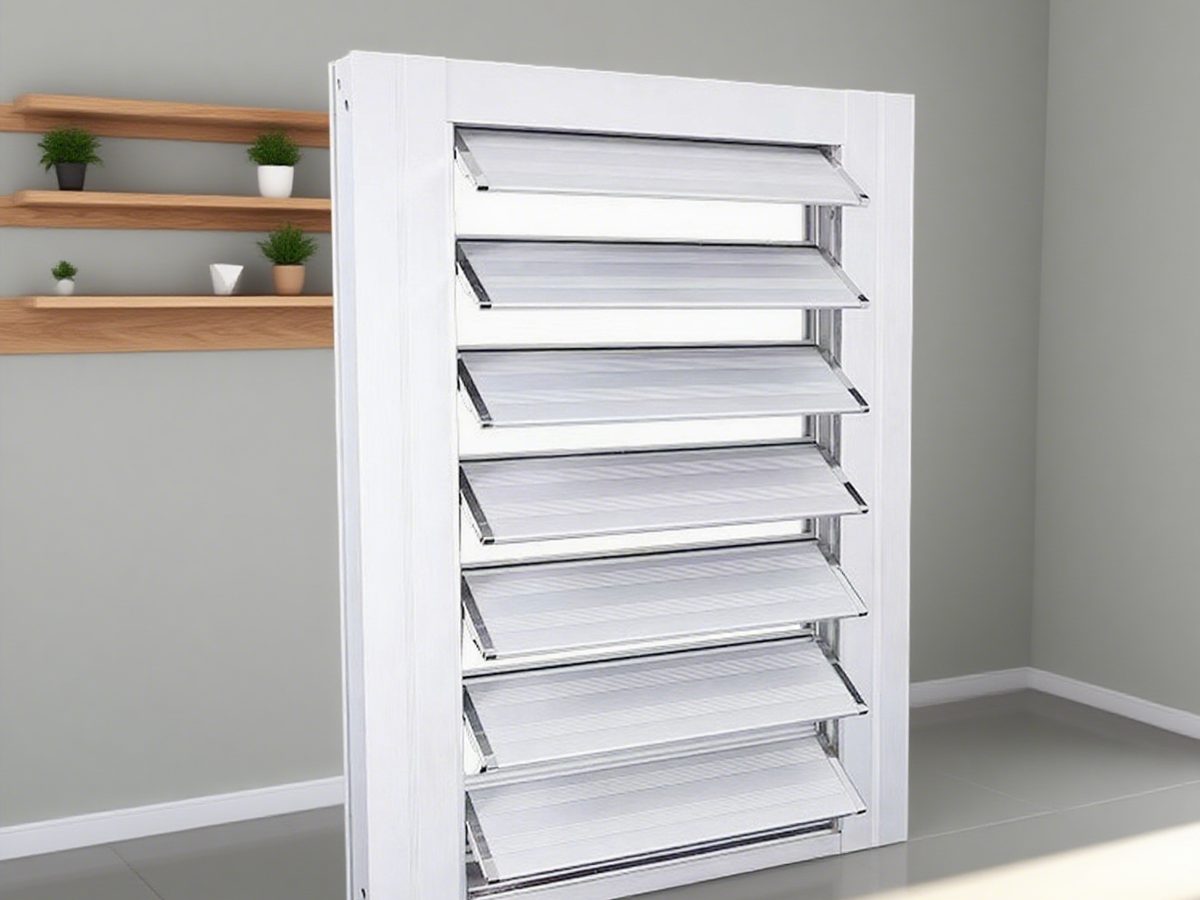
The PVC slat question, as it appears in a RFQ
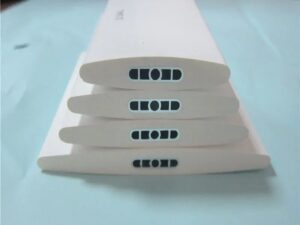
On PVC slats the recurring modes are these, caught with a different test.
| Failure | What triggers it | Test to demand on the production lot | PVC slats: Cold brittleness | High filler content (calcium carbonate) to cut cost. | Impact at low temperature — -10 C drop test; acceptance no crack | PVC slats: Woodgrain film peeling | Laminated film without adequate primer or edge sealing. | Colour fastness to light — ISO 105-B02; acceptance >= grade 4 |
|---|
The seven-line RFQ, written out
Below is the same enquiry in the form that gets a priced answer. Every line does a job; none of them is decoration.
- Product and construction. “3D spacer mesh, 100 % polyester, 6 mm, 320 gsm, tricot face” — not “3D mesh fabric”.
- The number that has to hold. One figure with a tolerance and a test method, chosen because your customer will measure it.
- Quantity and size mix. Total metres plus the split, because a 60/40 split prices differently from an even one.
- Destination and Incoterm. FOB Shanghai and CIF Rotterdam produce different quotes from the same mill.
- Packing. Roll length, core size, whether rolls can be stacked two high. This is where freight per metre is decided.
- Compliance documents. Name the report and the standard: AZO, REACH SVHC, EN 13501 B-s1, Oeko-Tex.
- Decision date. A date turns an enquiry into a queue position.
Seven lines is about 120 words. The same enquiry written as a paragraph runs to 300 and still leaves the supplier guessing on three of the seven.
One more line is worth adding when the order is a repeat: the last lot’s measured value for the key parameter. It tells the supplier that you keep records, which changes how the quote is built.
The seven lines, with the units a factory needs
- Construction named exactly: 600D polyester, PU coated, 2 passes, 120 gsm coating weight, not “waterproof 600D”.
- Weight and tolerance: 180 gsm +/- 5 %, measured to ISO 3801 on the finished fabric.
- Width in centimetres, and whether it is usable width or cuttable width. The 2-4 cm difference is a costing error on every metre.
- Colour as a Pantone reference plus the light source, and the colour fastness standard it must meet.
- Quantity per colour, not just total, with the delivery split if there is one.
- Tests by standard number, with the acceptance figure. “Good quality” is not a test.
- Packing and marking: roll length, core size, bagging, and the shipping mark.
A factory quotes what it reads. Six of the seven lines above change the price, and a quotation that comes back suspiciously low is usually an answer to a shorter RFQ than the one that was sent.
Need a quotation you can compare line by line?
Send the material, the annual volume and the destination market. The reply names the parameters we would fix first, the tolerance we hold, and the documents that ship with the lot.
What a factory needs in order to quote
A factory quotes a process, not a product name. That means five inputs: the construction, the performance figure that matters, the quantity per colour, the destination market and the date you need it.
When any of the five is missing, the sales engineer fills the gap with an assumption. The assumption is usually the most conservative one, because that is the version that will not produce a claim. That is why vague RFQs return expensive quotes.

The five lines that change the answer
Write the end use first, in one sentence, including the conditions: washed at 60 C, exposed to sun, loaded to 20 kg, used in a bathroom. Conditions decide more of the specification than the product category does.
Then the performance figure with a test method. Then quantity per colour, separately from total quantity. Then the market. Then the date, and whether it is a delivery date or an on-shelf date.
What to do with the quotes when they arrive
Compare line by line against your RFQ, not against each other. Two quotes that differ by 20 % are usually not the same product, and the difference is almost always in a parameter you did not specify.
Ask each supplier to state what they assumed where the RFQ was silent. The answers tell you more about the supplier than the price does.
One page, in this order
Put the end use at the top, in one sentence a production planner can read without context. Then the specification line. Then quantity per colour. Then destination and date. Then the questions you want answered in the reply. Everything else — company introduction, certificates, bank details — belongs in the signature, not in the body.
The test of a good RFQ is whether a factory could start costing it without asking you anything. If they have to ask two questions, the RFQ has two gaps, and the quote will either be delayed or be built on assumptions.
Products in this range
Related reading
- What a Free Sample Actually Costs You
- How to Compare Supplier Quotes That Look Nothing Alike
- Knitted Fabric Sourcing Guide: Gauge, Stretch and Shrinkage Control
Sample cut with your values on it · Neutral packing and private label · Consolidation, documents and lead times