Cost per unit and print quality. Durability claims beyond the campaign life are wasted money.
The requirement is cost per unit against a campaign life measured in months. Durability beyond that is money the buyer cannot recover, which is why a lighter construction is often the correct answer here.
The second is print quality on the actual surface. A material that prints beautifully in the proof and mottles in production costs more to fix than the difference between two substrates.
Requirements for promotional goods
- non-woven: Tensile strength at MD 20-60 N/5 cm — Direction matters: CD strength is usually half of MD and fails first.
- bag fabric: Abrasion at >= 25 000 Martindale — Trolley bags and backpacks live or die here.
- Service life: Cost per unit and print quality. Durability claims beyond the campaign life are wasted money.
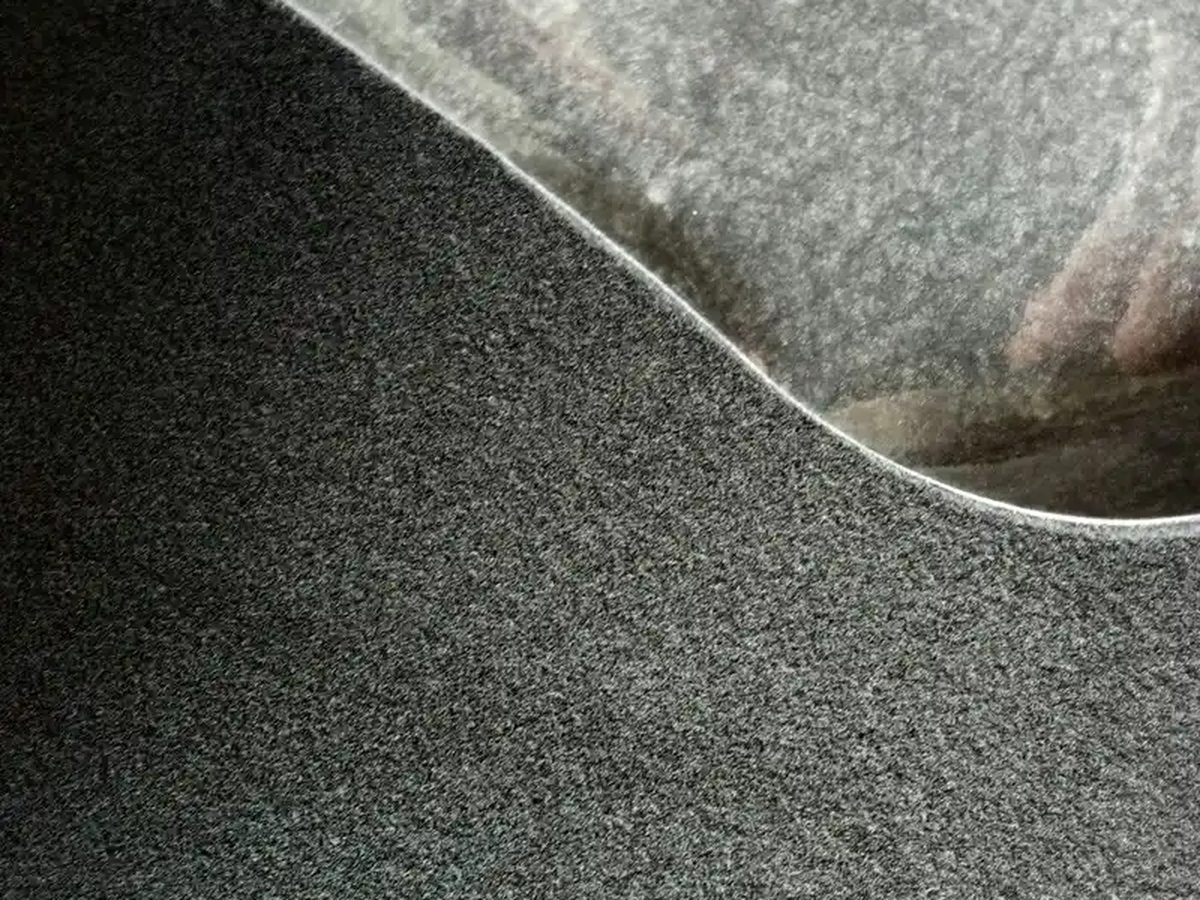
Candidate materials for promotional goods, and where each one loses
| Material | Decisive parameter | Characteristic failure | non-woven | Tensile strength: MD 20-60 N/5 cm | Low CD strength | bag fabric | Abrasion: >= 25 000 Martindale | Crocking on dark shades |
|---|
A specification you can send for promotional goods
Non-Woven
Oxford
Bag Fabric
1680D ballistic polyester, 2-pass PU with primer, 45 gsm coating, 1500 mm hydrostatic head, 25 000 Martindale, C0 DWR, wet rub >= grade 3, Pantone 19-4005 TCX — that line covers the parameters that decide performance in this application. Adjust abrasion first if the requirement is unusual; it moves the price least and the outcome most.

Failure patterns to test before committing to promotional goods
bag fabric. Crocking on dark shades: Black bag straps mark a white shirt. Cause: surface pigment without a fixing topcoat. Test: ISO 105-X12 dry and wet, plus a 24 h contact test under 5 kg load.
Sourcing notes for promotional goods
- For non-woven that means process at spunbond / spunlace / needle punch / SMS, not the nearest stock line.
- Run the sample through the process your factory will use: print, strength, cost.
- Check the MOQ per colour: 1000-2000 kg per colour for non-woven, 500-1000 m per colour for Oxford.
Questions buyers ask before ordering
Is 20-60 n a limit or a typical value for promotional sourcing guide?
On promotional sourcing guide, the working value for tolerance is 20-60 n.
What is the actual tolerance behind promotional sourcing guide?
On promotional sourcing guide, tolerance of 20-60 n is what the line holds without special setup, which is why it is the standard quotation.
What the first sample for promotional goods should prove
- That process sits inside spunbond / spunlace / needle punch / SMS on production material, not on a development sample.
- That mass per unit area passes after the process your factory will use, not only in the laboratory condition.
- That the colour matches the approved standard under D65, on the actual non-woven lot that will ship.
- That the packing and MOQ (1000-2000 kg per colour) match what the quotation assumed.
Sub-applications within promotional goods, and what each one needs
| Sub-application | What dominates | Starting specification | Bags and packaging | Print, strength, cost | Spunbond 60-100 gsm, >= 25 N MD | Trolley and luggage | Abrasion, tear, weight | 1680D ballistic, 2-pass PU, >= 30 000 Martindale |
|---|
Certification class for promotional goods, by destination
Promotional goods: failure modes worth a clause in the purchase order
Promotional textiles: where the price breaks at 5 000 pieces
Promotional work is priced to a unit cost, and the unit cost moves in steps rather than smoothly. Knowing where the steps are is worth more than a discount negotiation.
- At 500 pieces you are buying from stock or paying a minimum run charge. The fabric is whatever the mill has on the floor.
- At 2 000 pieces a dye lot becomes economic, and the colour stops being “close to the pantone”.
- At 5 000 pieces the mill will set the machine for your construction, which is where weight and density start being real rather than nominal.
- At 20 000 pieces packing and labelling become the cost driver, not the fabric.
The saving that promotional buyers reach for first is gsm, and it is the one that shows up in the end user’s hand. A 140 gsm bag that was specified at 180 feels like a different product, and the end client notices before the invoice is paid.
Cheaper by design: one print position instead of three, a standard size instead of a custom one, and a carton that ships at full pallet height. None of those reduce what the end user holds.
Sampling and approval on a three-week deadline
Promotional orders are lost in approval, not in production. A three-week window leaves four days for the sample round, and most buyers spend them waiting.
- Day 1-2: send a complete spec, not a reference. “Like the one we did last year” restarts the conversation. A spec with weight, colour reference and print position gets a stock sample out the same day.
- Day 3-5: approve in writing, with a photograph. Approval by phone is how a colour dispute starts. A photograph with the pantone chip in frame ends it.
- Day 6-8: the pre-production sample. One piece, made on the actual line, couriered. It costs 50 USD and catches the print position error that would cost the order.
- Day 9-21: production with a day-15 photograph. One photo from the line at the halfway point is the cheapest early warning in the trade.
Two things make the timeline possible. A stock colour instead of a custom dye lot removes five days. A standard size instead of a bespoke one removes the tooling approval.
If the deadline is fixed and the approval slips, the honest options are a smaller quantity or a stock colour — not a compressed production run, which is where the defect rate doubles.
The promotional maths: quantity, calendar, colour
- Quantity bands at 500, 1 000, 3 000 and 5 000 pieces, with the price step between them at 12-20 % rather than the 5 % a buyer expects.
- Calendar of 3-4 weeks production plus 25-35 days transit for a sea shipment; a promotional drop with a fixed date ships by air at 4-6 times the freight.
- Colour count drives the cost more than quantity: four stock colours add no setup, four Pantone matches add four setups at 300-800 USD each.
- Retail packaging adds 0.15-0.40 USD per unit and 10-15 days to the schedule, and it is the line most often forgotten in the quote.
- Overrun of 5-10 % is normal and should be agreed in writing before the order, because under-delivery on a dated promotion has no remedy.
A promotional order is a calendar problem with a price attached. The supplier who asks for the in-store date before quoting is the one who can still deliver it.
Need a quotation you can compare line by line?
Send the material, the annual volume and the destination market. The reply names the parameters we would fix first, the tolerance we hold, and the documents that ship with the lot.
Products in this range
Related reading
- Swimwear fabric Specification: What Each Number Actually Changes
- MOQ and Lead Time in Textile and Window Covering: How the Numbers Are Actually Built
- Oxford Fabric Specification Guide: D Number, Coating and Waterproof Rating
Sample cut with your values on it · Neutral packing and private label · Consolidation, documents and lead times