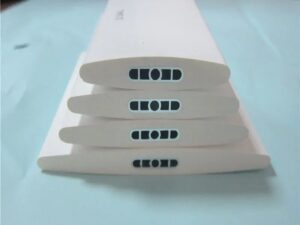
Of the four finished blinds failures below, the cord lock slipping under load is the one that reaches the end user before it reaches the inspection report.
Finished blinds: why failures cluster around one or two parameters
In finished blinds, the parameters in the table below are not independent. Ladder tape / cord and Cord lock between them explain most field failures, and both are routinely omitted from quotations because they are expensive to guarantee and easy to leave vague.
| Parameter | Typical range | Why it decides failure | Ladder tape / cord | polyester, 12-25 mm | Tape width affects the visual and the cord friction. | Cord lock | standard / auto-lock / cordless | The component that fails first in cheap blinds. | Bottom rail | wood, PVC, or aluminium | Weight affects how the blind hangs and how it operates. | Child safety | cordless / tension device / short cord | Mandatory in the EU, US, Canada and Australia, with different rules in each. |
|---|
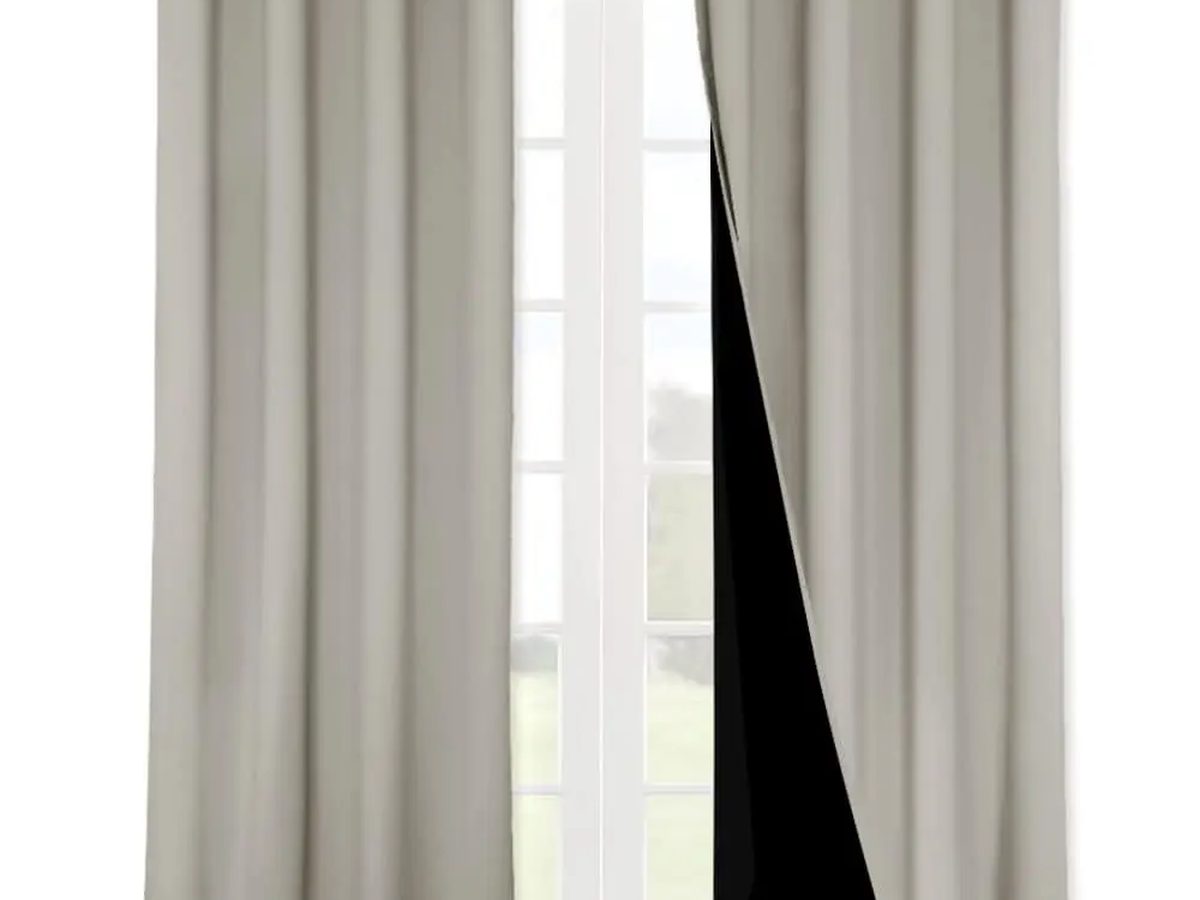
1. Cord lock slipping
What you see. The blind creeps down and will not hold position.
Why it happens. Cheap zinc die-cast lock or a cord that is out of specification for diameter.
Cycle test 5000 up/down operations with a 5 kg load.
What to specify instead. Specify a branded lock, matched cord, and cycle-test the assembled blind rather than the component.
2. Ladder cord fraying
Why it happens. Sharp edges on the headrail or an undersized pulley.
Visual inspection after 3000 cycles; measure cord abrasion.
What to specify instead. Deburr the headrail, use a roller pulley, and specify a bonded cord.
3. Blind not square
What you see. One side hangs lower; the blind rubs the frame.
Why it happens. Cutting error or unequal cord length during assembly.
Measure diagonals and check bottom rail level within 2 mm.
What to specify instead. Jig-based cutting and a final square check on every blind before packing.
4. Safety device failure
What you see. The tension device pulls out or the cord loop exceeds the limit.
Why it happens. Device not tested to the destination market’s standard.
EN 13120 mechanical tests; 16 CFR 1120 for the US.
What to specify instead. Test to the destination standard, not to a generic one, and keep the test report with the shipment.
Finished blinds: building a test plan you will actually run
| Test | Method | Acceptance | Operation cycles | internal 5000 cycles | no slip, no fray | Child safety | EN 13120 / 16 CFR 1120 | pass for destination market | Squareness | diagonal measurement | <= 2 mm difference | Cord load | static load test | per standard | Colour match | D65 + dE | dE <= 1.5 |
|---|
Finished blinds: what the report should contain
- Slat width 25, 35 or 50 mm — measured at three positions on the roll, recorded as a number rather than pass or fail On finished blinds that is slat width at 25, 35 or 50 mm.
- Headrail 25 mm steel or aluminium — cut from the middle of the lot, not from the end of the roll For finished wooden blinds it is headrail at 25 mm steel or aluminium that settles it.
- Cord lock standard, auto-lock or cordless — read at 23 C / 50 % RH after conditioning, not straight off the machine On finished blinds, skipping this is what produces the cord lock slipping under load.
- Width tolerance 1-2 mm on the finished blind — checked on production material, at in-process rather than only at pre-shipment For finished wooden blinds, the figure to write down is cord lock at standard, auto-lock or cordless.
- EN 13120 for internal blinds, EN 16433 and EN 16434 for cord safety — run to the method named above; the report travels with the lot On finished blinds that is slat width at 25, 35 or 50 mm.
Specification ranges for finished blinds are on the product page.
Questions buyers ask before ordering
How do you verify tolerance against 12-25 mm on finished failure modes and tests?
On finished failure modes and tests, if your customer checks tolerance, tell us the figure; 12-25 mm is ours, and a tighter one is a different conversation.
Does tolerance move between the finished failure modes and tests sample and bulk?
On finished failure modes and tests, our engineering position on tolerance is 12-25 mm; the batch record is what proves it after the sample is gone.
What happens to finished failure modes and tests if we need tolerance tighter than 12-25 mm?
On finished failure modes and tests, the number to put on the PO is tolerance 12-25 mm, with the method named alongside it.
The test plan for finished blinds
The minimum set on finished blinds
| Test | Method | Acceptance | Operation cycles | internal 5000 cycles | no slip, no fray | Child safety | EN 13120 / 16 CFR 1120 | pass for destination market | Squareness | diagonal measurement | <= 2 mm difference | Cord load | static load test | per standard | Colour match | D65 + dE | dE <= 1.5 | Packaging drop | ISTA 1A or 3A | no damage |
|---|
Sampling for finished blinds, and where it goes wrong
For a first order of finished blinds, take three positions along the run and one sample per colour, then test operation cycles on all of them rather than on a composite.
Several finished blinds results move by 10-20 % between a dry laboratory and a humid one, which is why two labs can disagree on the same material without either being wrong.
Reading a finished blinds report properly
- Slat width 25, 35 or 50 mm — measured at three positions on the roll, recorded as a number rather than pass or fail For finished wooden blinds it is headrail at 25 mm steel or aluminium that settles it.
- Headrail 25 mm steel or aluminium — cut from the middle of the lot, not from the end of the roll On finished blinds, skipping this is what produces the cord lock slipping under load.
- Cord lock standard, auto-lock or cordless — read at 23 C / 50 % RH after conditioning, not straight off the machine For finished wooden blinds, the figure to write down is cord lock at standard, auto-lock or cordless.
- Width tolerance 1-2 mm on the finished blind — checked on production material, at in-process rather than only at pre-shipment On finished blinds that is slat width at 25, 35 or 50 mm.
- EN 13120 for internal blinds, EN 16433 and EN 16434 for cord safety — run to the method named above; the report travels with the lot For finished wooden blinds it is headrail at 25 mm steel or aluminium that settles it.
The three tests buyers skip and regret on finished blinds
For finished blinds that usually means child safety measured after the wash or exposure the product will actually see, because cord lock slipping does not appear in a conditioned laboratory.
Ladder cord fraying is usually a construction failure rather than a material one.
Third, retention. It is the only way to know whether ladder tape / cord changed or the conditions did.
Turning test results into a purchase order clause on finished blinds
Full parameter ranges are on the finished blinds page; the checks that hold those ranges in production are described on the quality control page.
How often to re-test on finished blinds
| Stage | What to test | Frequency | Development sample | All parameters in the specification; measured on slat width, 25, 35 or 50 mm | Once per development | First production lot | All parameters, plus the end-use test; held at slat width, 25, 35 or 50 mm | Every lot for the first three; read against slat width, 25, 35 or 50 mm | Repeat lots | Critical parameters and the one that failed before; written as slat width 25, 35 or 50 mm | Every lot | Annual | Full panel, including ageing where relevant; measured on slat width, 25, 35 or 50 mm | Once a year, or after any process change; held at slat width, 25, 35 or 50 mm |
|---|
Retained samples: the cheapest insurance in the order on finished blinds
For finished blinds, the sample should include the finish, not just the base material, because cord lock slipping usually starts in the finish or the additive rather than the substrate.
The test plan for finished blinds, by order size
| Order | Tests to run | What it establishes | Sample or trial | Operation cycles | Whether the material can meet the requirement at all; read against slat width, 25, 35 or 50 mm | First production order | Operation cycles, Child safety, Squareness | The baseline every later lot is compared against; written as slat width 25, 35 or 50 mm | Repeat orders | Operation cycles plus the parameter that failed last time | Whether the process has drifted; measured on slat width, 25, 35 or 50 mm | Annual or after a process change; held at slat width, 25, 35 or 50 mm | Full panel | That nothing has moved in the background; read against slat width, 25, 35 or 50 mm |
|---|
For finished blinds, the one test never worth dropping is operation cycles, because it is the one that predicts cord lock slipping.
The claim file for finished blinds, and how long to keep it
Claims on finished wooden blinds are lost on documentation far more often than on material. By the time the cord lock slipping under load appears, the sample is gone and the finished blinds lot is cut, so the file is the case.
- The signed specification, with slat width at 25, 35 or 50 mm and headrail at 25 mm steel or aluminium on the same page as the finished blinds price.
- The sealed bulk approval sample for finished blinds, dated — not the development sample.
- The lot record showing slat width as measured on finished wooden blinds, not as passed.
- Photographs of the finished blinds consignment at goods-in, before the material was cut.
- The finished blinds inspection report naming the method: EN 13120 for internal blinds, EN 16433 and EN 16434 for cord safety.
Keep the finished blinds file for the warranty period plus one season — usually 24 months in export. A shelf costs nothing; a finished blinds shipment without the file costs the whole order.
Two of the five are almost always missing on finished blinds, and they are the two that decide it: the bulk approval sample and the measured slat width value.
Want a finished blinds quotation you can compare line by line?
Tell us the headrail and the annual volume. The quotation comes back with the tolerance band, the MOQ per colour, and the test standard named against each figure.
Products in this range
Related reading
- Basswood blinds and slats: Four Failures Buyers Report, and the Tests That Catch Them
- How to Document a Quality Claim So It Gets Resolved
- Swimwear Fabric Selection: Chlorine Resistance, UPF and Recovery
Catalogue and current price list · Neutral packing and private label · Consolidation, documents and lead times