An US landed cost changes at the HTS line before it changes at the mill. Section 301, the origin rule and the duty rate decide more of the margin than the quotation does.
The regulatory frame in the US
| Requirement | What it changes | 16 CFR 1120 | corded window coverings are regulated; cordless or short-cord is the practical route | Prop 65 | warning requirements; dark dyes and PVC plasticisers are the usual trigger | CPSIA | children’s products need third-party testing and a CPC | TSCA Title VI | formaldehyde limits for composite wood components |
|---|
What it means for textile imports into the US
16 CFR 1120 changes the finish or the additive, not the substrate. For Oxford, that usually means colour fastness to light rather than the base construction, which is why the cost appears in processing rather than in the material.
What it means for window coverings bought for the US
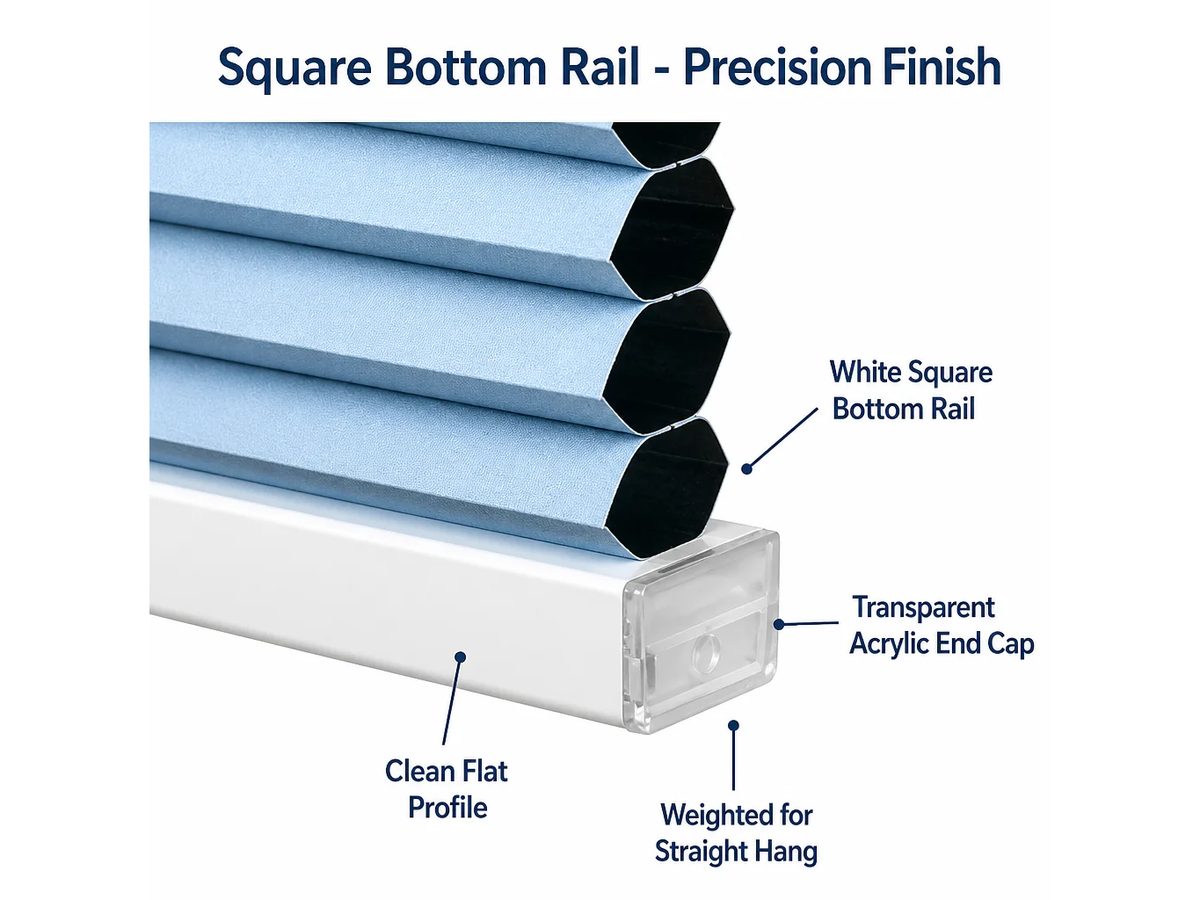
For finished blinds, the same requirement lands on the hardware and the safety device. Cord lock slipping is the failure that matters here, and it is decided by component choice rather than by the slat.
How the US actually buys
Who actually buys — Sourcing from China for The Us
Importers, distributors and, increasingly, marketplace sellers buying in small lots. The marketplace channel moves fast and returns hard, so the first order is often small and the repeat is large.
What they claim most — Sourcing from China for The Us
Cord and small-part safety, and colour transfer onto light surfaces. The safety standard is enforced, not advisory, so a generic certificate is worse than no certificate.
Price band
Wide. The top and the bottom of the market both exist, and the middle is squeezed by private label.
Payment habit
T/T 30 % deposit is common; letters of credit are used for larger first orders. Expect a compliance questionnaire before the PO.
How buyers in the US place orders
| Buying model | What they need | What loses the order | Project and contract | Compliance pack, fixed date, installation sequence | A date that moves | Importer and distributor | Lot consistency, a price band, stock colours | Shade variation on a repeat | Online and retail | Low MOQ, speed, images, retail packaging | A 12-week lead time |
|---|
The documentation pack for US customs
Buyers in the US do not ask for documents because they enjoy paperwork. They ask because an incomplete pack becomes their problem at the border or in an audit. A supplier who sends a complete pack with the quotation removes that problem and is very hard to replace on price alone.
- Test report for the parameter the regulation controls, with the lot number.
- Certificate with scope, site and validity visible.
- Declaration of conformity, signed and dated.
- Label artwork checked against the local rules.
- A written statement of what the supplier does not cover.
Where the price actually sits
Buyers compare landed cost against an incumbent, and the incumbent’s price already includes duty, freight and the paperwork. That is why a lower ex-works price does not automatically win, and why the useful conversation is about the three lines the buyer cannot easily see: claim rate, lead-time reliability and documentation completeness.
Where suppliers lose the US market
Not on price. On documentation that does not name the material, and on a sample that does not match the quotation. Both are read as risk, and risk is priced higher than a five per cent difference in unit cost.
Product detail starts from the fabric overview and the wooden blinds overview; the documents we can supply are on the certifications page.
Questions buyers ask before ordering
What happens to sourcing china us if we need tolerance tighter than 30 %?
On sourcing china us, tolerance sits at 30 % for this construction.
Is 30 % a limit or a typical value for sourcing china us?
On sourcing china us, the figure for tolerance is 30 %, measured at pre-shipment and written on the lot record rather than the brochure.
The PVC slat question, answered for US buyers
On PVC slats the recurring modes are these, caught with a different test.
What an US buyer has to add to the file
The US route is simpler on documents than the EU and harder on money. Three things decide whether a container is profitable before anyone inspects the fabric.
- Duty stacking. Section 301 tariffs sit on top of the MFN rate for most Chinese textiles, and the rate depends on the HTS line, not on what the supplier calls the product. Get the HTS code from a broker before the quote, not after.
- De minimis is gone for most goods. The informal-entry route that used to carry small orders has been closed, so a 400-piece trial now clears like a commercial shipment.
- Substantial transformation. A fabric woven in China and cut and sewn in Vietnam does not automatically become Vietnamese origin. If you are moving production for duty reasons, the origin rule decides whether the move works.
On the product side, CPSIA applies to children’s items, Prop 65 to everything sold in California, and the FTC textile labelling rules to fibre content and country of origin on the label itself.
Ask the supplier for the HTS code they use on their own exports. A supplier who does not know it has never shipped to the US directly, which tells you something about who has been absorbing the duty.
The five numbers an US importer carries
| Line | Figure | Where it bites |
|---|---|---|
| Section 301 tariff | 7.5-25 % ad valorem | Added to the MFN rate, not instead of it |
| MFN duty, textile lines | 3-12 % | Set by HTS code, and the code follows the fibre content |
| De minimis | 800 USD per shipment | Sampling and small top-ups below this clear without duty |
| Ocean transit | 30-35 days port to port | Plus 5-10 days for rail to the Midwest |
| Corded window coverings | 16 CFR 1120 | Cordless or short-cord construction, tested before the order |
The tariff line is the one that changes the answer. A 25 % Section 301 rate on a 4 USD landed cost is 1 USD, which is more than the difference between two suppliers quoting the same specification. Importers who compare FOB prices without the HTS code are comparing the wrong numbers, and the code depends on fibre content, not on the product name on the invoice.
The filing calendar around an US shipment
| Deadline | Timing | What it costs to miss it |
|---|---|---|
| ISF 10+2 filing | 24 hours before loading | 5 000 USD per violation, and the cargo still sails |
| Entry summary | 10 working days after entry | Interest plus penalties on the duty |
| Free time at port | 3-5 days | 75-150 USD per container per day after that |
| Section 321 de minimis | 800 USD per shipment | Above it, the full duty stack applies |
The paperwork carries its own dates and its own money: ISF filed 24 hours before loading, entry summary within 10 working days of entry, duty at 3-12 % of the CIF value depending on the HTS line, and a customs bond at 50 000 USD or 10 % of the previous year’s duties, whichever is greater, on a 20 GP that costs 2 400 USD and takes 30-35 days port to port. Add 3 % of shipments examined at random and 45 days of free storage before demurrage starts at 75-150 USD a day.
Working a sourcing decision through?
Describe the end use and the failure you are designing out. We reply with the material we would specify, the figure that decides it, and the test that proves it.
How Canada actually buys
Who actually buys — Sourcing from China for The Us
Distributors and retail buying groups, with bilingual packaging requirements from the start. The market is smaller and more concentrated than the US, and one account can be most of a programme.
What they claim most — Sourcing from China for The Us
Cold-weather cracking in PVC and plasticiser compliance. Winter performance is a real specification requirement, not a theoretical one.
Price band
Mid. Buyers benchmark against US landed cost and expect parity plus a service advantage.
Payment habit
30/70 in USD or CAD. Confirm the labelling language requirement before the artwork is approved.
The US: the same question, asked of motorised blinds
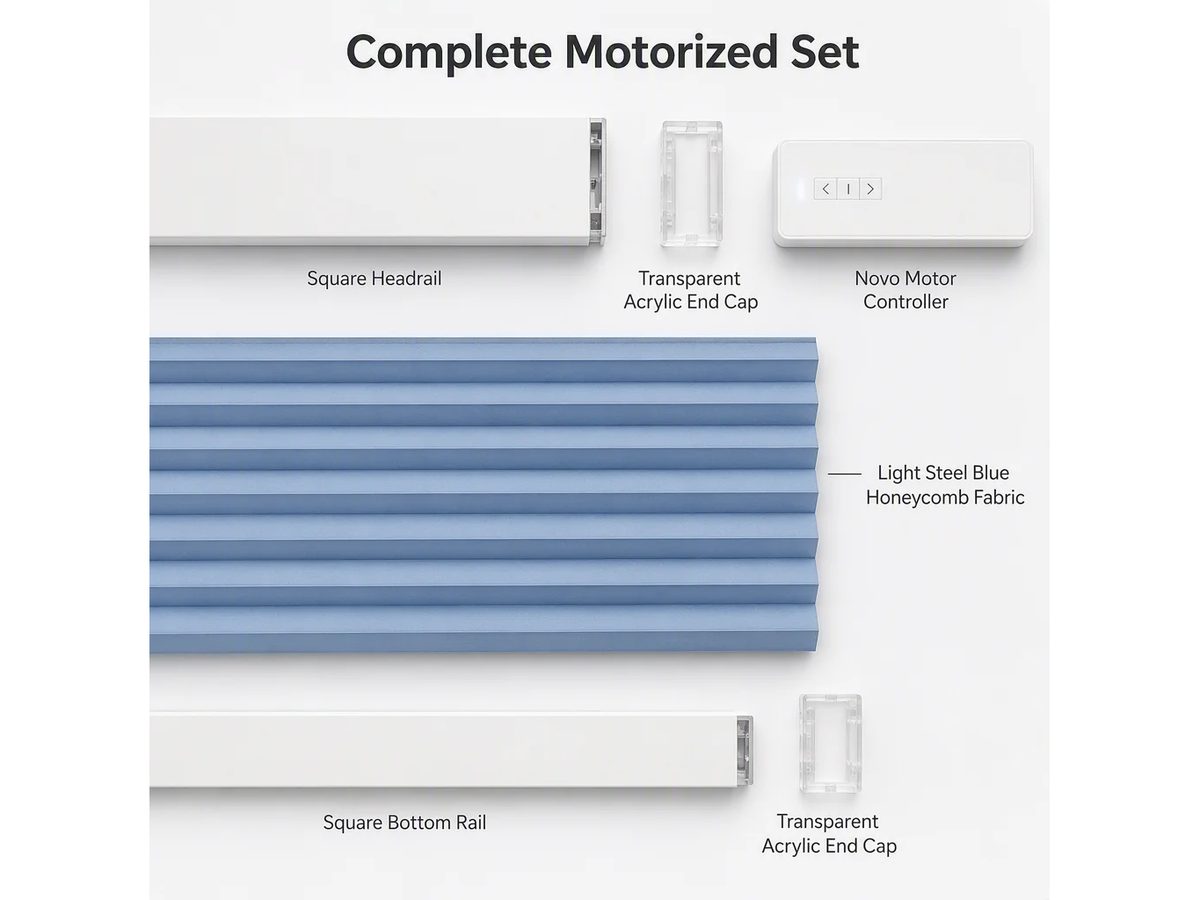
On motorised blinds the recurring modes are these, caught with a different test.
The landed-cost lines an US importer cannot quote around
| Cost line | Figure | Where it lands |
|---|---|---|
| Section 301 duty, List 3 | 25 % of customs value | paid at entry, absent from the quotation |
| MFN duty, HTS 6303.92 | 8.8 % | compounds with the 301 rate |
| Merchandise processing fee | 0.3464 %, floor 32.71 and cap 634.62 USD | per entry, not per shipment line |
| ISF filing | 24 hours before loading | 5 000 USD penalty if late |
| Continuous customs bond | 50 000 USD, or 10 % of prior-year duty | annual, whichever is greater |
| Shanghai to Los Angeles | 28-35 days port to port | plus 3-7 days rail inland |
| Random exam rate | 3 % of entries | adds 4-9 days and 300-800 USD |
Products in this range
Related reading
- MOQ and Lead Time in Textile and Window Covering: How the Numbers Are Actually Built
- How to Document a Quality Claim So It Gets Resolved
- PU Leather Sourcing: Thickness, Backing and Hydrolysis Failure
Sample cut with your values on it · Neutral packing and private label · Consolidation, documents and lead times