Industrial washing is the requirement. Domestic-wash figures understate shrinkage and colour loss by a wide margin.
Industrial laundering is the specification. A 60 C domestic cycle understates shrinkage and colour loss by a wide margin, and a garment that passes the first will still fail the second.
The second requirement is tear strength at the seam, because workwear fails by pulling rather than by abrasion. A higher density and a twill construction solve it more cheaply than a heavier yarn.
Requirements for workwear
- cotton/T.C: Construction at 1/1 plain / 2/1 twill / ripstop — Twill drapes and hides stains; plain is cheapest and shows everything.
- Oxford: Coating weight at 15-60 gsm per pass — Two light passes beat one heavy pass for flex durability.
- Service life: Industrial washing is the requirement. Domestic-wash figures understate shrinkage and colour loss by a wide margin.

Candidate materials for workwear, and where each one loses
| Material | Decisive parameter | Characteristic failure | cotton/T.C | Construction: 1/1 plain / 2/1 twill / ripstop | Shrinkage | Oxford | Coating weight: 15-60 gsm per pass | Coating peeling |
|---|
A specification you can send for workwear
Cotton/T.C
65/35 polyester/cotton twill, 21s x 21s, 108×58, 240 gsm, 160 cm, sanforised shrinkage = grade 4, Pantone 19-4127 TCX — that line covers the parameters that decide performance in this application. Adjust construction first if the requirement is unusual; it moves the price least and the outcome most.
Oxford
600D polyester oxford, 2-pass PU coating with primer, 1500 mm hydrostatic head, 155 cm usable, 62 gsm total coating, tear >= 25 N, Pantone 19-4052 TCX, hydrolysis-resistant — that line covers the parameters that decide performance in this application. Adjust coating weight first if the requirement is unusual; it moves the price least and the outcome most.
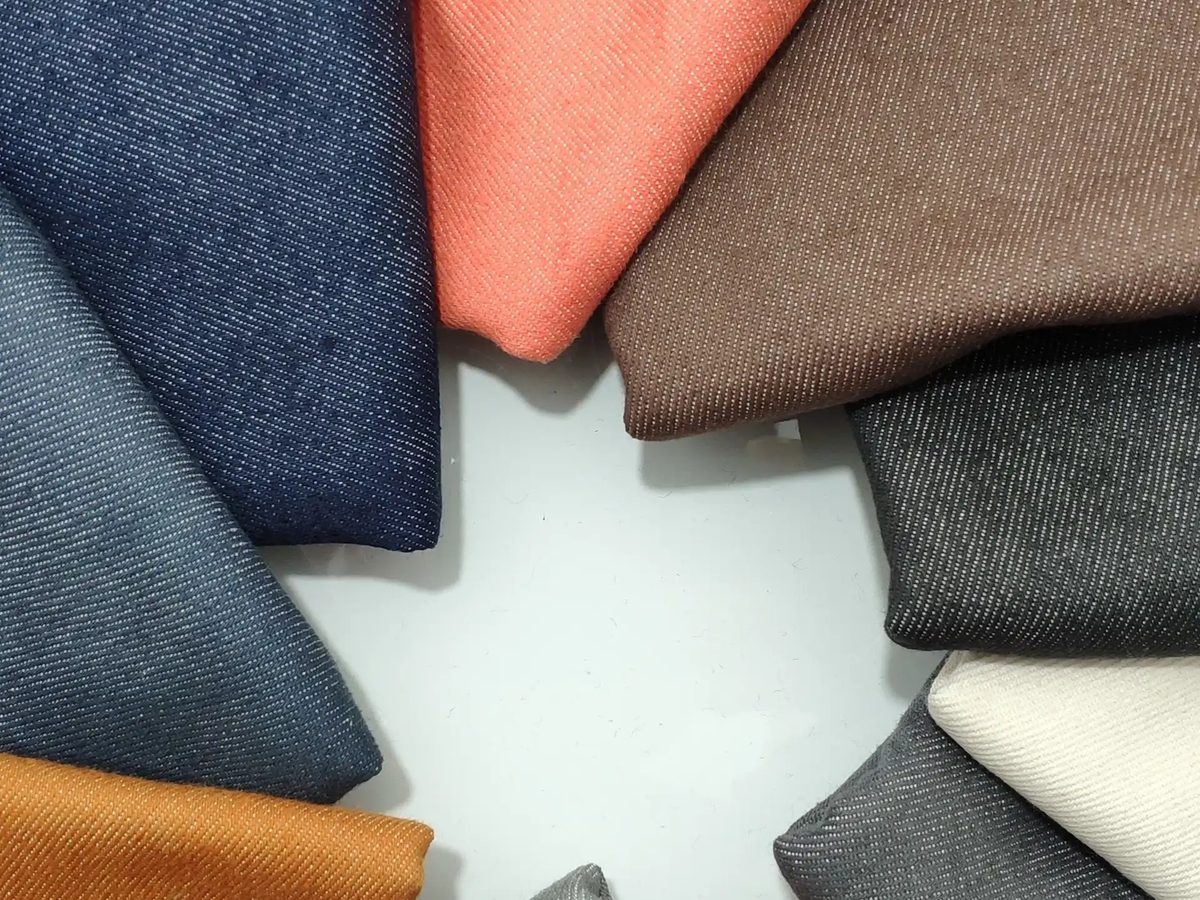
Failure patterns to test before committing to workwear
cotton/T.C. Shrinkage: Uniforms shrink a size after the first industrial wash. Cause: no sanforising, or sanforising settings not held between lots. Test: ISO 6330 at 60 C industrial cycle, 3 washes, then ISO 5077.
Oxford. Coating peeling: The PU film lifts at folds and along stitch lines within a season. Cause: under-cured coating, too heavy a single pass, or no primer on the base fabric. Test: ISO 2411 peel strength plus a 5000-cycle flex test at the fold.
Sourcing notes for workwear
- For cotton/T.C that means composition at 100 % cotton / 65-35 / 80-20 T/C, not the nearest stock line.
- Run the sample through the process your factory will use: industrial wash durability, tear, colour.
- Check the MOQ per colour: 1000-2000 m per colour for cotton/T.C, 500-1000 m per colour for Oxford.

Questions buyers ask before ordering
Is 15-60 gsm achievable at our volume on workwear sourcing guide?
On workwear sourcing guide, set tolerance at 15-60 gsm and the rest of the order follows; leave it open and the mill decides for you.
How do you verify tolerance against 15-60 gsm on workwear sourcing guide?
On workwear sourcing guide, we quote 15-60 gsm and test to third-party report.
What the first sample for workwear should prove
- That composition sits inside 100 % cotton / 65-35 / 80-20 T/C on production material, not on a development sample.
- That shrinkage passes after the process your factory will use, not only in the laboratory condition.
- That the colour matches the approved standard under D65, on the actual cotton/T.C lot that will ship.
- That the packing and MOQ (1000-2000 m per colour) match what the quotation assumed.
Sub-applications within workwear, and what each one needs
| Sub-application | What dominates | Starting specification | Workwear and uniforms | Industrial wash durability, tear, colour | Twill 220-250 gsm, 65/35, pre-shrunk | Luggage and travel bags | Tear and abrasion under load, dark shades prone to crocking | 600D PU 2-pass, 1500 mm, >= 25 N tear |
|---|
Certification class for workwear, by destination
Workwear: the numbers that survive an industrial wash
Workwear is bought on a life-cycle promise — two years, fifty washes, colour still recognisable. Four numbers decide whether that promise holds.
- Washes to failure, not washes to fading. ISO 6330 at the temperature the laundry actually uses, usually 60 °C or 75 °C industrial, not 40 °C domestic. A 40 °C claim on a 75 °C wash is the most common specification error in the category.
- Colour fastness to washing, grade 4 or better. Navy and black are the shades that fail, and they fail visibly: the garment fades unevenly at the collar first.
- Tear strength after wash. Tensile strength is quoted before laundering. Tear after ten cycles is the number that predicts a rip at the pocket.
- Shrinkage, pre-shrunk at 3 %. Above 3 %, a size run stops fitting after the first industrial wash, and the whole consignment becomes a sizing problem rather than a fabric problem.
Weight is the proxy buyers use — 180 gsm and up for a two-year claim — and it is a reasonable proxy, provided the density behind it is real. Ask for threads per inch, not just gsm.
High-visibility programmes add EN ISO 20471, which constrains the background colour and the retro-reflective tape, and changes which fabric you can use at all.
The figures that decide a workwear programme
- EN ISO 20471 for high-visibility, with class 2 and class 3 set by the area of fluorescent and retroreflective material, not by the garment type.
- Retroreflective tape at 50 mm width, tested to EN ISO 20471 after 25 domestic washes, because the tape fails before the shell does.
- Tear and abrasion at 25 000 cycles Martindale for a shell that sees daily industrial wear; 15 000 is a light-duty claim.
- Colour fastness to industrial washing at 75 C, grade 4 minimum, on the darkest shade in the range.
- Weight of 240-320 gsm for a year-round shell, and 180-220 gsm for a summer line that will be worn over a t-shirt.
The failure that ends workwear programmes is the tape, not the fabric. A shell that passes 25 000 cycles with tape that lifts at wash 12 has not passed the test the customer runs.
Need a quotation you can compare line by line?
Send the material, the annual volume and the destination market. The reply names the parameters we would fix first, the tolerance we hold, and the documents that ship with the lot.
Products in this range
Related reading
- Swimwear fabric: Four Failures Buyers Report, and the Tests That Catch Them
- Landed Cost for Importers: The Six Lines Buyers Forget
- Knitted Fabric Sourcing Guide: Gauge, Stretch and Shrinkage Control
Sample cut with your values on it · Neutral packing and private label · Consolidation, documents and lead times